• Welcome to Photrio!
    Registration is fast and free. Join today to unlock search, see fewer ads, and access all forum features.
    Click here to sign up

Pinhole large format

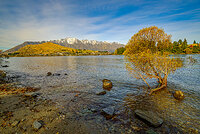
Afternoon Calm

D
Afternoon Calm

  • 5
  • 0
  • 66
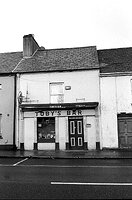
Toby's Bar

H
Toby's Bar

  • Tel
  • Apr 25, 2026
  • 2
  • 0
  • 72

Recent Classifieds

Forum statistics

Threads
203,504
Messages
2,855,683
Members
101,872
Latest member
kedama
Recent bookmarks
0

Norman Hart

Member
Allowing Ads
Joined
Mar 24, 2006
Messages
18
Format
Large Format
Hi
Are you going to get better results from film or paper negatives.

Thanks Norman
 
Paper negatives tend to be softer, so if that is the effect you want, then they might be a better choice. It all depends on the results you are looking for.

- Randy
 
Thanks Randy

Ill start of by trying paper negs first then its easier.

Norman
 
I think that some people do find it easier, but you still have to contact print to get a positive image. Personaly, if I had the camera all setup, I'd use film, but that's just me. What ever you use, I'd like to see the results!

- Randy
 
Printing paper negatives requires either a good printing frame or perhaps squeegeeing the wet paper negative onto a wet sheet of unexposed paper. Scanning paper negatives is simpler. Printing from film negatives is less problematic. Paper negatives do let you do image alternations with pencil on the back of the paper. Paper is not panchromatic, and is much slower than most film.
 
Actually...

If your paper negative is RC, and you have a 4x5 capable enlarger, you can project the negative just as you would a film negative. The image will be dimmer, but exposure times are still quite manageable; with my D2 and Zone VI cold light, I have to stop down to f/22 or f/32 to get manageable times with film, and it wouldn't hurt anything to open up to f/11 to get similar times with an RC negative.

That said, paper negatives tend to be contrasty compared to film, and contrast is controlled by either selecting a different paper (with graded) or a different filter (and the various, potentially bizarre effects of subject color and light color, with VC), and much less so by development (though there are developers that can harden or soften paper contrast by about half a grade compared to the Dektol/D-72 standard). If you look at J&C Photo and Freestyle, you ought to be able to buy ISO 100 film in 4x5 for well under $20 for a box of 25, and Efke 25 is just over $25/25 sheets if you prefer a slower exposure -- and the film you get will fit your film holders without trimming, unlike any size of enlarging paper.

Both sources also have ortho-lith film that runs ISO 6 to 25 and can be handled under red safelight, if you prefer easy inspection development, though I don't recall seeing ortho in 4x5 recently (haven't really been looking, but it's not difficult to recut under safelight); these films may require highly dilute developer to deliver pictorial contrast, but there are plenty of solutions for that problem, including stand development in either HC-110 Dilution G or Rodinal 1:100 (or weaker).

 
I've not tried paper negatives, only film in 4x5 and 8x10 formats in pinhole cameras. If you're already accustomed to processing sheet film, I'd go with film over paper. The results can be very sharp. As Donald Qualls said in the previous post, sheet film can be had fairly inexpensively.

Peter Gomena
 
Photrio.com contains affiliate links to products. We may receive a commission for purchases made through these links.
To read our full affiliate disclosure statement please click Here.

PHOTRIO PARTNERS EQUALLY FUNDING OUR COMMUNITY:


Ilford ADOX Freestyle Photographic Stearman Press Weldon Color Lab Blue Moon Camera & Machine
Top Bottom