
• Welcome to Photrio!
    Registration is fast and free. Join today to unlock search, see fewer ads, and access all forum features.
    Click here to sign up

Pattern on old film

Boardwalk

A
Boardwalk

  • 1
  • 1
  • 15
Speculative Silence

D
Speculative Silence

  • 1
  • 0
  • 15

Recent Classifieds

Forum statistics

Threads
202,111
Messages
2,835,272
Members
101,121
Latest member
artworldmaintenance
Recent bookmarks
0

Juri

Member
Allowing Ads
Joined
Nov 7, 2009
Messages
65
Location
Estonia, Eur
Format
35mm RF
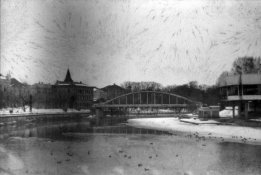
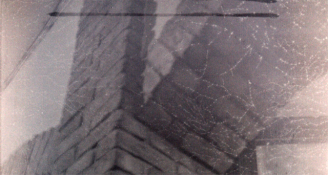
Several weeks ago I got a hold of a roll of soviet or russian Svema 64 film that had expired in 1995. I decided to try it out with my Zenit 11 and developed using an expired developer. The result was interesting as I had obviously expected, but the negative had a weird pattern on it. Just out of curiousity, could anyone explain it?

On the first photo the pattern looks normal, but on the second it seems to be "blown away". I used a dust blower to remove water drops from the negative after fixing. Could that have affected the emulsion somehow?
 

Attachments

  • SvemaFN64(Scan-110402-0029).jpg
    SvemaFN64(Scan-110402-0029).jpg
    492.8 KB · Views: 200
  • SvemaFN64(Scan-110402-0003).jpg
    SvemaFN64(Scan-110402-0003).jpg
    497.7 KB · Views: 212

kevs

Member
Allowing Ads
Joined
Aug 21, 2006
Messages
711
Location
North of Pangolin
Format
Multi Format
Hi Jüri,

I've never seen anything like that before. That might be static electricity discharges - the streaks look like sparks. It's not the developer's fault, or the blower brush you used. Static charge can build up if film is bulk-loaded in a dry environment. Another answer might be reticulation, where the emulsion buckles because of temperature changes during development, but it doesn't look like that to me.

Best,
kevs.
 

Worker 11811

Member
Allowing Ads
Joined
Jan 18, 2010
Messages
1,719
Location
Pennsylvania
Format
Multi Format
It looks like reticulation to me but that doesn't necessarily mean it happened during processing.

As you say, the film is old. There's no way to know how it has been stored. It could have been subject to extremes of temperature which might have caused it.

Further, I don't know the characteristics of Russian films. I have seen some films that won't reticulate if you put them in hot water and dunk them into ice water. I have heard of some films that will reticulate if you look at them wrong.

Most films should be able to withstand short excursions to extremes of temperature but I don't know how your brand of film behaves under that kind of stress.
 
OP
OP

Juri

Member
Allowing Ads
Joined
Nov 7, 2009
Messages
65
Location
Estonia, Eur
Format
35mm RF
Thank you for the replies. I'm glad to know it wasn't caused by my development process. I loaded it into a cassette manually, but I don't think there was any static involved. So I assume it has most probably something to do with how the film was stored.
 

Worker 11811

Member
Allowing Ads
Joined
Jan 18, 2010
Messages
1,719
Location
Pennsylvania
Format
Multi Format
Just last week I was almost done developing a roll of Legacy 400 when I accidentally poured in hot water to start my rinse cycle.

I had the water running slowly into a bucket to temper it at 68º F. but somebody came along and turned on the hot water when I wasn't looking. I used a measuring cup with a handle on it to dip some water and pour it into my developing tank and I didn't notice that the water was hot until some spilled out. By that time, the tank was already half full of 100º F. water. (I know... stupid mistake. :| ) I quickly dumped in some cold water, poured it out then put in more water at the correct temperature but I thought, for sure, I was going to get reticulated film.

The film came out all right. Luck was with me on that day.

If you keep all your B/W film processing within a ±5º F. range (but for developing temperature which should be within ±1-2º F.) you should not have a problem. Since most people just naturally operate that way, I'm assuming that the film didn't become reticulated when you were developing it. You'll have to think back to your processing regimen to be sure of that but I don't think you were the cause. I could be wrong. You have to be the judge of that.

Off the top of my head, I can't think of any other way the film could become reticulated unless it was already like that when you got it. Like I said, there's no way to guarantee how the film was handled and stored before it came into your possession but I have no idea how that brand of film responds to temperature excursions, either in storage or during development. I'm just puzzling out the question.
 

ndrs

Member
Allowing Ads
Joined
Feb 21, 2009
Messages
135
Location
Germany
Format
Multi Format
Hi Jüri,

Greetings to my former hometown!

Some Russian films were prone to show static discharge marks. Your scans show patterns similar to what I got on several occasions with Svema or Tasma films in the 1980es.
I can't recall though if I ever found out the cause. They might have been on film already or were caused by loading the bare, paper-wrapped roll into cassette, or even by static discharge in camera, especially in cold and dry weather. I have never seen anything like this happening with any other film.

Tervitades,
Andres
 
OP
OP

Juri

Member
Allowing Ads
Joined
Nov 7, 2009
Messages
65
Location
Estonia, Eur
Format
35mm RF
You'll have to think back to your processing regimen to be sure of that but I don't think you were the cause. I could be wrong. You have to be the judge of that.
I use consistent temperature when developing. I never pour water straight from the tap, I mix cold and hot water in a jug until thermometer indicates 20º C, so there could be perhaps a few degrees Celsius variation.

Considering what andres said, the pattern seems to be film-specific. When using soviet things, the result is often unpredictable.

Tervitused Tartust!
 

kevs

Member
Allowing Ads
Joined
Aug 21, 2006
Messages
711
Location
North of Pangolin
Format
Multi Format
I use consistent temperature when developing. I never pour water straight from the tap, I mix cold and hot water in a jug until thermometer indicates 20º C, so there could be perhaps a few degrees Celsius variation.

Considering what andres said, the pattern seems to be film-specific. When using soviet things, the result is often unpredictable.

Tervitused Tartust!

Jüri,

That seems to indicate that static discharge is the cause. If you have any of the uncut bulk-roll left, you could develop a small, unexposed piece, say five frames worth, then see if you get the same pattern. If there's no pattern, you might try exposing the some frames in your camera, not loaded into a cassette. Finally, load a roll into a cassette as normal, shoot and develop. This should help you trace the source of the problem. If the pattern is on the bulk roll, it could be randomly exposed throughout the roll.

Best,
kevs.
 

yulia_s_rey

Member
Allowing Ads
Joined
Feb 27, 2011
Messages
256
Location
Madrid, Spain
Format
Multi Format
Hello Jüri,

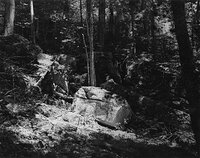
recently i processed a roll of AGFA APX 400 accidently in a hot process. It was spooled onto a Kodak 200 roll it was shot my my brother in 2002, as far as he was concerned it was a mystery roll, so I figured why not try it in some hairdye solution. This process runs hot 100 deg F. I skipped the bleach on purpose, thank goodness! The photos came out suprisingly but w/ signs of reticulation I logged it in my notes and shelved it. The attached photo is a snippet of that roll. as far as static electricity I have witnessed static discharges in the darkroom, once I used clear tape and pulled it way to quick, a dim blue static discharge was observed, upon processing the film took the same form as the discharge-i think there was a photographer who used this phenomena, blasting high voltages directly through conductive materials (coins, etc) hope this helps, if your temps were correct, a combination of heat/humidity and time.
 

Attachments

  • retpat.png
    retpat.png
    416.2 KB · Views: 165
OP
OP

Juri

Member
Allowing Ads
Joined
Nov 7, 2009
Messages
65
Location
Estonia, Eur
Format
35mm RF
Thanks for the feedback. I'm not actually sure if it could have been the static, because as I was notified by a private message that the pattern doesn't resemble a charge. Whatever it was, it isn't a problem for me anymore, since I'm afraid I won't find this film again.
 

Worker 11811

Member
Allowing Ads
Joined
Jan 18, 2010
Messages
1,719
Location
Pennsylvania
Format
Multi Format
A static discharge on the film will make the film turn black. That will show up as white on a print.

Your phenomenon is black on the print (or positive scan) meaning that the pattern would be white on the film.
 

kevs

Member
Allowing Ads
Joined
Aug 21, 2006
Messages
711
Location
North of Pangolin
Format
Multi Format
A static discharge on the film will make the film turn black. That will show up as white on a print.

Your phenomenon is black on the print (or positive scan) meaning that the pattern would be white on the film.

You're quite right, of course, Worker 11811. :smile: I thought 'static' because of the shape of the marks and the way they seem to radiate from a local 'centre'. I'm used to using slide films these days...

Sorry if I've mislead you, Jüri. I must think before posting! :smile:
 
OP
OP

Juri

Member
Allowing Ads
Joined
Nov 7, 2009
Messages
65
Location
Estonia, Eur
Format
35mm RF
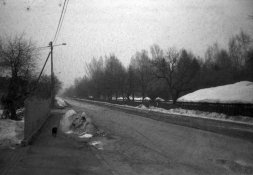
I'm bringing up this old thread I created. I just developed and scanned another roll of this old film, which had been expired in 1994. This time it came out nice and almost without the signs of that pattern. However, looking at it again made me wonder if it could be some kind of fungus. It does seem to resemble a net or branches. It's not causing me difficulties, since this film is mostly for playing around, but I'm just curious.
 
Photrio.com contains affiliate links to products. We may receive a commission for purchases made through these links.
To read our full affiliate disclosure statement please click Here.

PHOTRIO PARTNERS EQUALLY FUNDING OUR COMMUNITY:


Ilford ADOX Freestyle Photographic Stearman Press Weldon Color Lab Blue Moon Camera & Machine
Top Bottom