
• Welcome to Photrio!
    Registration is fast and free. Join today to unlock search, see fewer ads, and access all forum features.
    Click here to sign up

Paper reccomendations for a "noob"

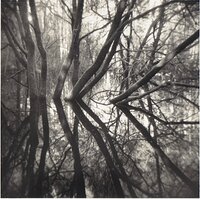
Flooded woodland

Flooded woodland

  • 14
  • 0
  • 96
Babylon

D
Babylon

  • 3
  • 1
  • 85

Recent Classifieds

Forum statistics

Threads
202,841
Messages
2,846,339
Members
101,559
Latest member
gnafin61
Recent bookmarks
0

WILL WORK FOR FILM

Member
Allowing Ads
Joined
Oct 3, 2016
Messages
102
Location
Boise Idaho
Format
Medium Format
I have been shooting B@W film for a little over a year now with success and am nearing the completion of my bathroom darkroom. I will be printing on a Beseler 23C enlarger. Currently I shoot Tri-x 400 35mm on a Nikon F and F4S. For the most part I understand the process and am looking forward to creating my own prints but one subject area has me a little confused. Which Ilford multigrade paper should I start printing on? I have read that RC paper is easier than FB to start with but I don't want to invest a lot of time into learning a paper only to find it lacks the personality that I am looking for. Nor do I want to start with a complicated and finicky paper that will only make for a rough start.

Any suggestions and detailed explanations of the specific traits of Ilford multigrade papers would be greatly appreciated.
AA051.jpg
 
So buy a pack of 25 sheets of Ilford RC paper and a pack of fiber (I prefer glossy) and try them both. It should be interesting for you to handle them both and see which you prefer. I use both. I still like Fiber paper when I'm proud of an image, but that may just be old habit.
 
Almost without exception, all currently available black and white papers are of a very high standard and liking or disliking a paper is only a matter of personal taste. The only way for you to find out if you like a paper or not is to buy it and try it.

RC coated papers are not necessarily easier to work with, but mach faster to work with and cheaper. An RC paper can be developed, fixed and rinsed in about 5 minutes, while it is often recommended to rinse an FB paper at least for one hour and depending on your equipment, it might then take several hours to dry the print. The IMHO only way to learn printing is to try, fail, recognize the problem, find a solution, try again and repeat, so if you at least do most of your work on RC paper to begin with, you will spend less time waiting for the paper to rinse and dry and more time on learning. Since there is no significant difference in working with RC and FB papers, you can of course simultaneously do some of your work on FB paper if you like the look and feel better.
 
I am looking at Ilford multigrade 1V FB classic and 1V RC deluxe. The FB is obviously more costly. Would either of these be a good medium to start with?
 
Yes, both are excellent.

Multigrade RC is my paper of choice for family album shots. Images I like a lot go on FB (MGWT in my case) and get dry mounted.

Lars
 
I like and use both these paper types. I use the RC paper to make a straight print of the whole frame with no cropping and no dodging or burning. This is so I can see what is in the image. The RC paper is much quicker to process. I may then experiment with print size, burning and dodging and contrast and cropping using RC. When I have a good idea of what I want from the finished print I switch to FB. It has a slightly different tonal balance so fine adjustments are often needed, it needs twice the exposure time, and is much slower to process, especially wash time.
To go with these papers I recommend the Ilford Multigrade developer, follow the instructions with care (times for RC and FB papers are different) and make notes as you go.
 
All the above recommendations are great. I also use Ilford MG RC for work prints, contact sheets, etc, and switch to FB for final prints and work I am going to frame / mount. Exposure times are a bit different, but I've often worked-out my dodging, burning and contrast requirements on RC paper first. FB takes more time to process, wash and dry and it is more critical to fix and wash thoroughly, especially if you plan on toning the print.

MG Glossy paper I find has too much of a "shiny" look for my taste. I prefer MG lustre paper as it is more similar to the FB glossy finish.
 
I agree with all the other responses. Like others, I do contact sheets on RC and then pick out the ones I think I will like better and make a fairly straight print (no dodging or burning, etc..) to see if there are any glaring problems with it. If I still like it, then I'll try on fiber the next time I get a chance. One thing I was taught is to not mix RC and FB in the same holding or washing bath because the RC can scratch the FB.
My favorite flavor of RC is pearl - it's not too glossy and not too matte for me.
 
FWIW, I do all my printing on RC and am very happy with it.
A mixture of Ilford MGIV RC and Oriental RC.
Mostly Pearl surface, but I do use Glossy reasonably regularly, and for a couple of things, Satin.
For my last (group) show, all my prints were on RC, and I was very happy how well they showed.
For most people, it is probably most important that they know a paper well and maximize what they can get out of it, than that they print on the "best" paper.
 
I agree that paper surface is an important consideration, my preferences are for FB in glossy surface, air dried, and RC in pearl surface. The RC glossy surface is mirror-like and although this gives a very good deep black it is not my first choice.

It was a long time after I began printing that I first "dipped my toe" in FB paper. I did a lot of good work using Ilford RC papers, they are very good quality. The choice of paper is a complex subject. At first I thought of paper as simply black-and-white. Seeing work done by others I came to realize that the "white" of the paper base can also be subtle shades of ivory and cream. The "black" of the picture tones can also be subtle shades of brown and blue. There is also the whole other-world of toning for picture color, something that for some printers is the real focus of the work. Plenty to explore :smile:
 
I have been shooting B@W film for a little over a year now with success and am nearing the completion of my bathroom darkroom. I will be printing on a Beseler 23C enlarger. Currently I shoot Tri-x 400 35mm on a Nikon F and F4S. For the most part I understand the process and am looking forward to creating my own prints but one subject area has me a little confused. Which Ilford multigrade paper should I start printing on? I have read that RC paper is easier than FB to start with but I don't want to invest a lot of time into learning a paper only to find it lacks the personality that I am looking for. Nor do I want to start with a complicated and finicky paper that will only make for a rough start.

Any suggestions and detailed explanations of the specific traits of Ilford multigrade papers would be greatly appreciated.
View attachment 179793
start with Alford RC and move to Iord FB after that.Learning is never a waste or loss
 
If your looking for something affordable to test and work with, I highly suggest the Arista EDU Ultra Fiber Glossy which is a variable contrast paper. I started off just with the 8x10 in like 25 packs
 
I started with Ilford MG IV Pearl RC and have received glowing compliments on the paper from a long time mentor on my selection of paper (it was a thank you gift to those that attended an decade birthday party). Straight forward to print on, tons of information available and a high quality paper. IMHO, probably the one paper that can go from learning on to a fine art print.
 
Do you have any information on where to obtain Alford and Iord papers and how they differ from more commonly known brands like e.g. Ilford?
Ralph's ability to type has been impeded by some health issues - he is referring to Ilford.
In case you didn't recognize his name, he is one of the co-authors of "Way Beyond Monochrome" - one of the best modern resources for the black and white film and darkroom photographer.
 
Photrio.com contains affiliate links to products. We may receive a commission for purchases made through these links.
To read our full affiliate disclosure statement please click Here.

PHOTRIO PARTNERS EQUALLY FUNDING OUR COMMUNITY:


Ilford ADOX Freestyle Photographic Stearman Press Weldon Color Lab Blue Moon Camera & Machine
Top Bottom
