
• Welcome to Photrio!
    Registration is fast and free. Join today to unlock search, see fewer ads, and access all forum features.
    Click here to sign up

Paper negatives on a roll

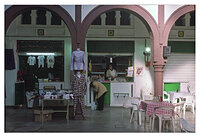
spanish market

A
spanish market

  • 0
  • 0
  • 10
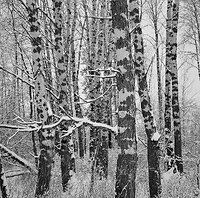
Paper Birch.jpg

H
Paper Birch.jpg

  • 0
  • 0
  • 23

Recent Classifieds

Forum statistics

Threads
203,059
Messages
2,849,285
Members
101,627
Latest member
GeorgeGGV
Recent bookmarks
1

bergytone

Member
Allowing Ads
Joined
Sep 8, 2014
Messages
168
Location
Grand Haven,
Format
Multi Format
I'm wondering if anybody has ever tried cutting photo paper to width and rolling it onto a film spool, say 120 size to allow for multiple shots with your paper negative shoots?

I acquired, on eboink a few years ago a rather large roll of 5" wide Ilford MGiV RC paper. It must have been meant for a processing machine to cut off 7" pieces at a time to make 5x7 prints. I thought I was bidding on a box of 5x7 paper, and you can imagine when I looked at finding out it is a 150 meter long roll of paper. It's aged nicely, probably ever so fogged, just ripe for paper negs.

Has anyone tried rolling up paper like this to make a multishot roll of paper negatives? Will the emulsion in the paper handle being curled so tightly, or will it crack? The hardest part will be cutting it to width under the safelight!:tongue:
 
Years ago I made a camera employing a roll of 4" wide paper, cut from 8x10 sheets and taped together using drafting tape on the reverse side. The film spools were 4" PVC pipe, with sheet aluminum flanges top and bottom. I had to also make a black paper backing strip, with frame numbers, and a red viewing window, similar to 120 film. A previous prototype used smaller diameter spools, causing the paper to be excessively curled.

~Joe
 
In war time paper based "camera film" was made for civil use.
 
I tried spooling up a scrap piece about a foot long onto a 120 reel, and Joe is right, it does curl quite a bit. But it relaxes quite a bit just sitting there, so I'm wondering if it will flatten a bit more once wet. I didn't see any obvious cracking on the emulsion. The next thing is to see if it will spool onto my Patterson spool without binding. I don't see why not, but because paper isn't as slippery as film, it may bind up.

horacekkenneth, I looked at that website, and it looks like they are indeed spooling paper onto 620 reels. There hasn't been much news on the site, so I wonder if it's still around.

It's going to be interesting to try to pre-flash a strip of paper two feet long.
 
if the film is narrow you might have trouble with the transport with smaller cameras.
i regularly spool my own paper on 122 size rolls ( for 3a postcard cameras ) and the winder
is a key and it is stiff to turn ... with 120 it is a lot of strain. maybe not for a few exposures
but for a handful .. maybe. if you coat your own film, or use a stash of single weight paper you
might have very little trouble.
with regards to your reel, just see saw the film in a tray, you can use the red light and make sure you
process the film enough. putting it on a reel is looking for trouble ..
good luck
 
One problem with paper negatives at 120 size is the contact print is a little small. Since they obviously can't go in the enlarger, the only option is to scan them and print them out enlarged (digital!) I'd like to avoid that, but I may have no choice.

jnanian, I also have a couple of 122 size cameras, a kodak and an ansco. They both have nice 'triplet' lenses, so they might just take reasonable shots. This might be a better option, rather than working on paper negatives at the smaller size.

What do you use for backing paper? I'd like to have the backing paper so I can still use the exposure count window. Has anyone found a source of a good, thin opaque backing paper? I realize for 120 size just use an old film backer, but for these giant sized negatives, I'm going to have to make something.
 
One problem with paper negatives at 120 size is the contact print is a little small. Since they obviously can't go in the enlarger, the only option is to scan them and print them out enlarged (digital!) I'd like to avoid that, but I may have no choice.

jnanian, I also have a couple of 122 size cameras, a kodak and an ansco. They both have nice 'triplet' lenses, so they might just take reasonable shots. This might be a better option, rather than working on paper negatives at the smaller size.

What do you use for backing paper? I'd like to have the backing paper so I can still use the exposure count window. Has anyone found a source of a good, thin opaque backing paper? I realize for 120 size just use an old film backer, but for these giant sized negatives, I'm going to have to make something.

Of course they can go in the enlarger. Especially if it's thinnish paper. Otherwise you can and i have peeled the paper neg to make it thinner and, it creates a lovely texture too.
 
One problem with paper negatives at 120 size is the contact print is a little small. Since they obviously can't go in the enlarger, the only option is to scan them and print them out enlarged (digital!) I'd like to avoid that, but I may have no choice.

jnanian, I also have a couple of 122 size cameras, a kodak and an ansco. They both have nice 'triplet' lenses, so they might just take reasonable shots. This might be a better option, rather than working on paper negatives at the smaller size.

What do you use for backing paper? I'd like to have the backing paper so I can still use the exposure count window. Has anyone found a source of a good, thin opaque backing paper? I realize for 120 size just use an old film backer, but for these giant sized negatives, I'm going to have to make something.

i don't use any backing paper, my ruby window is taped.
i have a lot of paper, i don't really care / worry if my spacing is a little off


good luck!
 
Last edited by a moderator:
I just rolled up my first roll of Ilford MGiV paper onto a 120 spool, and stuck it into my ol' Zeiss Ikonta 521/16. This is my first shot at lens based paper negatives. I've been reading as much as I can on this, and Joe VanCleave has a wealth of experience that he's shared. I'm going to just shoot some sunny scenes, doing some metering, bracketing and try the yellow filter held in front to see the effects. The sun is so low this time of year up here in the north, it's hard to find nice sunny scenes. I'll have to take lots of notes so I can best figure out exposures. I'm going to start with ASA12 as my meter setting.

The paper was measured to be the length of film, at 32 inches, and cut to width at 2 1/2 inches. When spooled up, it ended only slightly bigger diameter than a roll of film, but still fit in the camera. I did notice that it didn't want to stay wound up, it wanted to spring open and unwind. I wrapped it tightly and put a rubber band in it for a while and then it stayed put.

Stay tuned!
 
Maybe try 12 if you preflashed the paper ( or will post-flash it ). Try 3 when you use the yellow filter, again if preflashed. If you have a bulb setting, you don't need to wait for the sun, and might find less contrasty scenes to photograph. Have fun, it sounds great!
 
Ned, I already put it in the camera, so maybe post flashing will work. I use my enlarger to flash, so I'm not sure how to get the entire strip 32 inches long to flash. The enlarger, even at full height, only gives a circle of light about 20" in diameter. I think I'm going to have to work up a night light bulb hung from the ceiling to light up a larger area. I might even put it on a dimmer to control the amount of light better.
If I post flash, do I use the same time as pre-flash?
 
hi bergytone

what i tend to do is wind the paper on the spool and tape it there
and let it sit for a few days to get "memory of being spooled" it makes it
easier inside the camera :wink:

with regards to flashing the paper ...

you can use an opaque filter and pre flash his slides ... folks put a filter in front of the lens and make a blank exposure .. then make the actual exposure.
years ago a friend told me about this, i've never done it ( i never shoot slides ) but i can imagine it might be of help doing something similar
with paper negatives since it is pretty much the same concept.
ALL my paper negatives come from expired paper, so they might have a little bit of base fog which helps deaden the excessive contrast

here's a link from days gone by
(there was a url link here which no longer exists)

have fun !
john
 
Ned, I already put it in the camera, so maybe post flashing will work. I use my enlarger to flash, so I'm not sure how to get the entire strip 32 inches long to flash. The enlarger, even at full height, only gives a circle of light about 20" in diameter. I think I'm going to have to work up a night light bulb hung from the ceiling to light up a larger area. I might even put it on a dimmer to control the amount of light better.
If I post flash, do I use the same time as pre-flash?

Yes, I use exactly the same post-flash times as pre-flash. The results are very similar.

It will take a couple tests to figure out your flash time. My enlarger is pretty bright and I have to stop it all the way down and put stacked green and orange filters under the lens to get the times reasonable. Different papers need different amounts of flashing to get them "on the verge" of producing the tiniest off-white tone. For me, MGIV is about 25 seconds, Adorama VC about 17 seconds and Arista.edu VC (foma) is about 9 seconds.

Since paper is cheap and you've already loaded your camera, why don't you try without preflashing... around ASA 6 and about ASA 1.5 with the yellow filter. It's informative to try w and wo filter, w and wo flashing... gives you a feeling for what's happening!
 
Just went out today Ned, took some bracketed shots at ASA12, and then yellow filtered at ASA3. Another variable is the ol' Zeiss Ikonta's shutter probably isn't too calibrated, and I have a hunch in the cold (28F) here it may even be a little more sluggish.

I need to hurry up and build my shutterspeed tester to at least get rid of one variable! This is my first attempt at lens based paper negatives, so it's nothing more than a starting point.

But the bottom line is... I'm having fun, and it's a kick to explain to people with their $1000 Canon cameras what I'm doing with a mid century folding camera. The one question they always ask is... so you don't see your picture until later?
 
I doubt my shutters are accurate, they only go down to 1/25 I think. But my guess for ASA has worked when extended out to several seconds on B, and it seems right across several cameras. With a tripod and shutter release cable, a good trick if you need say 1/5 second is just to click the shutter 5 times on 1/25.

I think of paper negatives as "instant gratification" since I can come home and develop and see them right away... and not wait to finish off a roll of film.

Have fun!
 
Here's an update on my paper negative roll. The shots came out nice, with some calibration needed with my old Zeiss Ikonta, so I had various exposure issues. The images are clear on the negative, but when I contact printed them, there was a slight loss in clarity. I'm not sure what's going on, maybe I wasn't pressing the two together hard enough. Anyway, the small size of the resulting prints makes contact printing not a good option.

If I can work out a way to enlarge them, the paper negative roll could be great. i've had a little dialogue with blindpig about his opaque enlarger... it looks like a great option, but a lot of work. I'm certainly not going to just give in to the digital monster and scan them and go to walgreens to print them. Putting them in the enlarger has issues with textures showing through.

So for the moment, I'm back to using film. And designing my darkroom!
 
You don't have to build the whole contraption that I did,just the box part might fit in place of your current enlarger lamp house.Much less of a build problem(maybe).
 
blindpig,
Do you feel that the image quality (sharpness and tonal range) rivals that of a conventionally made film negative based print? Before I spend the time (and money- I'll need to buy a nice lens) I'd like to know how the results will come out. Do you have any recent shots that were enlarged with your contraption that show off the clarity?

It seems like you might be the only one who has experimented with this... I don't see much info at all, either on APUG or on the web about these 'opaque' projectors... maybe I'm not searching for the right thing.
 
APUGers think of everything.

I thought of trying this so I took a used sheet just to try out. I cut out the 6x6 squares but decided to space them. I taped 7 squares on the odd frames to backing paper and rolled it up. I put it in my Lubitel 2 and it rolled on nicely. I think trying for 12 frames would be too much. I'm going to let it sit for a while too see if the paper cracks. Peeling off the layer of paper might work better only leaving emulsion.
 
RC paper might be a bit stiff for this, if you had a roll of single weight paper that might work well or some the lightweight Type A paper. A commercial solution might be the Washi "film" that Freestyle was selling for a while. http://filmwashi.com/products/
 
RC paper might be a bit stiff for this, if you had a roll of single weight paper that might work well or some the lightweight Type A paper. A commercial solution might be the Washi "film" that Freestyle was selling for a while. http://filmwashi.com/products/

Rolled some RC paper on to two spare backing papers I had. It was a bit of planning. First I hung up the papers on a wall and marked out in white crayola where the papers would go. I then made a template and traced on the back of an 8x10 sheet of Illford RC. Cut them all out and taped onto the hanging paper. One sheet got 6 the other I put squares on 1,3,5,7,9,10,11,12 to test out. I masking taped them down. It rolled back up without much problem. I rubber banded them and loaded the 6 shot into my Lubitel 2 for testing.

I don't have a hand held meter so this is going to be a complete guess on metering. I loaded it into the Lube because I know it can handle the strain. I don't want to break my M645 or Broni S2. I used RC because it's what I have so why not? The only issue I can see is trying to flatten the paper after I develop, I'm relatively new to the darkroom so I don't have any idea how to flatten RC paper.
 
RC paper might be a bit stiff for this, if you had a roll of single weight paper that might work well or some the lightweight Type A paper. A commercial solution might be the Washi "film"

Regular single weight paper is still available, one does not need to go the Washi-paper route.
 
Rolled some RC paper on to two spare backing papers I had. It was a bit of planning. First I hung up the papers on a wall and marked out in white crayola where the papers would go. I then made a template and traced on the back of an 8x10 sheet of Illford RC. Cut them all out and taped onto the hanging paper. One sheet got 6 the other I put squares on 1,3,5,7,9,10,11,12 to test out. I masking taped them down. It rolled back up without much problem. I rubber banded them and loaded the 6 shot into my Lubitel 2 for testing.

I don't have a hand held meter so this is going to be a complete guess on metering. I loaded it into the Lube because I know it can handle the strain. I don't want to break my M645 or Broni S2. I used RC because it's what I have so why not? The only issue I can see is trying to flatten the paper after I develop, I'm relatively new to the darkroom so I don't have any idea how to flatten RC paper.

i'd be careful putting rolled paper like that in your broni, it might put too much strain on your film advance mechanism ( clutch ) and do some damage to it.
i only do it with cameras i wind by hand ( kodak 1A, hand made cameras, graflex 3a ) because there is no clutch ... and it is hard to crank rc paper by hand too, nevermind
rc paper with another thickness of backing paper !

Regular single weight paper is still available, one does not need to go the Washi-paper route.

hi Agx, what single weight paper is there these days? not sure is slavich is making any anymore, and they were the last ones to make it IRRC...

john
 
Wephota still offers single-weight paper, likely made by Slavich.
 
Photrio.com contains affiliate links to products. We may receive a commission for purchases made through these links.
To read our full affiliate disclosure statement please click Here.

PHOTRIO PARTNERS EQUALLY FUNDING OUR COMMUNITY:


Ilford ADOX Freestyle Photographic Stearman Press Weldon Color Lab Blue Moon Camera & Machine
Top Bottom
