
• Welcome to Photrio!
    Registration is fast and free. Join today to unlock search, see fewer ads, and access all forum features.
    Click here to sign up

paper gelatin / alum sizing, multitude of recipes

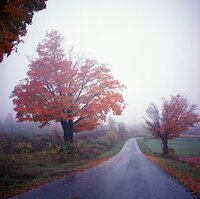
Rainy Day Trees

A
Rainy Day Trees

  • 6
  • 1
  • 94
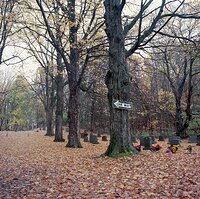
One Way

A
One Way

  • 3
  • 1
  • 93

Recent Classifieds

Forum statistics

Threads
203,157
Messages
2,850,719
Members
101,703
Latest member
yppnq
Recent bookmarks
1
Well, there goes that money down the drain - I bought the wrong kind, Pot Alum. Does the bloom of the gelatin make any difference to the hardening properties?

Not necessarily money down the drain!
Potassium Aluminum Sulphate DOES harden gelatin, just not to the same degree as chrome alum, it's quite usable. There are many factors at play when it comes to 'hardening' gelatin besides the 'bloom' (bone/skin, porcine,bovine, extraction method, pH, time, temperature etc.,). Try out some different formulae to discover what works for you.
 
Not necessarily money down the drain!
Potassium Aluminum Sulphate DOES harden gelatin, just not to the same degree as chrome alum, it's quite usable.

Thanks, then I can sleep well at night again. :smile:
 
There's two alums used in hardening gelatin, plain Alum a generic term usually means Potassium Aluminium Sulphate and it's used mainly in hardening fixers but only works in acid solution lower than about pH5.

The other, Chrome alum, is Potassium Chrome Sulphate which has greater hardening properties and is used in commercial film & paper emulsions as well as for Gelatin subbing layers.

Both Formaldehyde & Chrome alum work well when sizing with gelatin but the choice may depend on what the papers going to be used for.

Ian

Further evidence.... jeez, I guess I just should've read closer.
 
Quick question;

I'm going to size some cold press watercolor paper with gelatin. I have in my possession and want to use chrome alum, not formalin or glyoxal.

Is it necessry to include the alum in the gelatin, or can I soak the sized paper in it after the fact. How severe is the staining, as mentioned above by R Shaffer?
 
Anyone have any comments on hardening a plain-gelatin-coated watercolor paper in a chrome alum bath?
 
I'm going to size some cold press watercolor paper with gelatin. I have in my possession and want to use chrome alum, not formalin or glyoxal.

Is it necessry to include the alum in the gelatin, or can I soak the sized paper in it after the fact. How severe is the staining, as mentioned above by R Shaffer?

On my first attempt at sizing used alum - I went a bit over the top and added way too much potassium chrome alum and the paper came out with a very distinct blue tint. I now keep a bottle of 2% solution to hand and add 2ml per 100ml of gelatin (1g gelatin per 100ml water). At this dilution, the colour is barely perceptible when wet, and disappears on drying.

If you need a larger volume to soak your paper in, the sizing solution can be reheated two or three times.
 
Thanks Paul,

That seems to echo what Luis Nadeau says in his book on carbon. He also notes that manufacturers who use this method wait no less than a month for the gelatin to fully harden. That seems excessive... and impractical.

Can I soak a plain gelatin sheet in some % of chrome alum, or is incorporating it in the emulsion the only way to keep the stain at an imperceptible level?
 
To be honest, I'm no expert on sizing, but.... I would have thought it possible to do a subsequent soaking in a ~0.5% bath. However, if Nadeau states a month or more to reach fully hardened with chrome alum combined, then I would have expected a similar or longer time for a secondary bath.
 
Yeah, I fear you might be right. And who knows if such a low percentage bath would even be effective... not being integrated into the emulsion.

Maybe I should bite the bullet and get some formalin...
 
I have successfully hardened both Knox's gelatin and gelatin from Bostick and Sullivan with formalin and with Glyoxol, which is less ordorous than formalin. I've used this treatment for carbon, gum, and salted paper, although I prefer arrowroot starch for salted paper prints. I think aging the paper is important when making carbon prints, but not necessary for salting or gum.
 
Photrio.com contains affiliate links to products. We may receive a commission for purchases made through these links.
To read our full affiliate disclosure statement please click Here.

PHOTRIO PARTNERS EQUALLY FUNDING OUR COMMUNITY:


Ilford ADOX Freestyle Photographic Stearman Press Weldon Color Lab Blue Moon Camera & Machine
Top Bottom
