• Welcome to Photrio!
    Registration is fast and free. Join today to unlock search, see fewer ads, and access all forum features.
    Click here to sign up

Panoramic images: Half Dark Slide versus Dedicated Camera

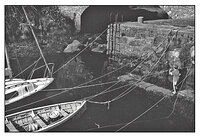
Boy and boats

A
Boy and boats

  • 1
  • 0
  • 8
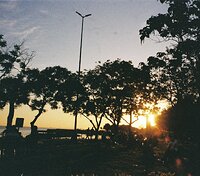
sunset.jpg

A
sunset.jpg

  • 0
  • 0
  • 21

Recent Classifieds

Forum statistics

Threads
204,364
Messages
2,867,597
Members
102,234
Latest member
Sagasha
Recent bookmarks
2

lowleft

Subscriber
Joined
May 10, 2026
Messages
50
Location
Colorado Springs CO
Format
Medium Format
I'm definitely in trying some larger format panoramic photos and my two options within a budget that won't get me divorced is getting a half dark slide ($32-ish) or 3d printing a camera that is capable of doing wide formats, like the Fat Shot X. I like the ability to change film wherever without a dark bag, and much cheaper film (~$4 per shot on 120 versus $6 per shot on 4x5 for portra 400) with way more options (please give Kodak Gold in sheet film). However using one camera for multiple styles is still easier, but I would never say no to another camera.
 
I do a variety of panoramic formats. I've never done the half-darkslide thing - It just feels like too many opportunities to introduce dust onto the film and operator error. I have the following cameras that do panoramic photos:
Canham 5x12 (probably the best option of the cameras I have if you want to do serious panoramic work, but definitely not budget friendly, nor is it compact or lightweight)
Vermeer 6x18 pinhole (one of the coolest, uses 120 film but you only get 4 shots per roll, plus the hemispheric film plane can create compositional challenges if you aren't paying attention)
Reality So Subtle 6x12 pinhole (another more compact panoramic camera, with a similar hemispheric film plane as the Vermeer, with similar compositional challenges)
Horseman 6x12 w/65mm Rodenstock lens (love the camera, but another definitely not budget-friendly option unless you get lucky like I did)
Holga Pan 6x12 panoramic (very budget friendly, with a lens a Holga fan would love - definitely some mild vignetting in the corners, and some blurriness/loss of sharpness in the corners, but not as much as you might want for a Holga).
A possible best-of-most-worlds solution for you might be to get a Holga Pan, remove the lens, and replace it with a vintage Schneider Angulon f6.8 90mm and a helical focus mount (or you could even set it up as focus-free and position the lens to give you infinity to a couple meters at f/16). Then you'd have a lightweight, inexpensive, portable, yet optically sharp panoramic camera.

 
I do a variety of panoramic formats. I've never done the half-darkslide thing - It just feels like too many opportunities to introduce dust onto the film and operator error. I have the following cameras that do panoramic photos:
Canham 5x12 (probably the best option of the cameras I have if you want to do serious panoramic work, but definitely not budget friendly, nor is it compact or lightweight)
Vermeer 6x18 pinhole (one of the coolest, uses 120 film but you only get 4 shots per roll, plus the hemispheric film plane can create compositional challenges if you aren't paying attention)
Reality So Subtle 6x12 pinhole (another more compact panoramic camera, with a similar hemispheric film plane as the Vermeer, with similar compositional challenges)
Horseman 6x12 w/65mm Rodenstock lens (love the camera, but another definitely not budget-friendly option unless you get lucky like I did)
Holga Pan 6x12 panoramic (very budget friendly, with a lens a Holga fan would love - definitely some mild vignetting in the corners, and some blurriness/loss of sharpness in the corners, but not as much as you might want for a Holga).
A possible best-of-most-worlds solution for you might be to get a Holga Pan, remove the lens, and replace it with a vintage Schneider Angulon f6.8 90mm and a helical focus mount (or you could even set it up as focus-free and position the lens to give you infinity to a couple meters at f/16). Then you'd have a lightweight, inexpensive, portable, yet optically sharp panoramic camera.

Is it fairly easy to remove the lens on the Holga Pan? I hadn't heard of this one yet, but semi-familiar with the cameras in general.
 
So the delta between 120 and 4x5 is $2. For me that wouldn’t be enough to justify a new camera as you have the 4x5. I love the occasional panoramic shot myself, I would crop to get it. Either before (my preference) or after exposure. Just a thought.
 
So the delta between 120 and 4x5 is $2. For me that wouldn’t be enough to justify a new camera as you have the 4x5. I love the occasional panoramic shot myself, I would crop to get it. Either before (my preference) or after exposure. Just a thought.

I guess it depends on how you look at it. A 50% increase in film cost in addition to like a 90% decrease in film options adds to it. Even when its made in both formats, 4x5 can easily experience production delays and issues.
 
Since no one has mentioned the elephant in the room, I will.

If you 3d print a camera you'll probably be limited to one lens or, perhaps, multiple lens cones, each with a helicoid.

If you want to use several focal lengths, a 4x5 camera (press, technical, view) with half dark slide might be preferable.

If you want negs longer than ~120 mm you'll probably want one lens on a printed camera or a 5x7er.

If you really want to use 120 film and are ready for divorce, consider getting a variable format roll holder that will fit a 4x5 camera.
 
If you can live with one lens, then the Holga Pan 120 mod with Schneider Super Angulon 90/6.8 has great quality/cost ratio. I made one myself, and love it. You can start with the built-in lens of the Holga Pan 120, and you might even like its lo-fi visual effects.

If you want to use more lenses and perspective controls of 4x5 camera, then the cheapest option right now might be the Intrepid Super 120 multi-format roll film back. I don't have experience with that yet.

Panoramic pinhole cameras are inexpensive and fun too.
 
Start with the cheapest option first (shoot and crop to pano), then try the half dark slide approach, then if you really like it and want to do much more, look for a pano roll film back for 4x5 (or 5x7). Most of the 3D printed pano cameras will be very limiting in terms of lens options and film transport quality, so better to just ease up to where you should be all along (LF camera + roll film back).
 
If you can live with one lens, then the Holga Pan 120 mod with Schneider Super Angulon 90/6.8 has great quality/cost ratio. I made one myself, and love it. You can start with the built-in lens of the Holga Pan 120, and you might even like its lo-fi visual effects.

If you want to use more lenses and perspective controls of 4x5 camera, then the cheapest option right now might be the Intrepid Super 120 multi-format roll film back. I don't have experience with that yet.

Panoramic pinhole cameras are inexpensive and fun too.

How difficult was the conversation? Seems like a good option if I don't spend too much on the lens haha.
 
Start with the cheapest option first (shoot and crop to pano), then try the half dark slide approach, then if you really like it and want to do much more, look for a pano roll film back for 4x5 (or 5x7). Most of the 3D printed pano cameras will be very limiting in terms of lens options and film transport quality, so better to just ease up to where you should be all along (LF camera + roll film back).

Yeah I just ordered a half dark slide, that'll be fun to use and test.
 
You can do the calculations for each option to determine which one ends up costing the least for the number of photos you intend to take.

For example, if you only intend to take <8 photos it costs less to shoot full 4x5 sheets and crop them, but if you’re going to shoot >8 sheets it costs less per shot to get the half dark slide.

And if you’re going to shoot <374 shots it costs less to use the half dark slide, but if you’re gonna shoot >375 shots it costs less to spend $500 on a 6x12 roll film back for your 4x5 camera.

I didn’t include the cost of processing in my calculations because I don’t know how much it costs you to have your film processed, but you could include that in your calculations very easily.
 
Photrio.com contains affiliate links to products. We may receive a commission for purchases made through these links.
To read our full affiliate disclosure statement please click Here.

PHOTRIO PARTNERS EQUALLY FUNDING OUR COMMUNITY:


Ilford ADOX Freestyle Photographic Stearman Press Weldon Color Lab Blue Moon Camera & Machine
Top Bottom