

• Welcome to Photrio!
    Registration is fast and free. Join today to unlock search, see fewer ads, and access all forum features.
    Click here to sign up

Overdeveloped or overexposed

Recent Classifieds

Forum statistics

Threads
202,891
Messages
2,847,110
Members
101,531
Latest member
F2_User
Recent bookmarks
0

Jessestr

Member
Allowing Ads
Joined
Mar 31, 2014
Messages
399
Format
35mm
Hi all

I've been working a project for 2 years now and it's the first time I've come to this point. I went shooting and all my scans looked overexposed or overdevloped. I've noticed the negatives looked way dense then my other shots but how can I tell it's overdeveloped or overexposed? I metered the same way I always do and I developed the same way like last two years. So either temperature of the developer was too high or metering was fault... But I doubt both. Also same camera...

Hope you can help me.

Either three things:
- I messed up metering, but I check at home with other meters and I do it correctly
- I messed up developing... could be higher temperature but doubtful
- Camera's shutter is inaccurate... but very doubtful, previous week it was doing fine

Left negative is from today (way too dense overdevved or overexposed) and right negative sheet is from other day with good exposure/development.


Thanks
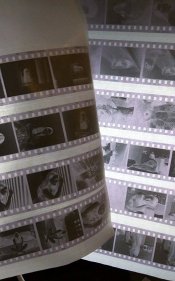
 

Attachments

  • 702889_1646448255594308_1107394962_n.jpg
    702889_1646448255594308_1107394962_n.jpg
    367.5 KB · Views: 1,214
if you shoot 135, look at the shot count numbers imprinted along the edge
 
if you shoot 135, look at the shot count numbers imprinted along the edge

Compared to other previous shoots with good results the numbers look way darker. What should the density be of the frame numbers?
 
I'd say over developed. If it was overexposed you wouldn't have nearly clear shadow areas in the negative which appear to be there for dark parts of the subject on the left set of negs. And that ties up with what wiltw is saying, i.e. the numbers which don't get any exposure are developed out more.
 
What developer are you using? Some will actually get more active over time. D76 used to do this to me.

Look on the bright side. Over is better than under, whether it be development or exposure. You can still get a good print. It's when things are under that you have problems, as you just can't print what isn't there on the neg to begin with.
 
What developer are you using? Some will actually get more active over time. D76 used to do this to me.

Look on the bright side. Over is better than under, whether it be development or exposure. You can still get a good print. It's when things are under that you have problems, as you just can't print what isn't there on the neg to begin with.

HC-110 dil B
Tri-X 400 , it's fresh.

Been checking older negatives, some have the same problem, but not as much as today.
The frame numbers are transparant on most of the negatives, on some its way denser
 
not sure you're image is a fair comparison? The sheet on the right looks to be on the lightbox (?) and the left sheet well in front?

can you do another with them equal distance from the light source?
 
not sure you're image is a fair comparison? The sheet on the right looks to be on the lightbox (?) and the left sheet well in front?

can you do another with them equal distance from the light source?

it's my pc screen haha, but even when equal it's easy to see they differ very much.
cant take a good picture at same distance at the moment.

as others have said, I checked the frame numbers and they look denser. So I got into my archives, took negatives with dense frame numbers and normal frame numbers... and yes overdeveloped it is. I guess I should use my thermometer again with black and white...
 
are you located in europe by any chance and was it new bottle of hc110 becasue some sizes in europe are different strength than other sizes and require less or more developer. I think 1 litre bottles are full strength and 500ml bottles lower strength so shouldn't be diluted as much as the stronger stuff. i.e. if you have switched size of developer bottle you need to read what the dilutions should be becasue they ain't always the same.
 
My guess is overdeveloped. Overdevelped films have high density but also have high contrast. These look a bit contrasty. Overexposed films have normal contrast but are dense and often have blocked up highlights. I don't see that here.
 
HC-110 dil B
Tri-X 400 , it's fresh.

Been checking older negatives, some have the same problem, but not as much as today.
The frame numbers are transparant on most of the negatives, on some its way denser

When the frame numbers are denser on certain negs but not on all, then it's a development issue.
Most likely temperature, agitation changes. Just put your darkroom routine in order and everything will be fine.
 
HC110 TriX combo for dilution B is hot and easy to overdevelop with relatively small increases in time, temp, and probably agitation. It's also easy to mix imprecisely.
 
I'm with Saganich on his comments about dilution B. While I would not recommend changing horses in mid-stream in regard to your project, I use dilution H (1+63) partly because I'm doing it on a one shot basis, but also because of the potential variations with the higher concentrations and shorter processing times. The 400TX datasheet I have here calls for developing times down in the 3 minute range at 75ºF in dilution B. And below the chart there is a line: "Note: Tank-development times shorter than 5 minutes may produce unsatisfactory uniformity."

So obsessively precise darkroom methods are in order (at least until you learn what you can get away with!)

(I am surprised that the sheet I have doesn't seem to list times for normal roll films in some of the intermediate dilutions; I'm thinking it used to.)
 
I also use HC-110 and also use a more dilute solution (1+49) which gives a nice reasonable 8 mins for Tri-X at 20/68. Much more forgiving of small changes in dev time and temp.
 
are you located in europe by any chance and was it new bottle of hc110 becasue some sizes in europe are different strength than other sizes and require less or more developer. I think 1 litre bottles are full strength and 500ml bottles lower strength so shouldn't be diluted as much as the stronger stuff. i.e. if you have switched size of developer bottle you need to read what the dilutions should be becasue they ain't always the same.

Did you read this on the internet? It must be true, but
It seems there's only one Kodak data sheet for the film*.

* I didn't spend a lot of time looking though.
 
Did you read this on the internet? It must be true, but
It seems there's only one Kodak data sheet for the film*.

* I didn't spend a lot of time looking though.

http://www.covingtoninnovations.com/hc110/

I knew this to be fact some years ago and it was common knowledge. I haven't checked to see if its still the case.

There should be a little booklet stuck onto the 500ml bottle with dilutions to give B etc working solutions. i.e. check what it says on the packaging.

[edit]

I just did a check on a few european supplier sites and I didn't find the 500ml on sale so maybe its no longer being produced. I don't know for sure.
 
Last edited by a moderator:
Ok so it was overdevelopment. I should be more careful next time.
I process for 6m30s and agitate very gentle.

Thanks for all the feedback
 
To me the ones on the left are a tiny bit "hot" (= overdev). The ones on the right look pretty "soft" (=underdev) to me...

A densitometer will put an end to your existential torment! :laugh:
 
Ok so it was overdevelopment. I should be more careful next time.
I process for 6m30s and agitate very gentle.

Thanks for all the feedback

hate to suggest this,
but have you had your camera's shutter worked on or CLA'd between the time you started your project and now ?
have you run a "test roll/s" through your camera and developer to get your best exposure and development times?
i ask because its not hard for a camera's speeds to drift and offer up a different exposures than what it was "originally"
this is why professinals ( and a few people buying used gear off of the inter web ) get cla's for their shutters, some more often than others.
the best way to get consistent negatives the way you hope them to be ... is to get shutters looked at about once a year, and keep tight controls
on development times temperatures and stock solutions ..

have fun !
john
 
hate to suggest this,
but have you had your camera's shutter worked on or CLA'd between the time you started your project and now ?
have you run a "test roll/s" through your camera and developer to get your best exposure and development times?
i ask because its not hard for a camera's speeds to drift and offer up a different exposures than what it was "originally"
this is why professinals ( and a few people buying used gear off of the inter web ) get cla's for their shutters, some more often than others.
the best way to get consistent negatives the way you hope them to be ... is to get shutters looked at about once a year, and keep tight controls
on development times temperatures and stock solutions ..

have fun !
john

Hey! I have not.. I used a about three cameras in the project. leica m6 at start, then nikon f100 for about 6 months and then switched to a nikon fe for 6 months... so the negatives (also on color) are always exposed well... I guess it was just overdevelopment since I have to add a lot of contrast (grade 4) into the negatives and compensate under the enlarger.
 
I use to develop HC-110 Dil B for 5 1/2 minutes at 68-70 degrees. I mostly use dilution H now. You need to keep developer temperature, the rest of the chemistry and wash water within about 3 degrees...always use a thermometer to be sure of this. You could be all over the map otherwise.Over developed and/or overexposed negatives will always be more dense, less sharp and more grain..
 
I guess it was just overdevelopment since I have to add a lot of contrast (grade 4)

Over developed negatives should (in general) require a softer contrast grade (1 or 0) of paper.
 
Photrio.com contains affiliate links to products. We may receive a commission for purchases made through these links.
To read our full affiliate disclosure statement please click Here.

PHOTRIO PARTNERS EQUALLY FUNDING OUR COMMUNITY:


Ilford ADOX Freestyle Photographic Stearman Press Weldon Color Lab Blue Moon Camera & Machine
Top Bottom
