• Welcome to Photrio!
    Registration is fast and free. Join today to unlock search, see fewer ads, and access all forum features.
    Click here to sign up

Omega Dii condenser question...

Train

A
Train

  • 1
  • 1
  • 21
Train Station 1

A
Train Station 1

  • 0
  • 0
  • 22

Recent Classifieds

Forum statistics

Threads
201,784
Messages
2,830,152
Members
100,946
Latest member
李添翼
Recent bookmarks
0

Anthony Zingre

Member
Allowing Ads
Joined
May 13, 2023
Messages
17
Location
Albuquerque
Format
4x5 Format
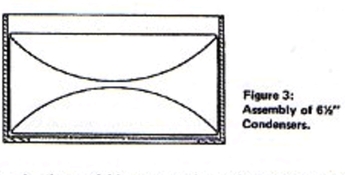
Of the two condenser lens present in the housing, one has more of a flatter, pancake shape compared to the other and has no edge roll when compared to the thicker lens which has an edge about 3/16ths thick. You know, one of these things ain't like the other and if I had a better way to measure the thicknesses of the two, I would... but alas, no. They are just different.
Anyway, and assuming the two lenses have been removed and replaced for cleaning about a gagillion times over the past eighty years, my question is, which one goes in first? I'm including the drawing from a service manual and maybe it's my eyes but the flatter lens looks to be on top, which is the exact opposite of the way it came out of the housing I own. The other thing that has me questioning this is the assembly instructions for the Dii refer to a lens 1 and a lens 2 in boxes.
I just bought this Omega and I will figure this out but purchased the enlarger for conversion to a 380nm UVA light source. First, I'm not looking into a 100w 380nm COB LED beam and expect to have an optical nerve left and would like to and second, I cannot see the beam anyway unless it's bouncing off a fluorescent source, which is a terrible way to see Newton rings or some aberration anyway. I'd have to reassemble to its original condition and start at square one. Which seems like a terrible thing for a lazy artist to have to do. 😅 So... anyone familiar with these enlargers got an idea so I don't need to remove two power supplies, fan tower and other assorted thingamadoodles and bless me with a little knowledge?

Thanks!
 

Attachments

  • Screenshot_20230524-191516_Adobe Acrobat-01.jpeg
    Screenshot_20230524-191516_Adobe Acrobat-01.jpeg
    81.1 KB · Views: 71

Bill Burk

Subscriber
Allowing Ads
Joined
Feb 9, 2010
Messages
9,463
Format
4x5 Format
I never heard they were anything but identical. I’d put the best one nearest the film (one of mine had a few bubbles and the other didn’t- so good side down.
 
OP
OP
Anthony Zingre

Anthony Zingre

Member
Allowing Ads
Joined
May 13, 2023
Messages
17
Location
Albuquerque
Format
4x5 Format
Thanks, Bill. Personally, I'd not heard this either and the big concern being the overall collomated (sp?) position of the two lenses. That, I suppose, merely reducing what Newton rings might be forming and not much else. Mine, however, look to be different. I'm taking them into work today to measure the overall thickness and see if anyone else notices the spherical difference that my wife and I noticed. I came up with a plan for checking the light difference with the two lenses in different positions. Hopefully I won't see a difference.

Thanks again, Tony.
 

ic-racer

Member
Joined
Feb 25, 2007
Messages
16,728
Location
USA
Format
Multi Format
purchased the enlarger for conversion to a 380nm UVA light source

Do those condensers pass UV light?
 
Last edited:
OP
OP
Anthony Zingre

Anthony Zingre

Member
Allowing Ads
Joined
May 13, 2023
Messages
17
Location
Albuquerque
Format
4x5 Format
At this point I'm going to say no. That said I have not tested it. The fan tower and power supplies are in place and I'm waiting for the COB to arrive. I say no but a gentleman on YouTube, Prussian Blue, converted his 4×5 Beseler, about the same age unit as my Omega Dii, and plows the light straight through his condenser. So... for now, I'm leaving the condenser in place. If it doesn't work, no problem. I'll remove the glass and utilize an on COB 60° lens.

Tony
 

Donald Qualls

Subscriber
Allowing Ads
Joined
Jan 19, 2005
Messages
12,540
Location
North Carolina
Format
Multi Format
Do those condensers pass UV light?

I'm sure they'll pass some -- the question is what attentuation they have (and whether that results in uneven exposure due to the varying thickness of the glass).
 
OP
OP
Anthony Zingre

Anthony Zingre

Member
Allowing Ads
Joined
May 13, 2023
Messages
17
Location
Albuquerque
Format
4x5 Format
Do those condensers pass UV light?

Hello, ic-racer. Not sure why your second comment didn't make it here but did on my email, but, good advice. I may be chasing unicorns but, light is light is light. If the condenser is blocking too much UV, there are ways of spreading that light out evenly. As a matter of fact, I'm guessing no lens on the UV COB might actually work better. Two lens are available, a 60° and a 120°. The COB itself emits UV over 140°. I'm assuming Prussian Blue on YouTube is using the 60° lens to concentrate light off the emitter, blast it through the condenser, and hope to have as much UV radiation at the paper as possible. If the condenser wasn't there to block UV and no lens on the emitter was there to block UV, the only thing keeping energy away from the paper is the enlarger lens. But that lens is acting to concentrate UV. It'd have to. It's focusing light at the neg plate. So, maybe all of this is mute. Just fire up the COB and remove all the extraneous lenses, except, obviously, the enlarging lens and get as much radiative energy to the paper as possible. What will be the only factor, because the COB is emitting even UV at 140°, is the loss of energy over distance. I don't think there will be hot spots with this particular COB. And what about reflectance inside the light head before reaching the negative plate? I'm rambling...sorry.
 
OP
OP
Anthony Zingre

Anthony Zingre

Member
Allowing Ads
Joined
May 13, 2023
Messages
17
Location
Albuquerque
Format
4x5 Format
I'm sure they'll pass some -- the question is what attentuation they have (and whether that results in uneven exposure due to the varying thickness of the glass).

My question too. Maybe it would be better to just remove the condenser lenses entirely. I'm going to find out in about a week.
 

Donald Qualls

Subscriber
Allowing Ads
Joined
Jan 19, 2005
Messages
12,540
Location
North Carolina
Format
Multi Format
My question too. Maybe it would be better to just remove the condenser lenses entirely. I'm going to find out in about a week.

Another option might be to try to obtain same-size (or slightly more convex) lenses in acrylic -- potentially Fresnel sheets would work, like whole-page magnifiers cut to fit the space. One at top, one at bottom, with the light source one sheet's focal length above the top sheet.
 

ic-racer

Member
Joined
Feb 25, 2007
Messages
16,728
Location
USA
Format
Multi Format
Hello, ic-racer. Not sure why your second comment didn't make it here but did on my email, but, good advice. I may be chasing unicorns but, light is light is light. If the condenser is blocking too much UV, there are ways of spreading that light out evenly. As a matter of fact, I'm guessing no lens on the UV COB might actually work better. Two lens are available, a 60° and a 120°. The COB itself emits UV over 140°. I'm assuming Prussian Blue on YouTube is using the 60° lens to concentrate light off the emitter, blast it through the condenser, and hope to have as much UV radiation at the paper as possible. If the condenser wasn't there to block UV and no lens on the emitter was there to block UV, the only thing keeping energy away from the paper is the enlarger lens. But that lens is acting to concentrate UV. It'd have to. It's focusing light at the neg plate. So, maybe all of this is mute. Just fire up the COB and remove all the extraneous lenses, except, obviously, the enlarging lens and get as much radiative energy to the paper as possible. What will be the only factor, because the COB is emitting even UV at 140°, is the loss of energy over distance. I don't think there will be hot spots with this particular COB. And what about reflectance inside the light head before reaching the negative plate? I'm rambling...sorry.

I initially missed the part about UV and removed the part about using visible light to test to condenser combination.
 

ic-racer

Member
Joined
Feb 25, 2007
Messages
16,728
Location
USA
Format
Multi Format
Another option might be to try to obtain same-size (or slightly more convex) lenses in acrylic -- potentially Fresnel sheets would work, like whole-page magnifiers cut to fit the space. One at top, one at bottom, with the light source one sheet's focal length above the top sheet.

There was a previous thread with just that:
img-20210415-wa0005-jpeg.274170
 

Donald Qualls

Subscriber
Allowing Ads
Joined
Jan 19, 2005
Messages
12,540
Location
North Carolina
Format
Multi Format
OP
OP
Anthony Zingre

Anthony Zingre

Member
Allowing Ads
Joined
May 13, 2023
Messages
17
Location
Albuquerque
Format
4x5 Format
I want to thank all three of you. The last two comments gave me some real food for thought. Going with Bill's idea to just drop the lenses in place and see what happens in both directions by testing for attenuation of UVA at the print surface. Still waiting for the COB.
 
Photrio.com contains affiliate links to products. We may receive a commission for purchases made through these links.
To read our full affiliate disclosure statement please click Here.

PHOTRIO PARTNERS EQUALLY FUNDING OUR COMMUNITY:


Ilford ADOX Freestyle Photographic Stearman Press Weldon Color Lab Blue Moon Camera & Machine
Top Bottom