You can easily achieve the exposure times you want with ND gels, why the headache about using a 2 instead of a 3?
I print with a constant black level. Grade 3 is the grade I use to determine exposure time with the film base plus fog to get an acceptable black level. From there, it’s fairly straight forward to use the paper’s ISO Range rating to calculate the exposure times for each contrast grade, so you control the highlights of the image with the contrast.
For example, if the grade 3 exposure came out to 10 seconds, then using the ISO range of MGIV, grade 2.5 would be 13 seconds, grade 2 would be 16 seconds, grade 1.5 would be 20 seconds, grade 1 would be 26 seconds, grade 0.5 would be 39 seconds, grade 0 would be 52 seconds, and grade 00 would be 86 seconds.
Each of those times at their respective grades with film base plus fog would produce a max black (or close enough to it) that is the same.
So, in practice, at the start of a roll, do 1 test strip at grade 3 with the FB+f to determine your exposure time (10 seconds for example), put the grade 2 filter in and set the time to 16 seconds and start printing frames. If you hit a frame that is too contrasty or too dull, adjust the grade and exposure and re-print it.
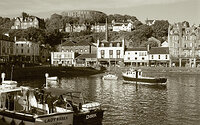
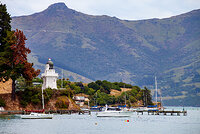
Printing at a constant black level also gives an easy way to deal with film that you over exposed. You simply add exposure time to that base time that matches the amount you shot over the film speed, so for example, with fomapan 200 (shot with the images above) I shot it at 100, but with my developer and development time it’s real speed is 125-160, so once I do that initial exposure, I flip the timer from 1.0x to 0,1x and kiss it with 4 bursts (4/10th of a stop).
Simple, straightforward, and it works, especially if you’re printing roll film.