




Andreas Thaler
Subscriber
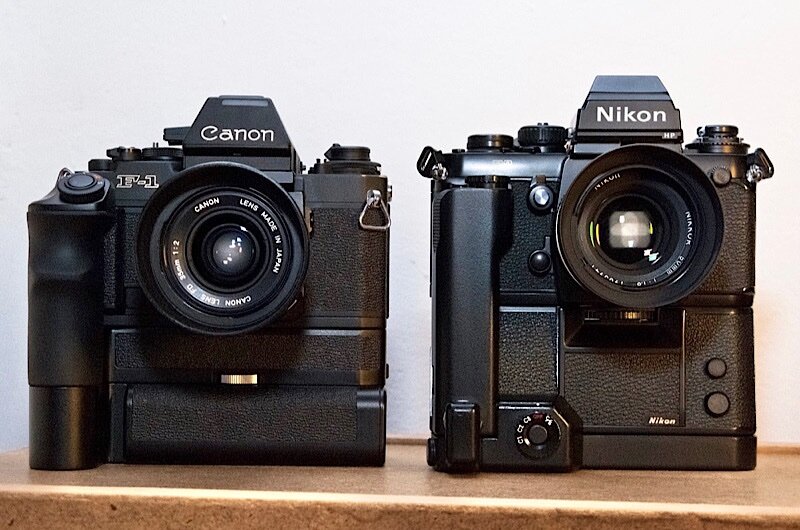
Two flagships and rivals of the 1980s:
Canon New F-1 with Motor Drive FN and Nikon F3 with MD-4 and MK-1, which is mounted below the motor drive.
The Nikon F3 and its exclusive motor drive MD-4 are a perfectly matched pair.
The MD-4 not only cocks the shutter and transports the film, but also makes the F3 more comfortable to hold.
In continuous (C) mode, the MD-4 speeds up the film to 5.5 fps (frames per second), powered by eight AA batteries.
Nikon MK-1: Speed control and shutter release in portrait format
However, you don't always need that much speed, so the Nikon MK-1 firing rate converter is the third in the group.

It reduces the film transport speed to either 1, 2 or 3 fps or leaves it at 5.5 fps. It also offers a second shutter release with which the F3 can be conveniently fired in portrait format.
The MK-1, which is fixed to the underside of the MD-4 using two screws, does not require additional batteries.
A look inside and repair of the trigger
Now available in sufficient numbers on the used market, the MK-1 is an accessory that is made of metal just as solidly as the F3 and MD-4.
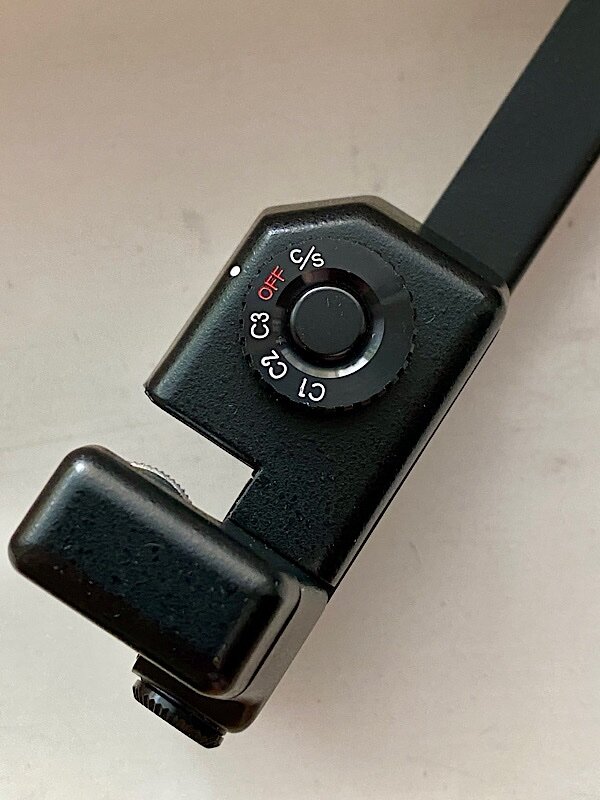
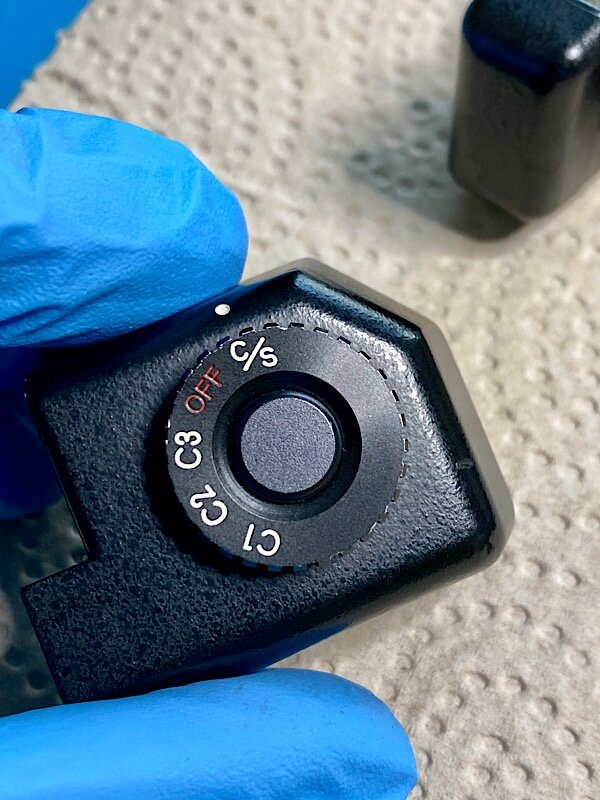
Nikon MK-1, control wheel with shutter release in the middle:
Set the motor speed to 1 frames per second (C1), 2 fps (C2), 3 fps (C3) or film transport at full speed of 5.5 fps (C/S).
OFF locks the shutter release, the film transport speed remains at 5.5 fps provided by the MD-4.
I own a few of these, some of them heavily used, which do their job perfectly.
However, the shutter release on one of them no longer works reliably.
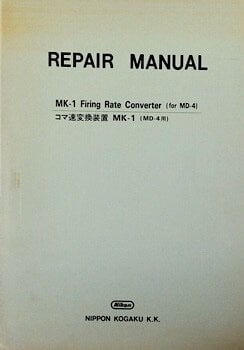
A good opportunity to take a look inside the MK-1 and familiarize yourself with the Nikon Repair Manual for the MK-1.
I was able to acquire the only one (original, no reprint) that was offered on eBay

Nikon MK-1 firing rate converter at mir.com.my:
Nikon MD-4 Motor Drive - Part V
Nikon MK-1 firing rate converter instruction manual, PDF user manual
Disassembly
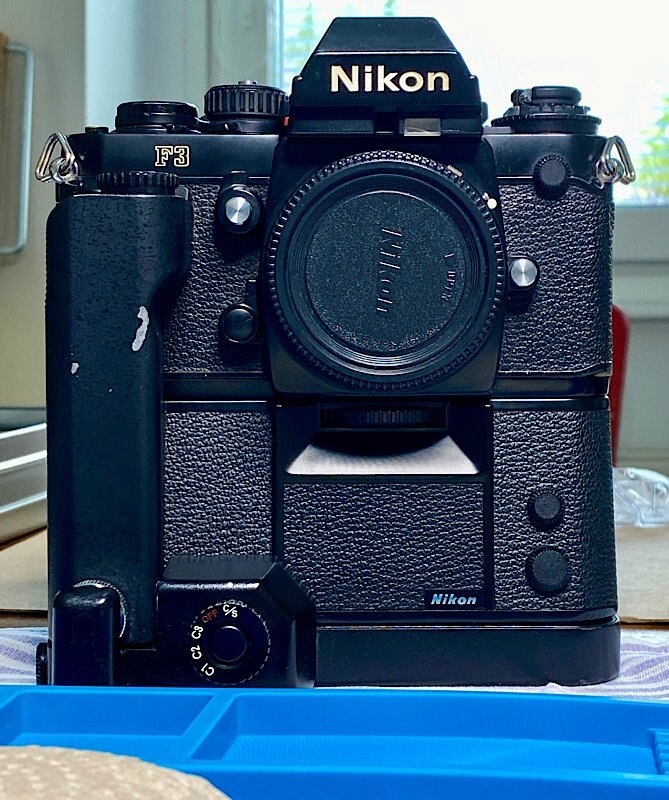
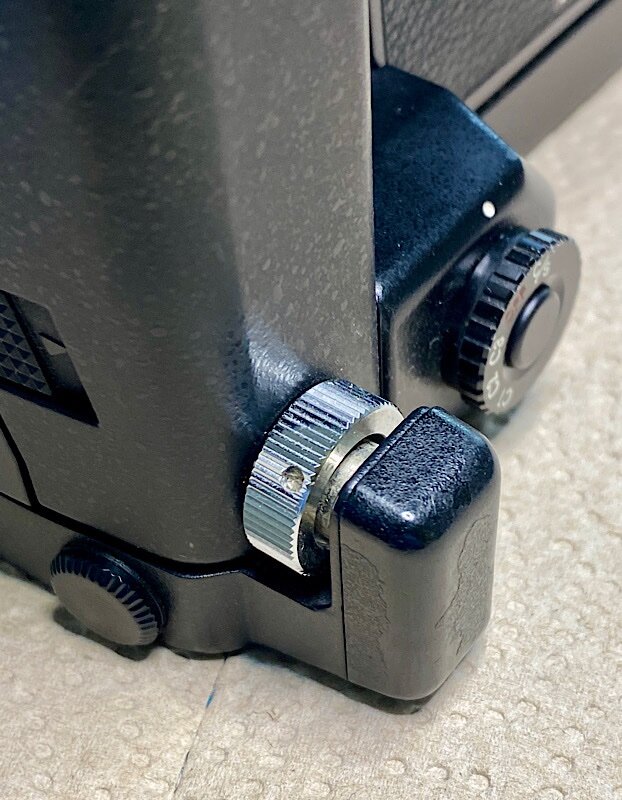
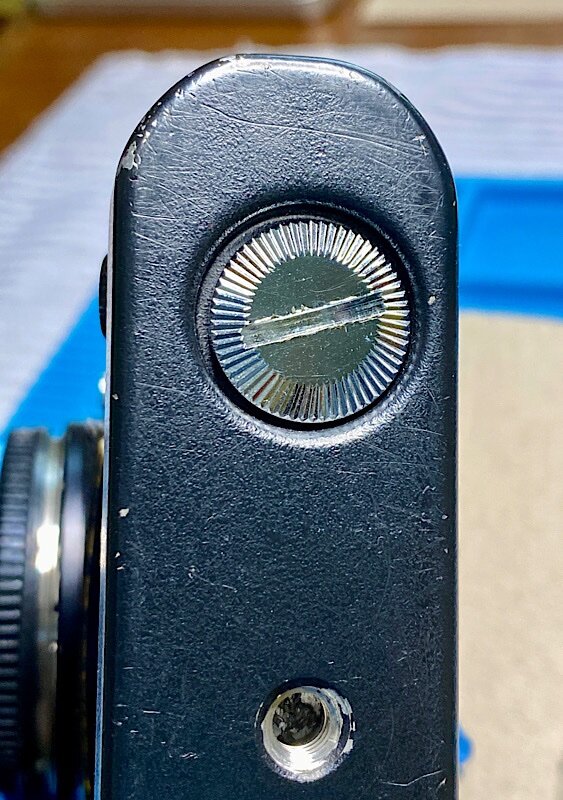
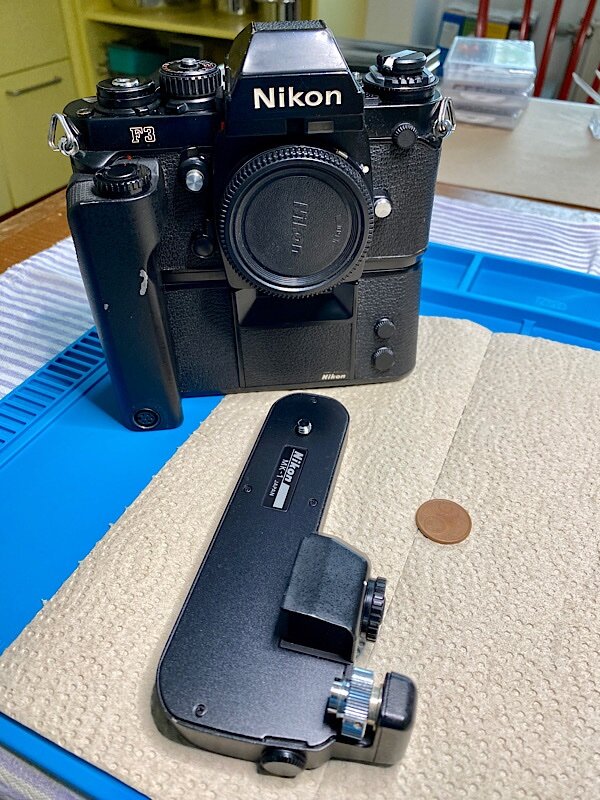
The MK-1 is fixed to the bottom of the Motor Drive MD-4 with two screw connections, which according to the user manual should be loosened or tightened in a specific order, see:
Nikon MK-1 firing rate converter instruction manual, PDF user manual
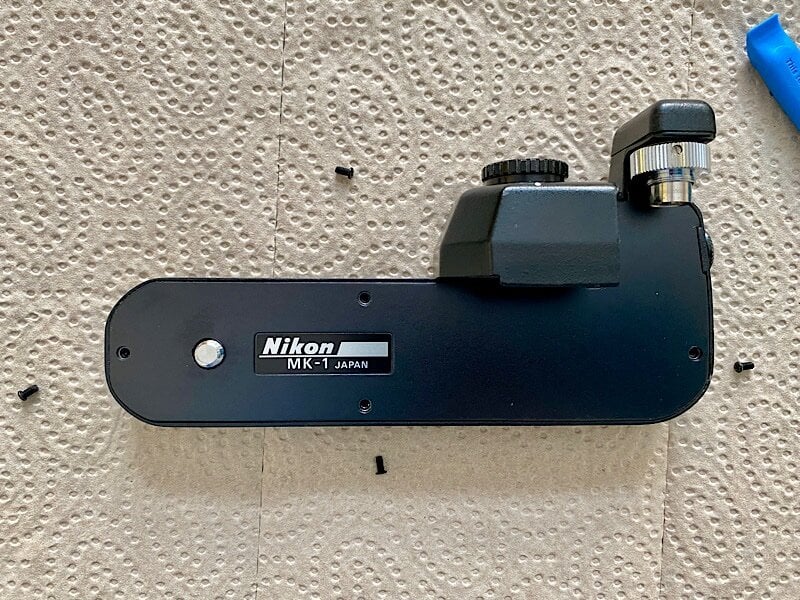
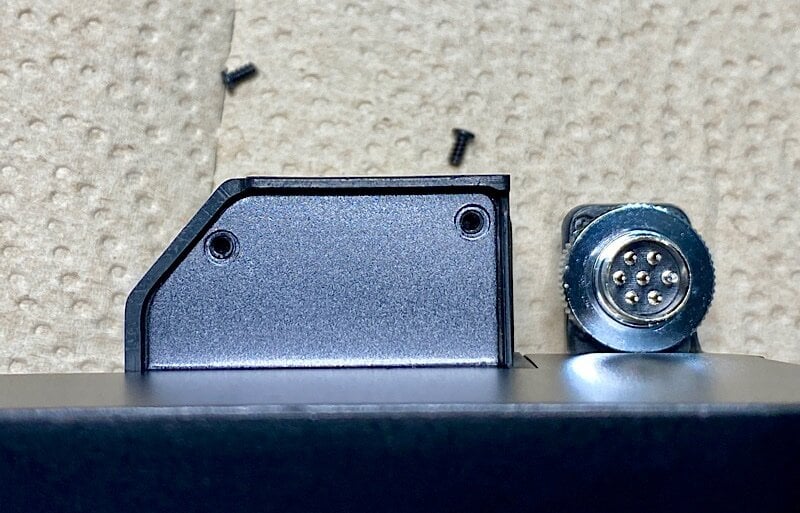
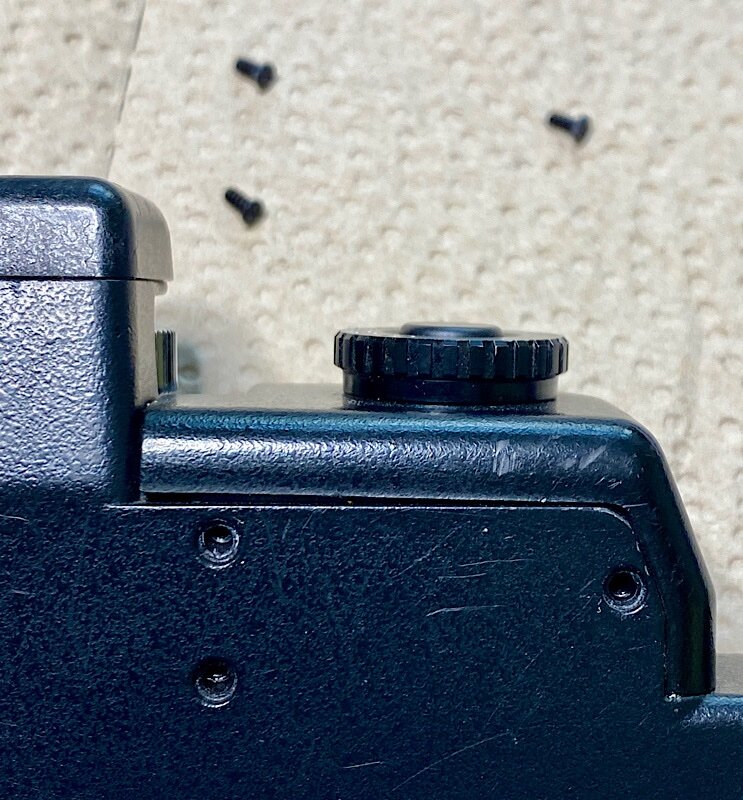
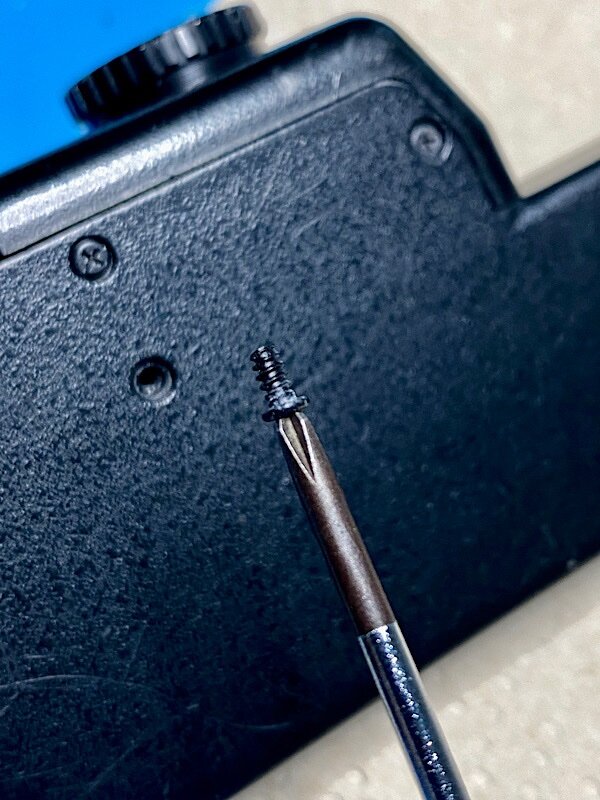
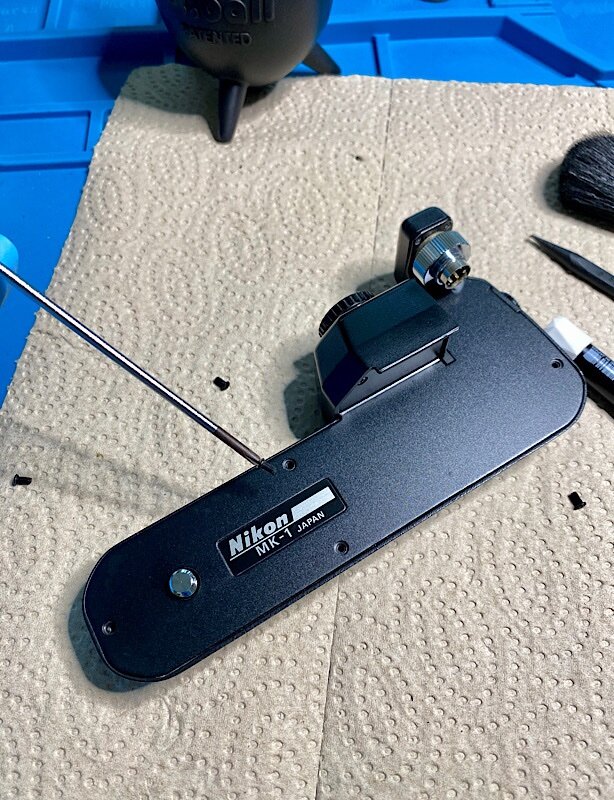
Loosening the screws.
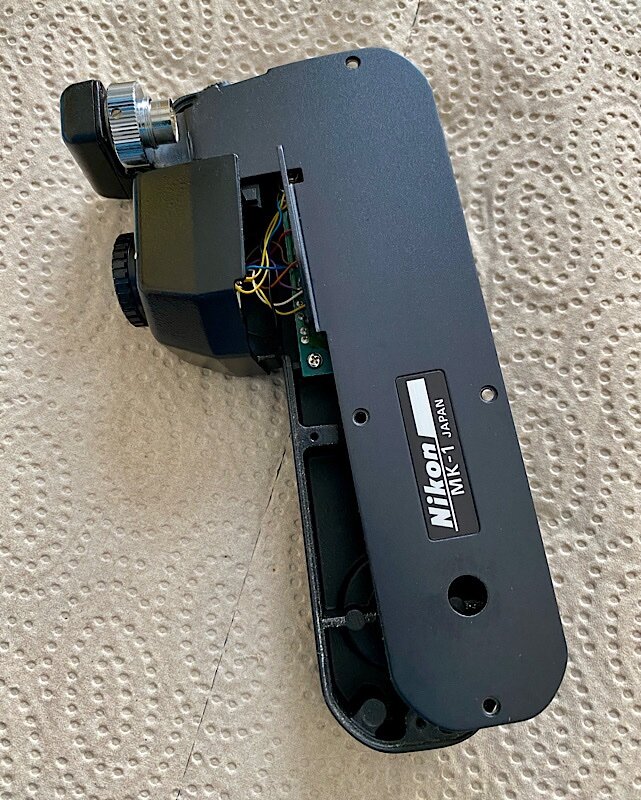
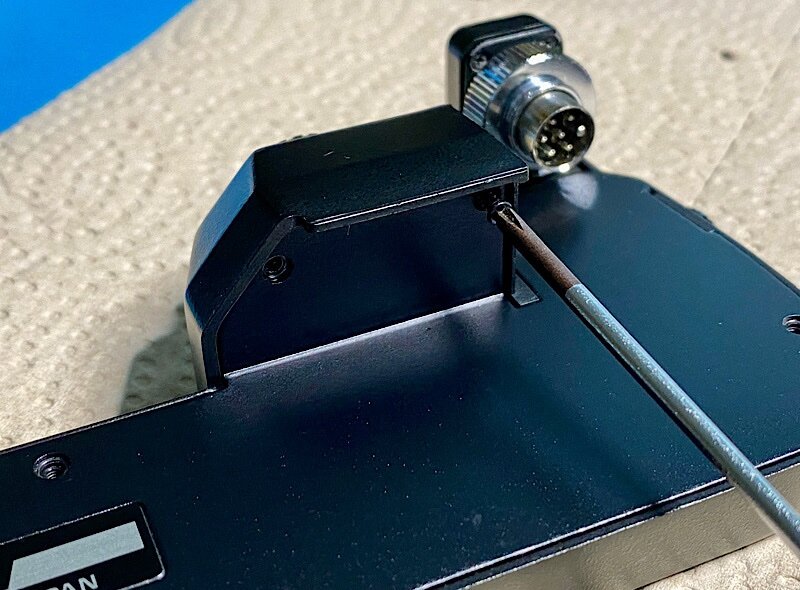
Removing the upper cover plate.
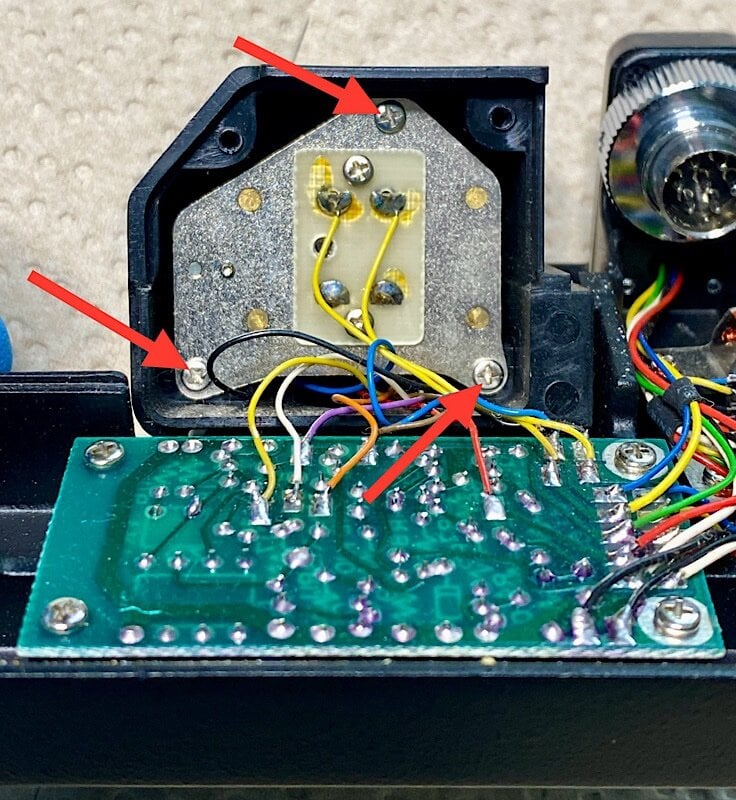
To remove the assembly with the switch, these three screws are loosened.
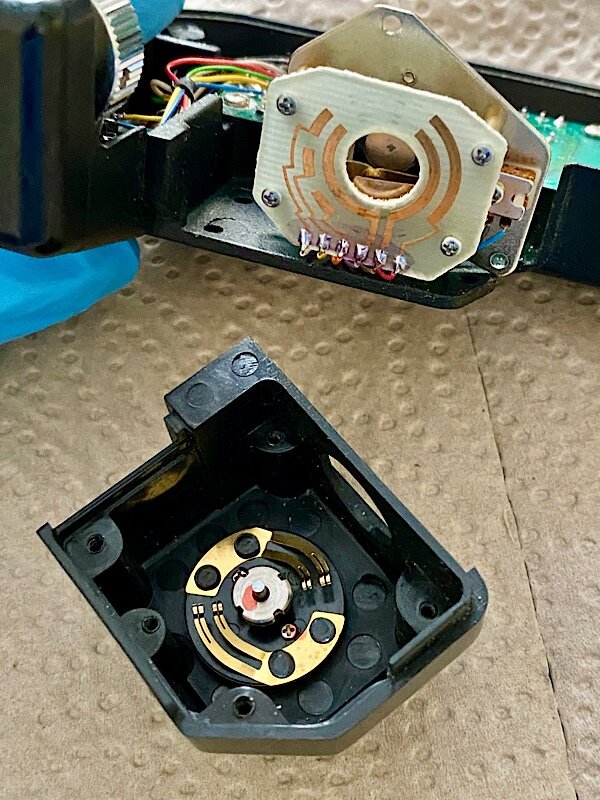
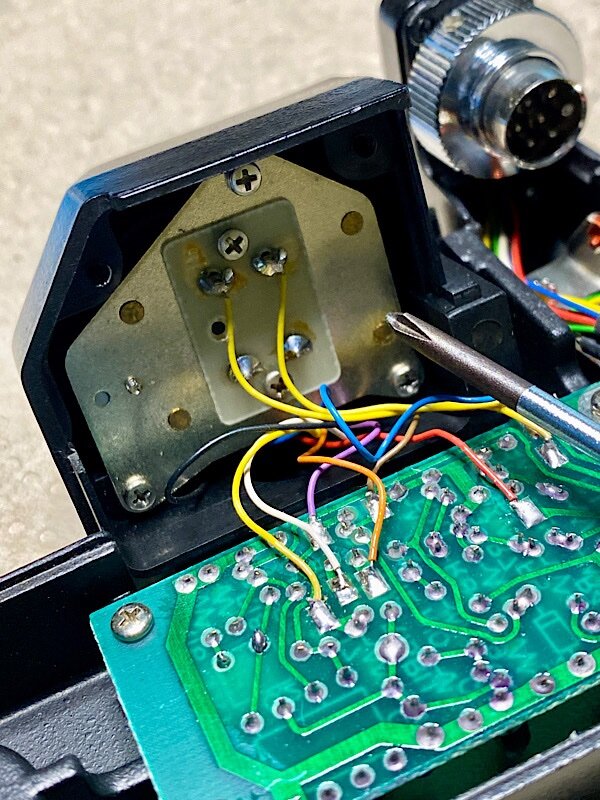
The switch contacts with wipers and contact tracks.
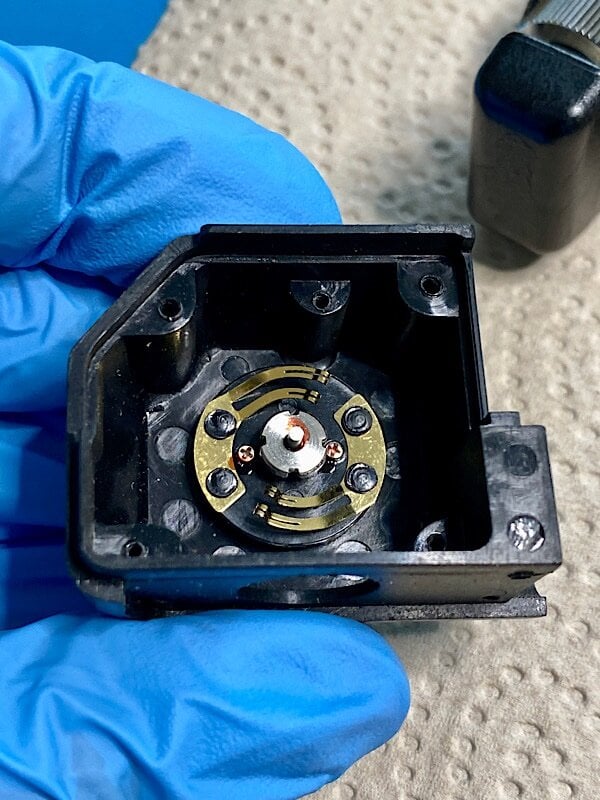
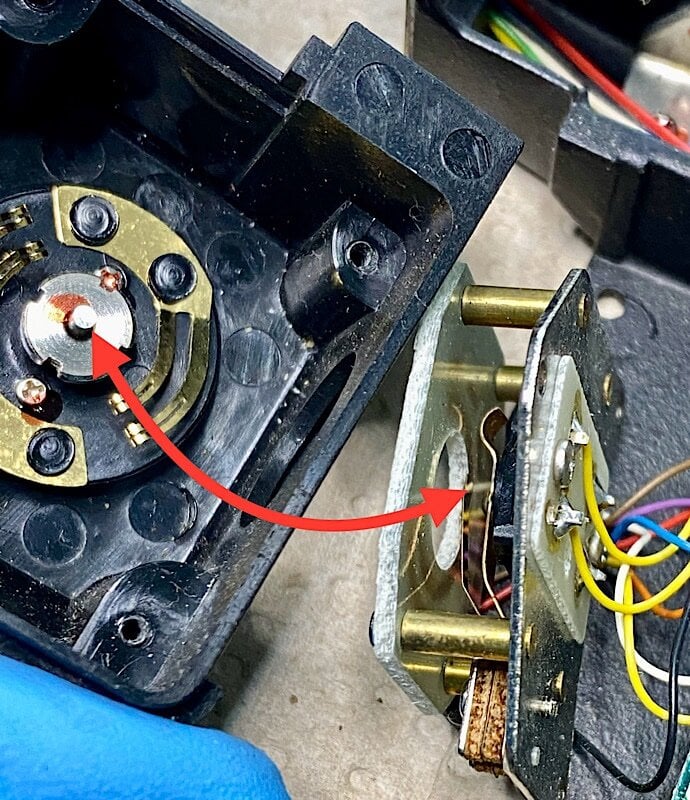
The wipers rotate with the rotary switch that clicks into place in steps.
The trigger moves its two contacts forward and contacts a two-stage switch.
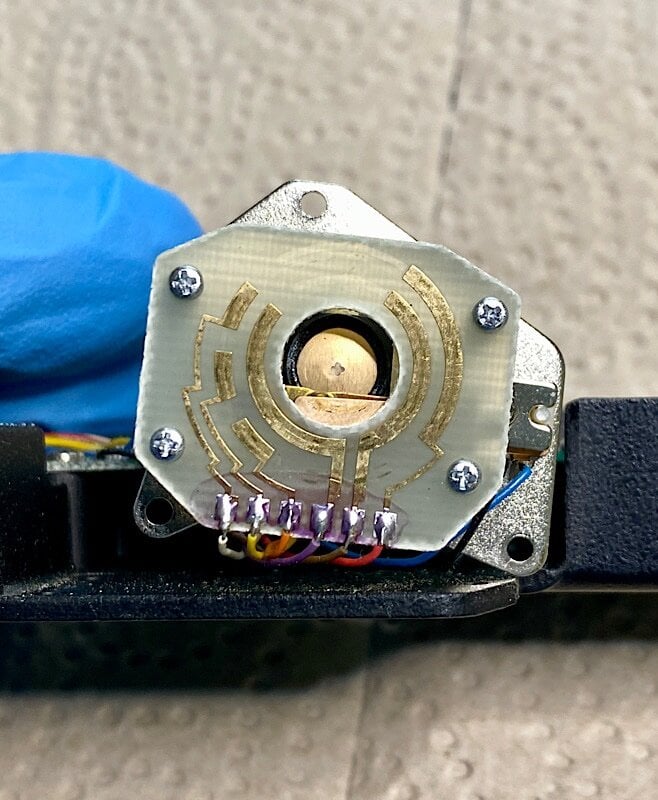
I will clean the contact tracks, wipers and switches.
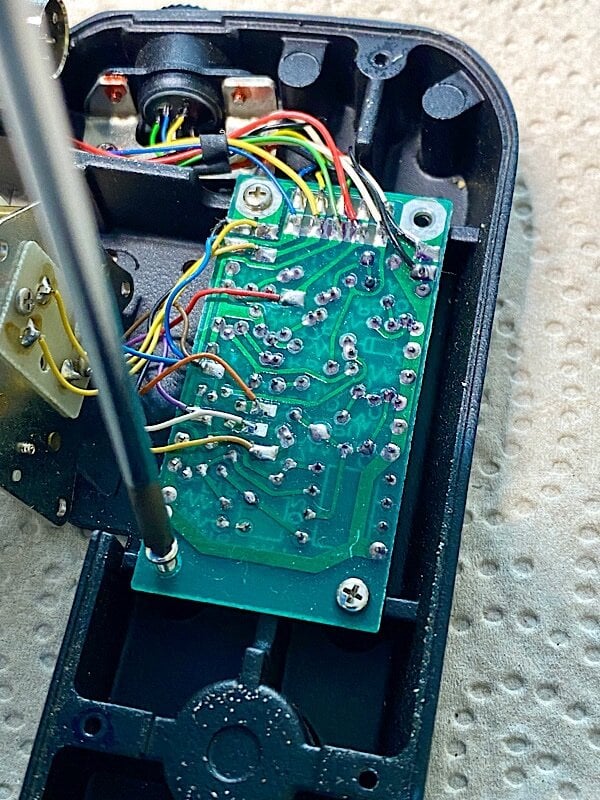
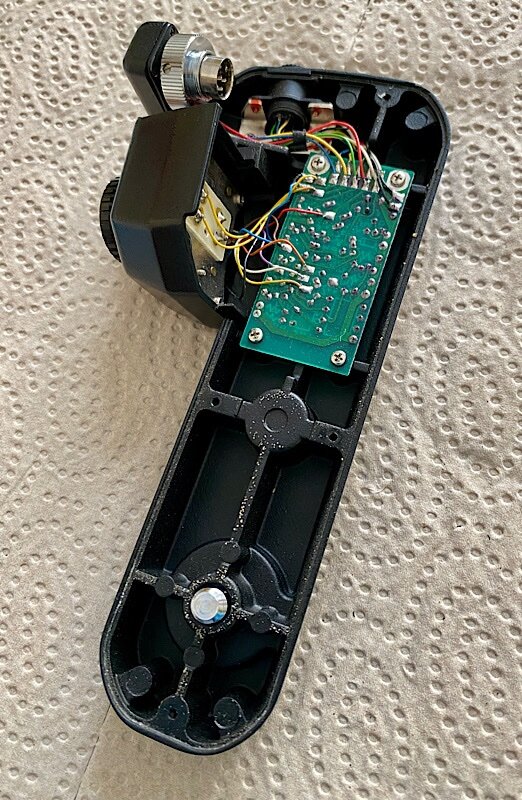
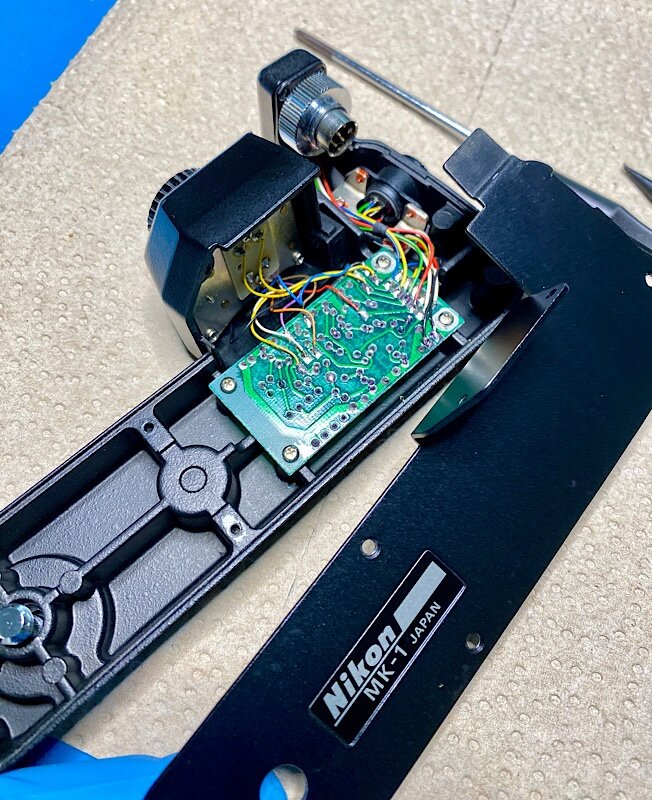
Next we move on to the circuit board.
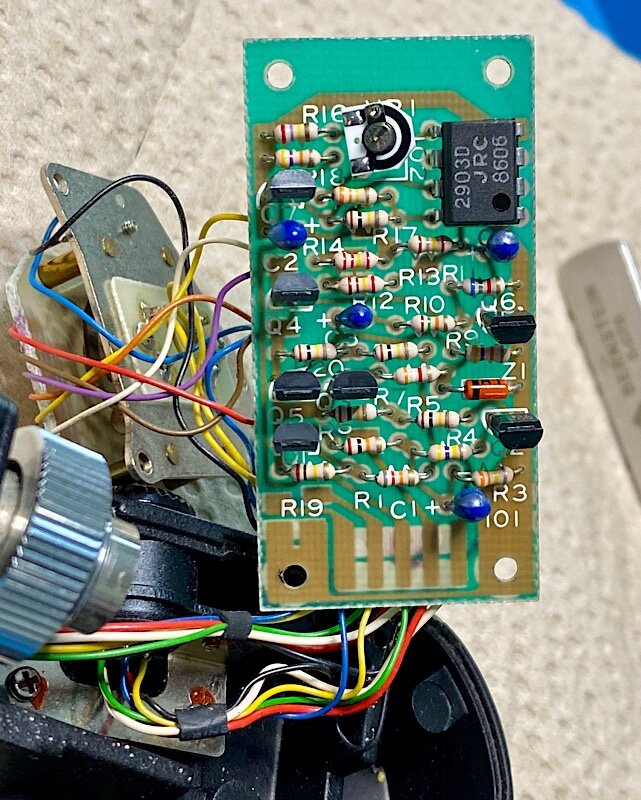
Analog electronics with discrete components (resistors, transistors, tantalum capacitors, diode, trim potentiometer) and an IC.
I can't find a data sheet for the IC online. According to the circuit diagram in the repair manual, it is an operational amplifier.
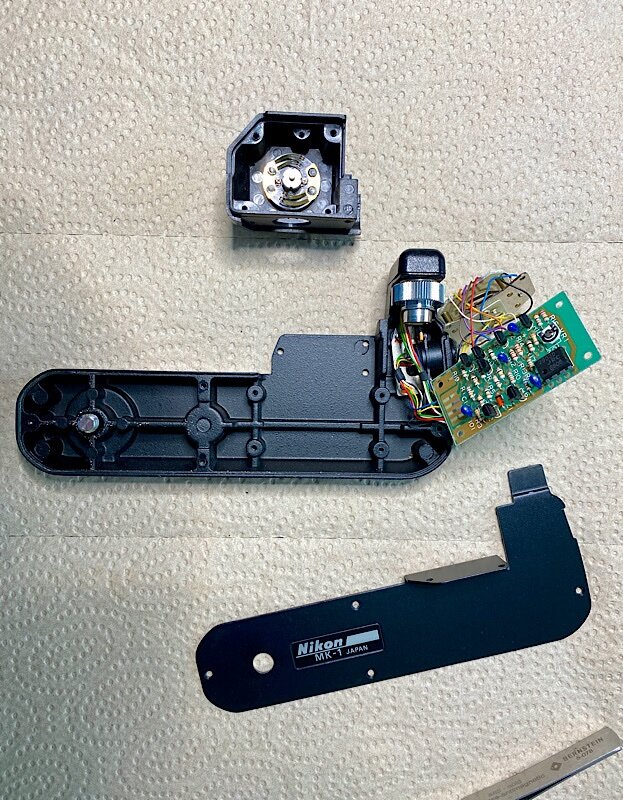
Overview
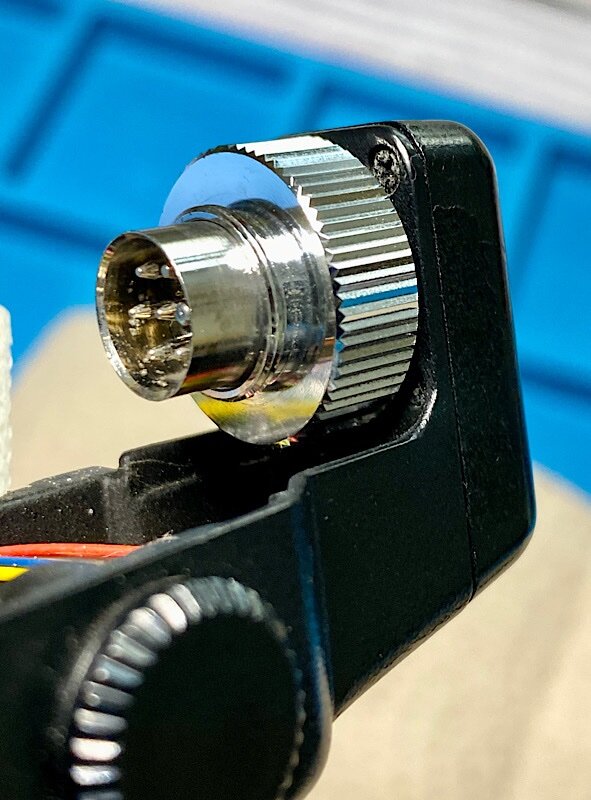
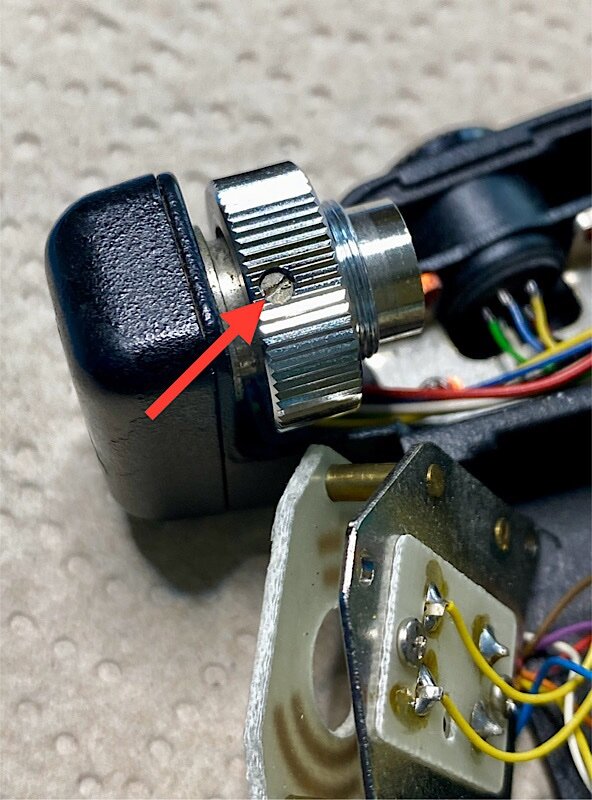
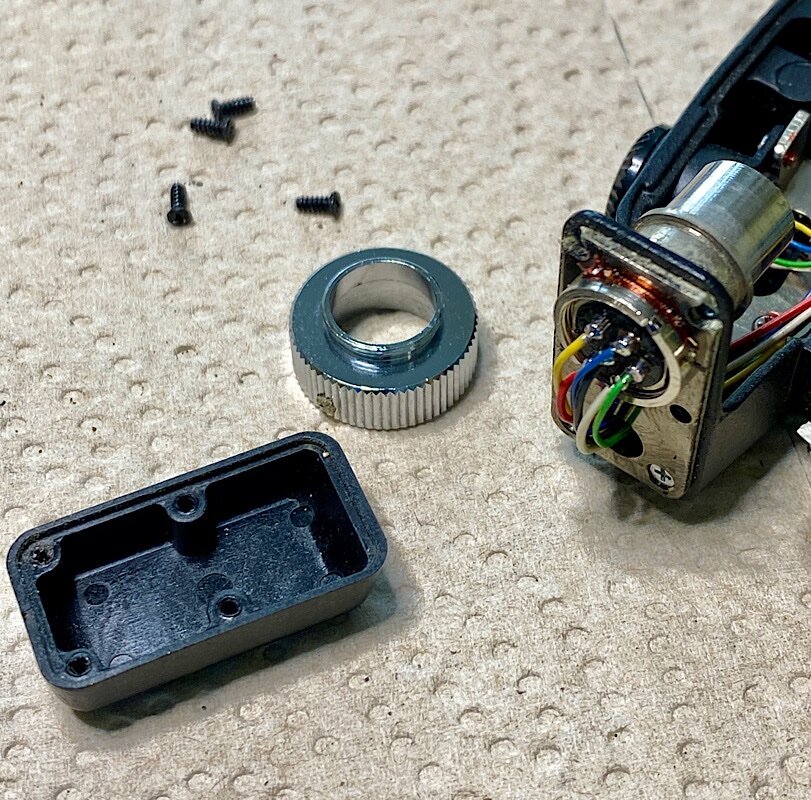
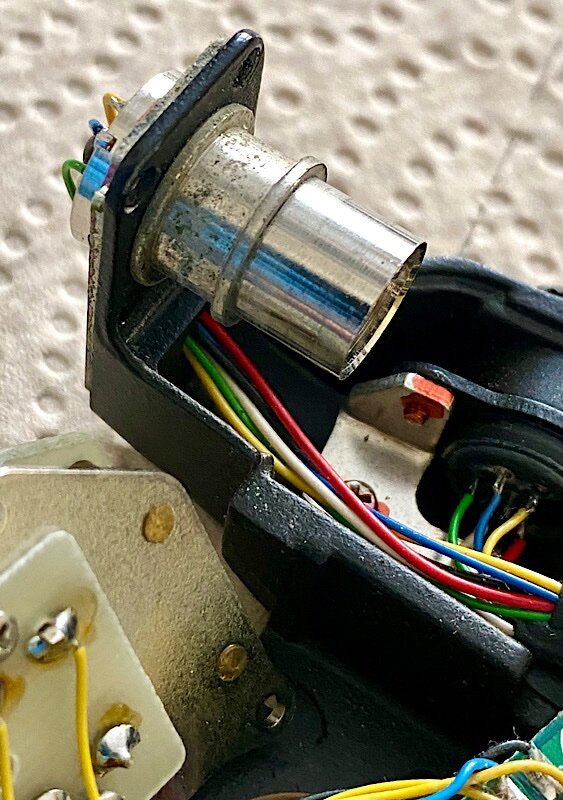
The connection to the MD-4 and cover.
Dirt has accumulated here, which I will also remove.
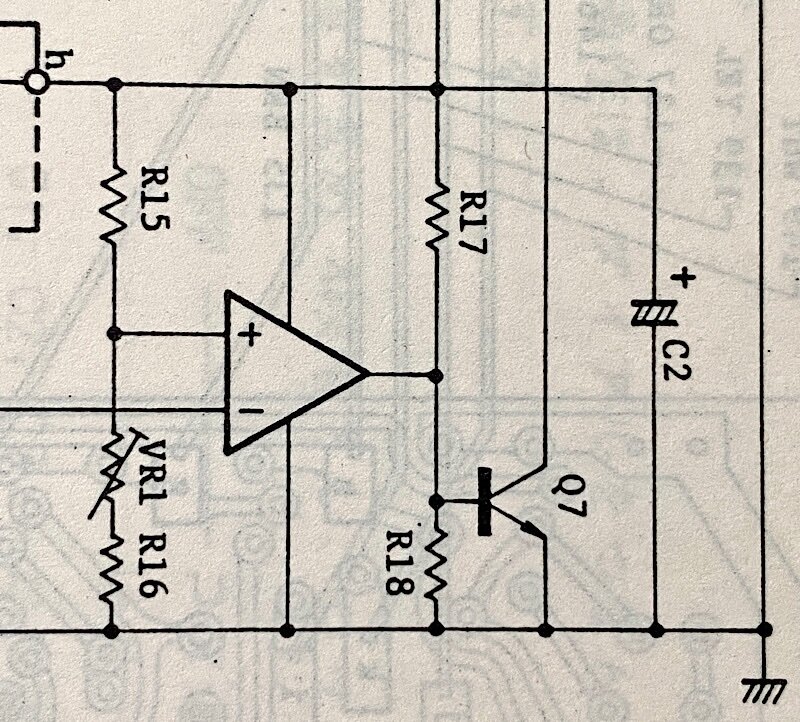
Excerpt from the circuit diagram.
The IC is an operational amplifier (triangle) which could be connected here as a comparator.
Two voltages at the two inputs (+/-) are compared, and the larger of the two voltages is amplified at the output and is either positive or negative.
Cleaning and reassembly
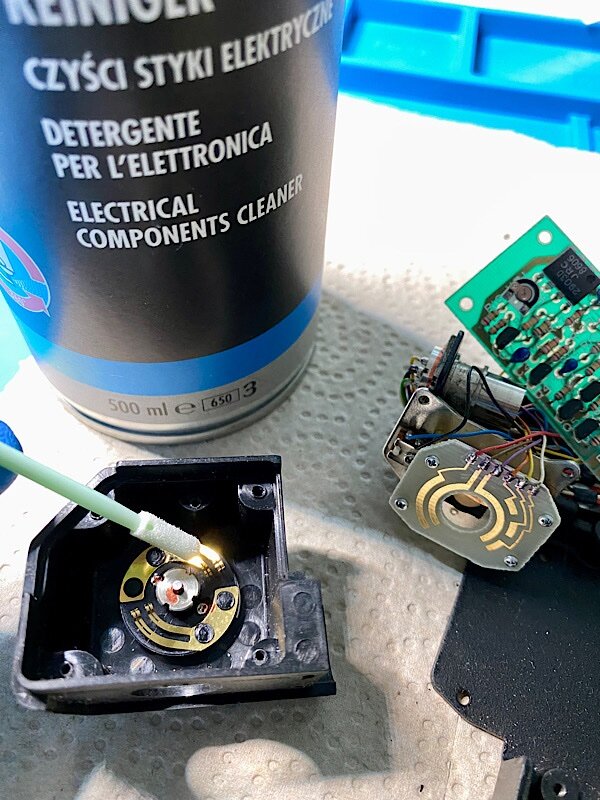
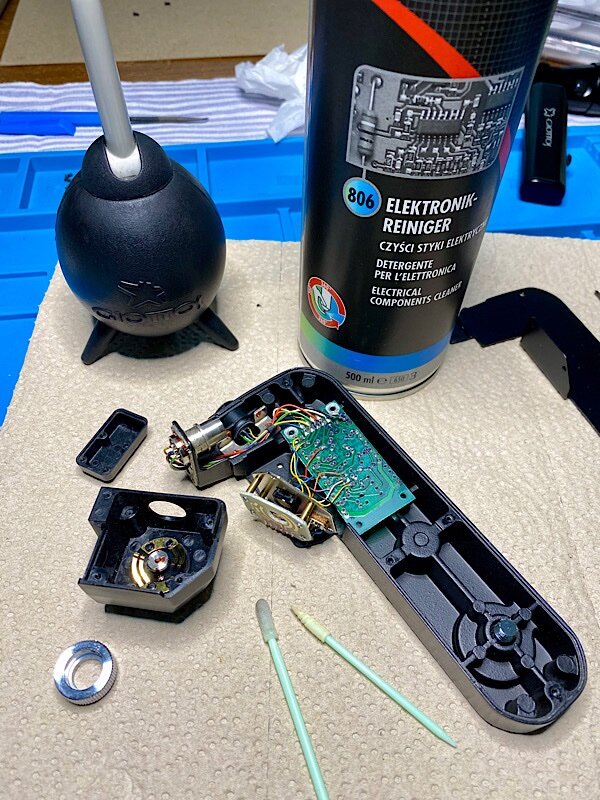
Bellows, electronic cleaner, cleaning swabs.
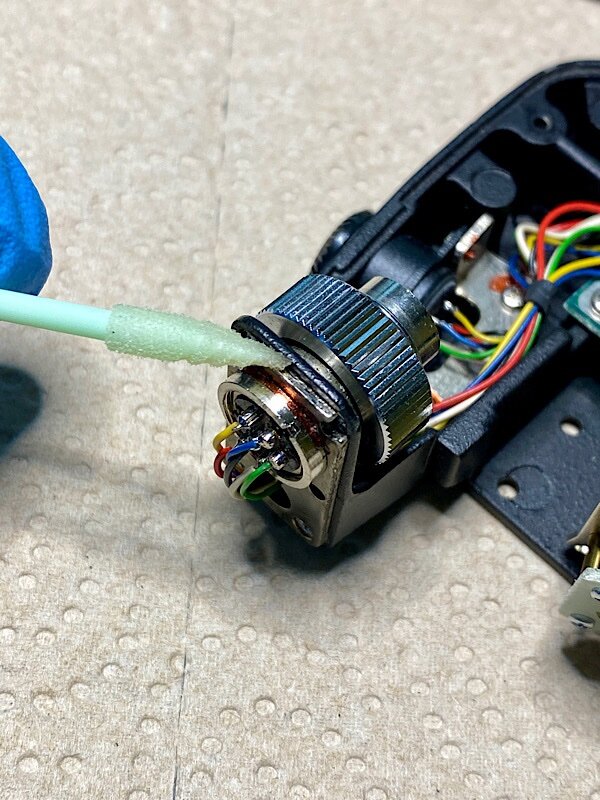
Dirt has accumulated in the recesses, which I remove with isopropyl alcohol.
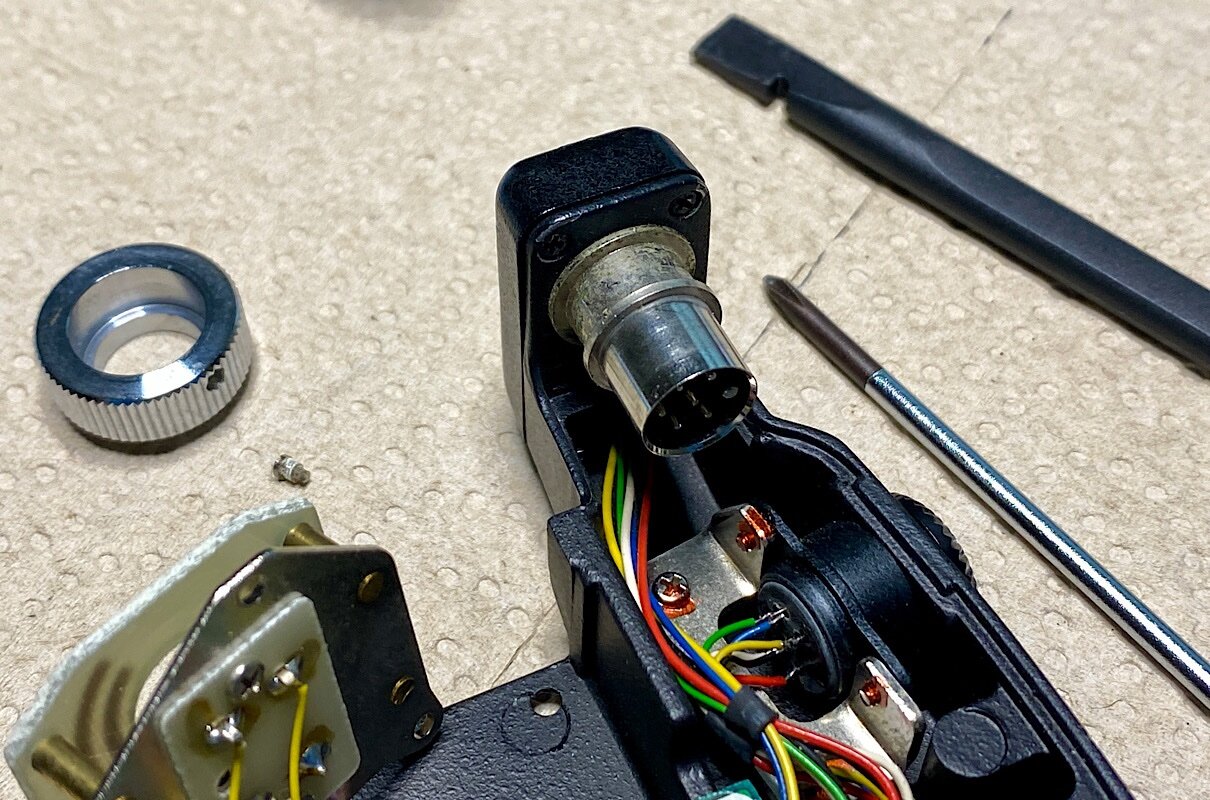
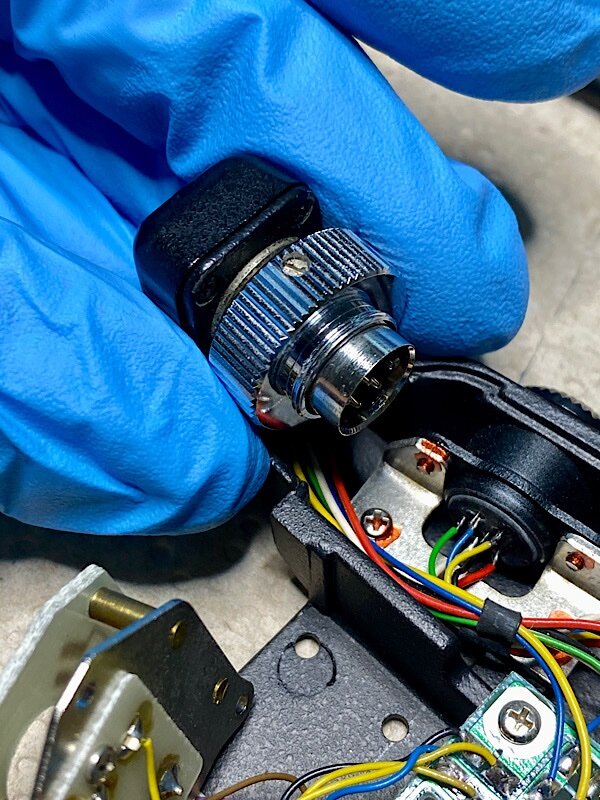
First, the plastic cover is mounted with the four screws, then the ring is put on and secured with its screw.
It doesn't work in the reverse order because the ring partially covers the drill holes for the screws.
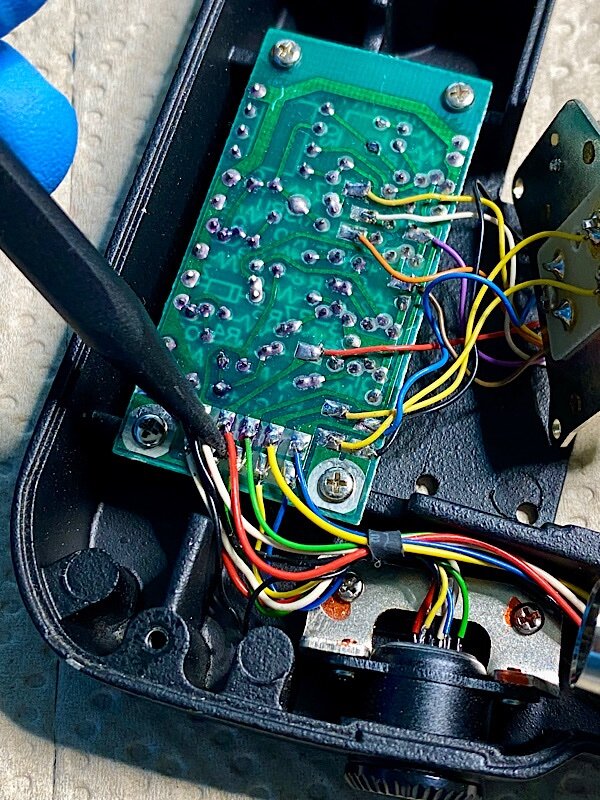
I check all the soldering points.
No complaints here.
Mounting the retaining plate for the rotary switch with three screws.
The cover plate is placed on.
Only then is the assembly with the rotary switch screwed on as it covers the vertical part of the cover plate.
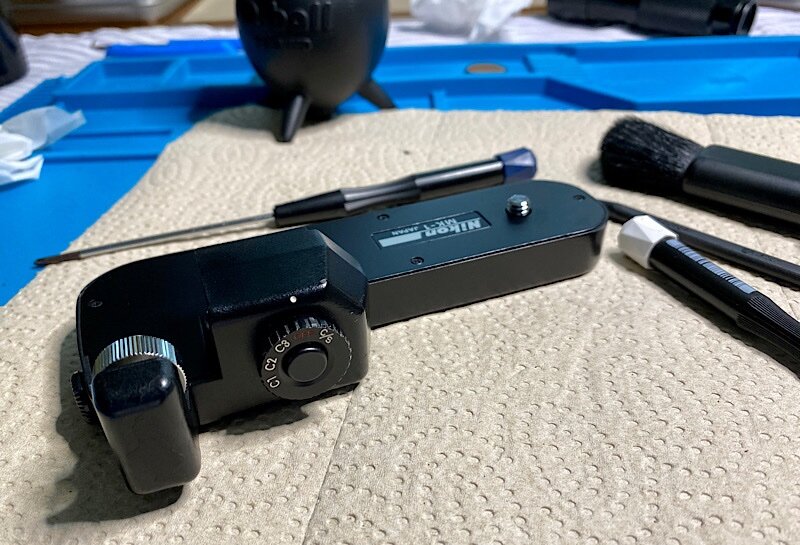
Ready
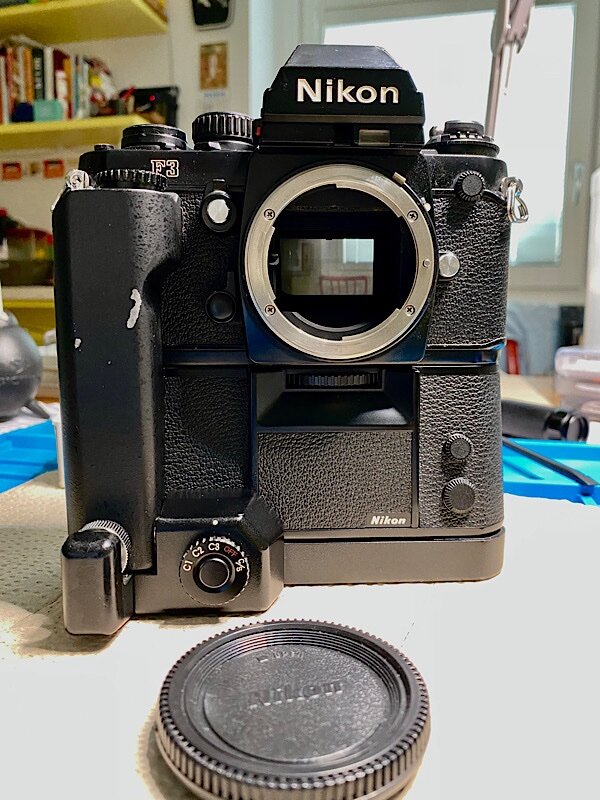
Test on the F3 with MD-4 - everything is fine.
Conclusion
- The MK-1 is solidly made of metal with some plastic parts.
- The analog electronics are straightforward and I assume troubleshooting based on the circuit diagram is feasible.
- All electronic components should be industry standard and still be available new on the market today.
- The operational amplifier should be replaceable with one of the available models.
- The MK-1 is designed simply and easy to service.
 A word of caution
Please keep in mind that you’ll be using highly flammable solvents for service work, and their fumes are harmful to your health. Soldering also produces fumes that should not be inhaled. Dangerous high voltages can be present when handling electronics, especially in conjunction with electronic flash units and mains. Therefore, familiarize yourself with the safety regulations beforehand and ensure your safety. Depending on the activity, protective gear may be advisable.
All information provided without guarantee and use at your own risk.
Acknowledgments
Without the work of Master Larry Lyells, in particular, we wouldn’t have the detailed technical information we need today for service/repair of SLRs.
The SPT Journal and The Camera Craftsman, which he helped shape significantly as an author, and which contain all the necessary information and instructions are available for a fee through Learn Camera Repair.
We owe our access to them to Eugene Pate, the founder of Learn Camera Repair.
Last edited:
