• Welcome to Photrio!
    Registration is fast and free. Join today to unlock search, see fewer ads, and access all forum features.
    Click here to sign up

Nikon Ftn

Fold

H
Fold

  • 0
  • 0
  • 8
Procession (2)

Procession (2)

  • 2
  • 0
  • 19

Recent Classifieds

Forum statistics

Threads
202,925
Messages
2,847,670
Members
101,539
Latest member
disami
Recent bookmarks
0

suryo

Member
Allowing Ads
Joined
Sep 29, 2008
Messages
9
Format
35mm
I have a Nikon Ftn equiped with a 43-86mm f/3.5 Zoom-Nikkor Auto. I'm using them for B&W photography. The meter does not work, as it needs batteries which aren't sold anymore. I also have a Gossen Lunasix3, which also does not work for the same reason.

How can i get them to work, has anyone found (possibly someone with the same camera or meter) found a way to make it work?

Is it possible for me to take good photos, by guessing?
 
..double post.. forum is wierd.. dw i know how it works now :wink:
 
I've used zinc-air hearing aid batteries, with a home-made brass ring around them (cut on my lathe), so that they match the original battery in outside diameter. I've also used the same hearing aid batteries, with the shell of an original battery "hollowed out". The zinc-air batteries don't last that long (couple months), but the voltage will be correct.
 
There is an alkaline substitute that has a slightly lower voltage. I use one of those. To calibrate, I took another camera with a built in meter, focused on a scene outside, and adjusted the f/stop and shutter to get a zero needle. Then I focused the F on the exact same scene, set the f/stop and shutter speed the same as the second camera, then turned the ASA setting until the needle matched. I've found this is close enough for the kind of street shooting I do.
juan
 
You can match the outside diameter with a small rubber o-ring.Got a pack of them from my local hardware store for a few bucks.
 
There is an alkaline substitute that has a slightly lower voltage. I use one of those. To calibrate ...

This works fine, and is probably the easiest and possibly cheapest solution. But be sure to check the metering every few months or so before going out for a shoot. Alkalines slowly lose voltage and need to be replaced when the voltage drops enough to effect readings - the battery will still have half of it's life left so you can re-re-calibrate with ASA adjustment rather than use a brand-new battery.
 
You can get an adapter for the Gossen and Nikon both.
The adapter incorporates a voltage reducing component that doesn't require adjustment or compensation. Ain't cheap but allows the use of silver batteries that give longer life and proper voltage.
I believe both Bogen who handles Gossen now and C.R.I.S. would be able to sell you the adapter.
 
Gossen has a kit complete with 2 MS-76 Silver batteries
GOSSEN LUNA-PRO BATTERY KIT BOGEN 4145
Last price I had was under $18.00 USD
 
I bought a couple of adapters from Frans de Grujiter in the Netherlands, for the Ftn meter of my F. It was 30 euros for two. Basically hollowed out PX625 shells altered to reduce the voltage of normal 1.5v cells. Seem to work pretty well. You could email him at battery.adapter@orange.nl to see if he still has any.
 
Is it possible for me to take good photos, by guessing?

Yup. Inside of film box lists exposure times for common conditions, like beach, sunny, open shade, etc. Use best judgement and bracket when critical.

Lots of very fine photography got made before meters existed.
 
Is it possible for me to take good photos, by guessing?

I prefer "observing" the light, rather than "guessing" :wink:

When it comes to typical lighting situations, I almost never rely solely on my meters. Instead, I use them to double-check the exposure that my eyes and past experience indicate should be used.

It is a really good idea to practice determining exposure without a meter. Start with "sunny 16" and learn how to tell when the light is different.

You will also probably find that after a while you will be able to estimate exposures fairly accurately in more unusual lighting situations.

You will likely surprise yourself.

Matt
 
Yeah i got my handheld light meter to work, but i think i will take your advice MattKing :wink:
 
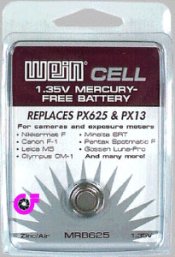
I use WEIN cells in my FTN and Gossen Luna Six with no problems. They last nearly a year for me. No modifications are required - they exactly replace the PX13 cells. Check: Dead Link Removed

I buy them by the box of 12, which reduces cost, and I always have them available.
 

Attachments

  • Wein Cell.jpg
    Wein Cell.jpg
    23 KB · Views: 131
I use WEIN cells in my FTN and Gossen Luna Six with no problems. They last nearly a year for me. No modifications are required - they exactly replace the PX13 cells. Check: Dead Link Removed

I buy them by the box of 12, which reduces cost, and I always have them available.

Ill see how long these zinc air batteries last, cause those wein cells are way expensive.


By the way how do i know if my light meter is giving the correct exposure measurements? Do i slide the ridge to see if the needle stops at the red check mark? Cause when i do that, the needle stops after the red mark, inbetween scale numbers 8 and 9 - right in the middle of those numbers.
How do people know if its 1, 2 or 3 stops too high or low??

What do i do?

Sorry if im asking too many questions, im just really getting into this! :smile:
 
Good morning, Suryo;

Get a large 18 % gray reflectance card; the one that is about 8 by 10. Take it outside with your light meter on a sunny day. Set the meter to a reference ASA film speed number and "Reflected Light" mode, not "Incident Light." With your back to the sun, hold up the 18 % gray card and aim the light meter at the card without casting a shadow onto the card. The light meter may give you a reference number to transfer to a dial. Set the dial to that reference number and look at the f 16 indicator on the aperture scale portion of the dial. Or just look at the f 16 indicator if the meter reads directly. The corresponding shutter speed number should match your reference ASA film speed number; that is, with the meter set to ASA 100, the f 16 point should be next to the 1/100th of a second shutter speed setting. Usually this will be simply 100.

If the number is 100 in our example, everything is good and you do not need to do anything.

If the number is different, then use a simple proportion ratio from your junior high school mathematics class to come up with a "correction factor." (And you thought that you would never have a chance to apply those things you learned in your high school mathematics class.) If the indicated number is 50, then the ratio is 100 to 50 or 2 to 1. That is a correction factor of "2." To get the meter to "indicate correctly," multiply the ASA film speed number by the correction factor (here in our example, by 2) to get the dial to work out correctly. Or, this works out to multiplying the ASA film speed number (100) by the correction factor (2) to get our new correction ASA film speed number rating (200) to get the meter to work properly and indicate to us the correct shutter speed. (If the f 16 indicated shutter speed was 200 instead, then that would be a ratio of 100 to 200 or 1 to 2 and a correction factor of one-half or 1/2.)

In the example, the meter was telling us that it would take a shutter speed twice (2 times) as long as it should for f 16 in sunlight. The meter was one stop off over exposed. By multiplying the ASA film speed number by two, we made the meter think that the light is one stop brighter than it really is, so the meter cut the shutter speed required for f 16 by one-half (1/2) to correct for the inherent error in the light meter. Usually we can assume that for the light levels we will normally work in, the meter's response will be linear.

You may hear people refering to the foundational principle behind this as "the sunny 16 rule." The 18 % gray reflectance card is a standard reference we can afford. If you do not have a camera tester with its built-in light meter testing facility, this is probably the most convenient and low cost way to make a fairly good quantitative assessment of your light meter.

Sorry about the length of this, but with the loss of the 1.35 VDC mercury batteries, just putting in a 1.5 VDC silver cell that has a very stable voltage over its discharge curve, or maybe a 1.5 VDC alkaline cell if nothing else is available, will require a check of the calibration. The Wien cells will also work very well, but they are more expensive and they do not last long. Then there is also the possiblity of buying (or even making) a replacement battery holder that will have the proper Schottky barrier diode, or perhaps a simple germanium diode, that has the ability to drop the battery voltage back to mimic the old mercury PX625 and provide the 1.35 VDC the meter expects to operate from. You can also have a camera technician install a Schottky barrier diode in the wiring inside the light meter, and then just use a 1.5 VDC silver cell in the regular place of the PX-625.

 
Photrio.com contains affiliate links to products. We may receive a commission for purchases made through these links.
To read our full affiliate disclosure statement please click Here.

PHOTRIO PARTNERS EQUALLY FUNDING OUR COMMUNITY:


Ilford ADOX Freestyle Photographic Stearman Press Weldon Color Lab Blue Moon Camera & Machine
Top Bottom