




Andreas Thaler
Subscriber
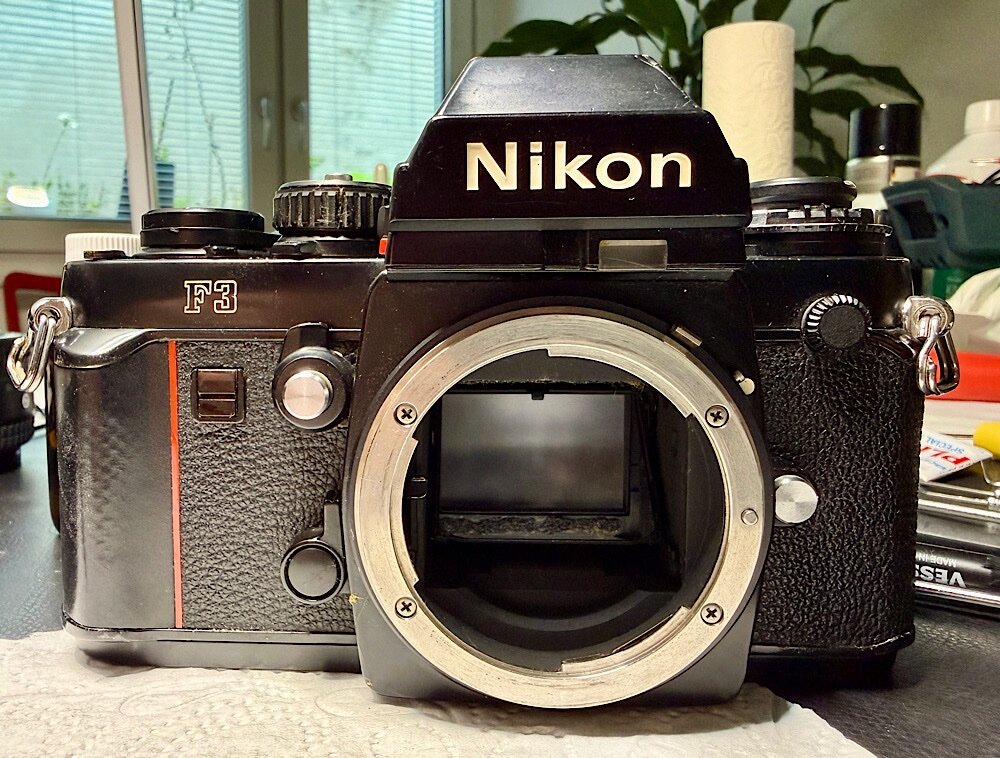
An F3 worked on the MD-4 Motor Drive. But it could not be triggered at its own with the electronic shutter release. Anyway it but could be triggered with the mechanical reserve shutter release. The LCD did not show anything in the viewfinder.
Clearly a problem with the power supply.
The error can occur in a number of places, for example:
- in the battery compartment,
- on the battery contacts on the circuit board,
- on the shutter release switch,
- on its contact,
- or there is a defect in one of the ICs.
A troubleshooting guide from C & C Associates for electronic problems was once again helpful here, in this case for the Nikon F3.
The very first decision diagram under „Power Circuit Malfunctions“ led to the solution.
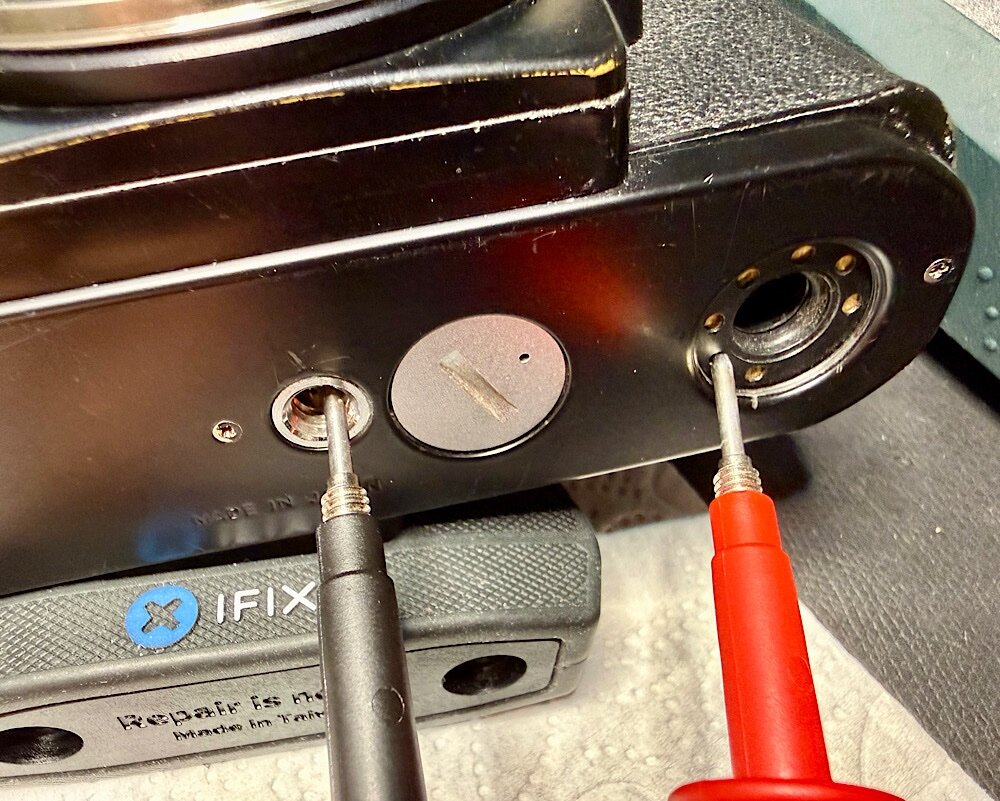
Since the operating voltage of ~3 volts could not be measured at test point TP-1 (one of the contacts of the connector for the Motor Drive MD-4 on the bottom of the camera) the guide lists the following possible causes:
battery terminals, solder connection to flex (red wire), or battery box ground to flex (black wire).
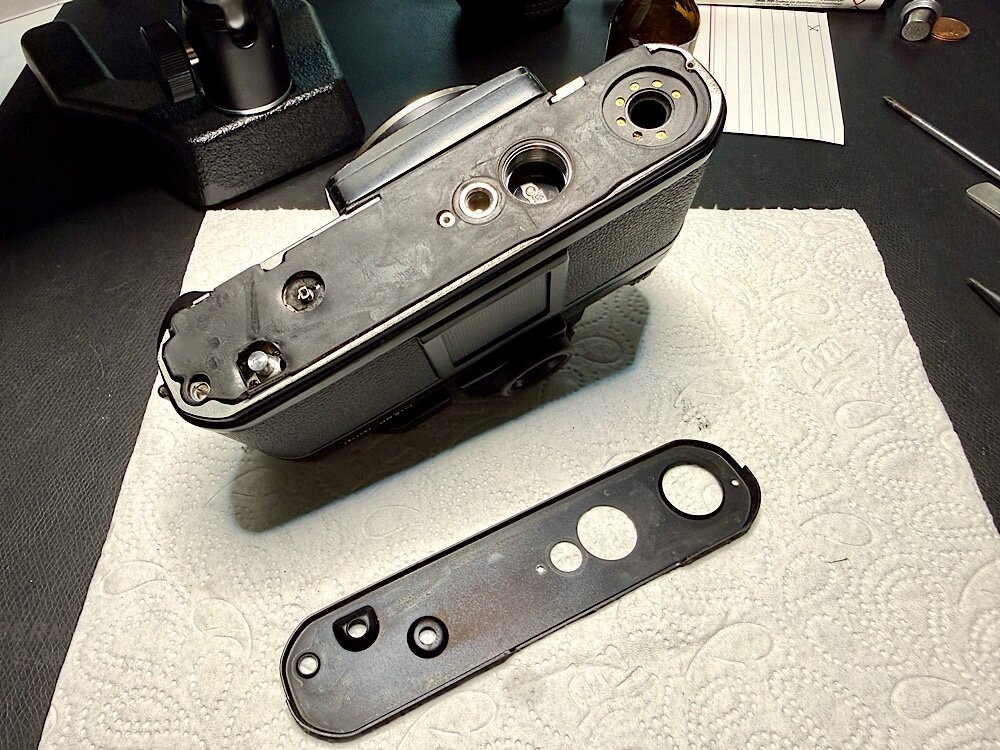
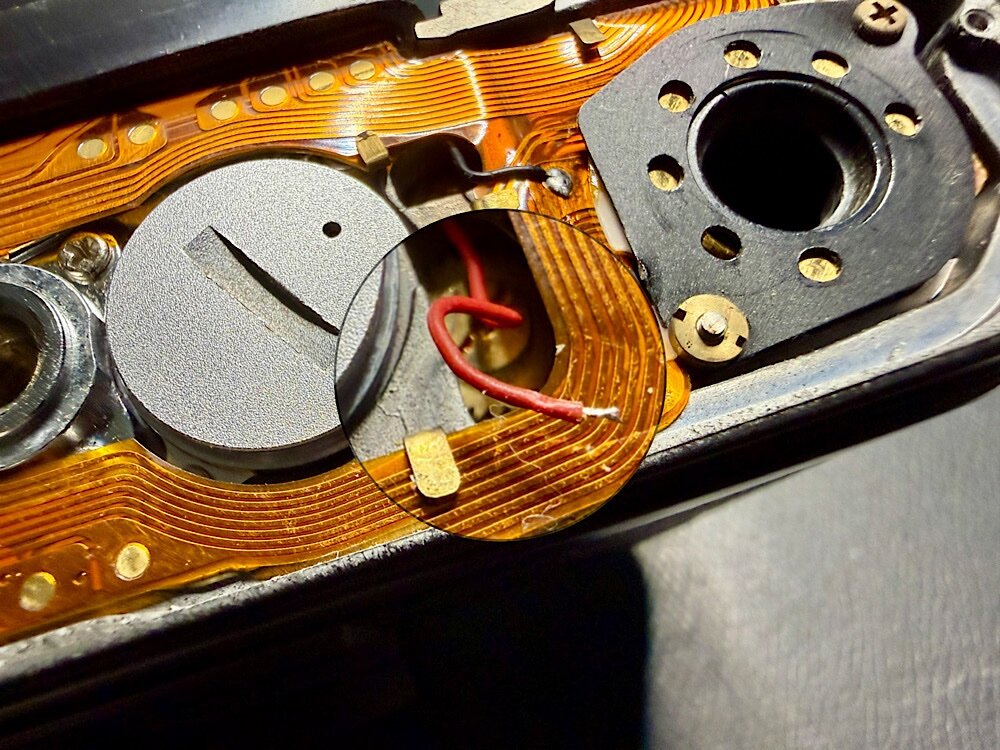
After removing the base plate with the rubber seal cover, I saw that the positive contact of the battery compartment was not soldered to the circuit board.
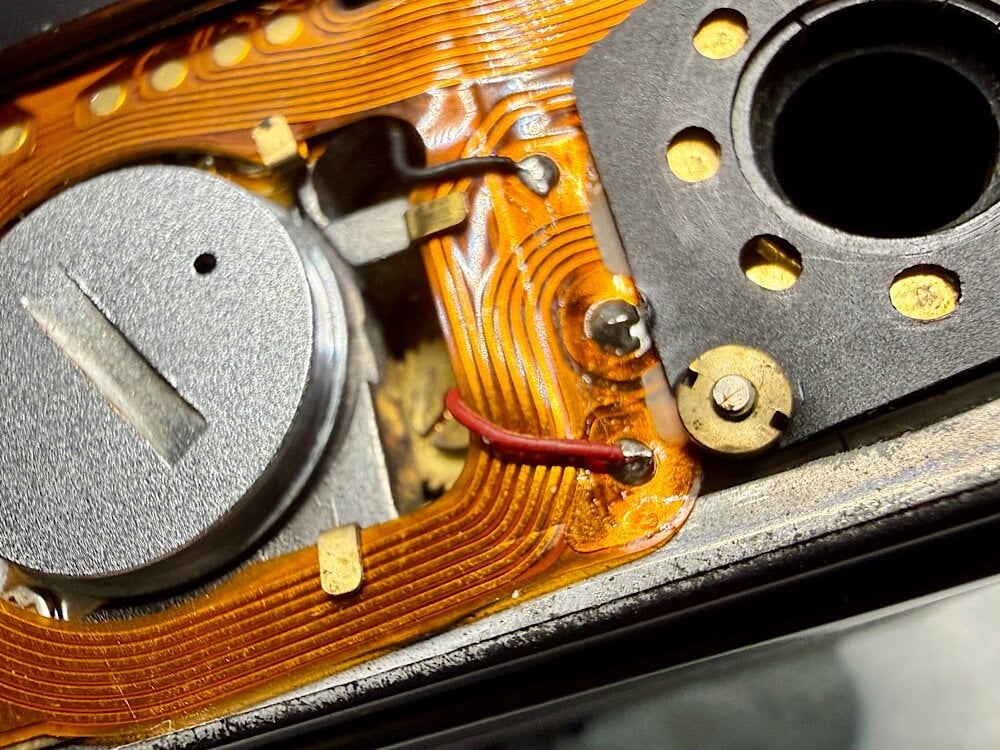
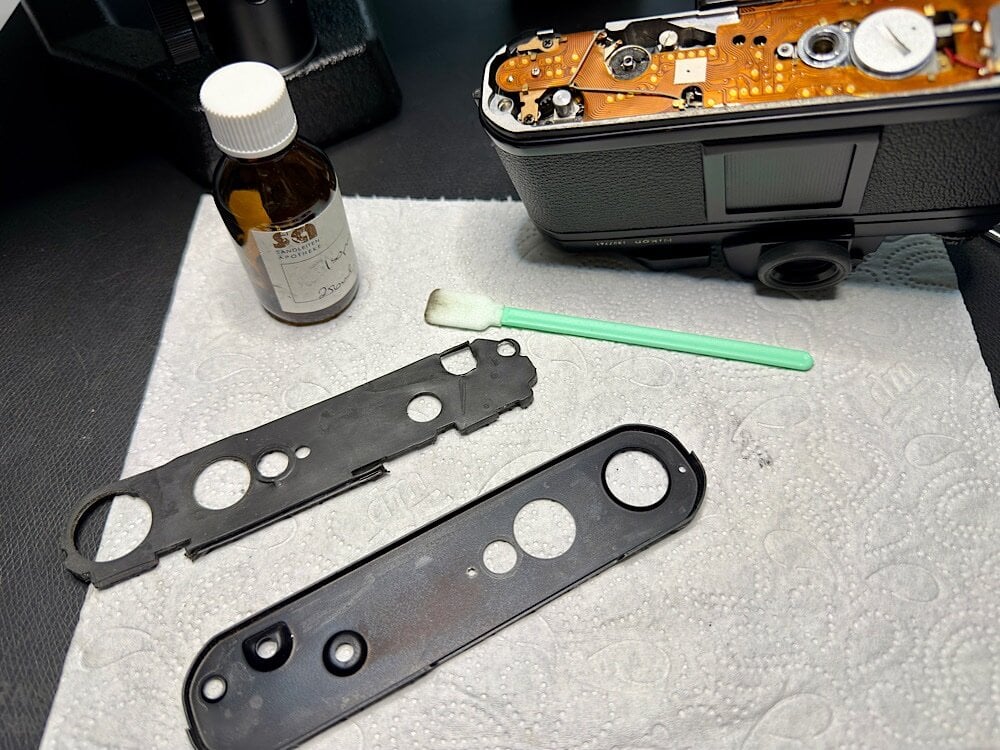
This was quickly remedied with a soldering iron. The F3 can now be triggered with the shutter button, and the LCD works again.
At this point I also cleaned the rubber cover with isopropyl alcohol.
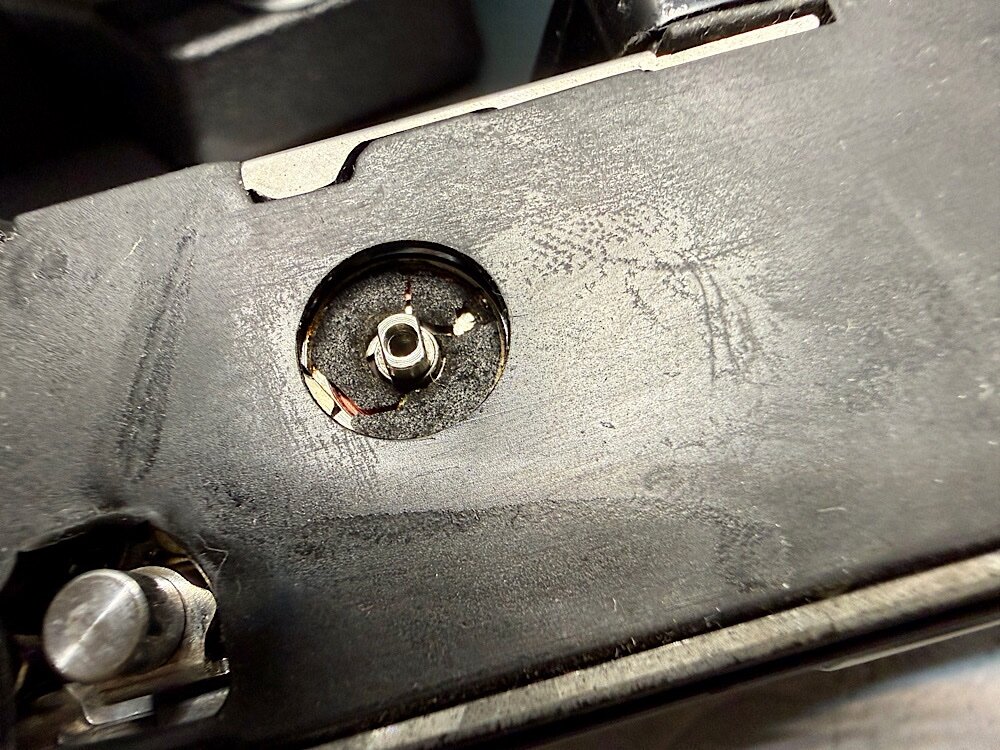
The seal around the motor drive coupler seems to have fallen apart on every F3 by now. I'm leaving it in place here, as it's still holding and offers some protection against dust and dirt.
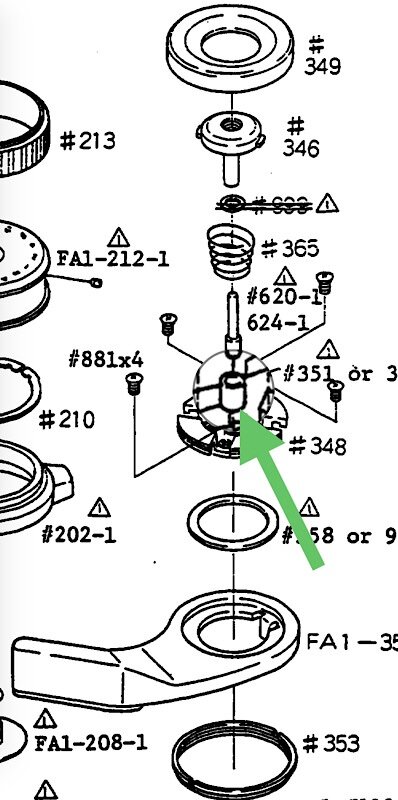
Nikon F3 Repair Manual
A small brass bushing that centers the pin over the trigger contact is missing near the winding lever. But it works without it.
A simple repair that brought the F3 back to life

+++
 A word of caution
Please keep in mind that you’ll be using highly flammable solvents for service work, and their fumes are harmful to your health. Soldering also produces fumes that should not be inhaled. Dangerous high voltages can be present when handling electronics, especially in conjunction with electronic flash units and mains. Therefore, familiarize yourself with the safety regulations beforehand and ensure your safety. Depending on the activity, protective gear may be advisable.
All information provided without guarantee and use at your own risk.
Acknowledgments
Without the work of Master Larry Lyells, in particular, we wouldn’t have the detailed technical information we need today for service/repair of SLRs.
The SPT Journal and The Camera Craftsman, which he helped shape significantly as an author, and which contain all the necessary information and instructions are available for a fee through Learn Camera Repair.
We owe our access to them to Eugene Pate, the founder of Learn Camera Repair.
