

• Welcome to Photrio!
    Registration is fast and free. Join today to unlock search, see fewer ads, and access all forum features.
    Click here to sign up

Nikkor AF 85mm 1.8D no D

Somewhere...

D
Somewhere...

  • 5
  • 2
  • 113
Iriana

H
Iriana

  • 8
  • 2
  • 184

Forum statistics

Threads
202,755
Messages
2,845,165
Members
101,508
Latest member
Shelagh
Recent bookmarks
1

alter ego 6x9

Member
Allowing Ads
Joined
Mar 26, 2012
Messages
89
Format
Multi Format
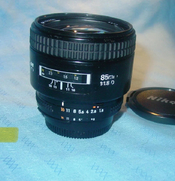
I was looking for Nikkor AF 85mm 1.8D lens to buy. While browsing through ebay listings I noticed that some models are without letter D. Otherwise they are completely identical, just one the name AF Nikkor 85mm 1.8, the other - 85mm 1.8D. I could not find any information online about non D version. Is this the same lens or not?
 

Attachments

  • IMG_0041.jpeg
    IMG_0041.jpeg
    468.7 KB · Views: 90
  • IMG_0040.jpeg
    IMG_0040.jpeg
    534 KB · Views: 101
I'm no expert on Nikon lenses, I just use them!

That said, I think that the non-D lens is an older version.

The "D" designation indicates that the lens provides distance information to the camera body. This information can be then used in the cameras exposure calculations which is only important when using a flash.

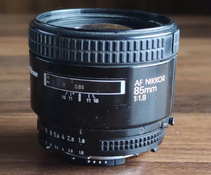
There is also a physical difference in the mechanism for locking the aperture ring. The D lens has a small slide (the white mark near the 1.8 marking) while the older model has a button (seen on the lower right of the lens in the photo you provide).

I don't know if there are optical differences but as far as I know both versions are considered very good optically.
 
I'm no expert on Nikon lenses, I just use them!

That said, I think that the non-D lens is an older version.

The "D" designation indicates that the lens provides distance information to the camera body. This information can be then used in the cameras exposure calculations which is only important when using a flash.

There is also a physical difference in the mechanism for locking the aperture ring. The D lens has a small slide (the white mark near the 1.8 marking) while the older model has a button (seen on the lower right of the lens in the photo you provide).

I don't know if there are optical differences but as far as I know both versions are considered very good optically.

Thanks. I was planning to use it on Nikon F90x, so what is important to me is the optical performance and AF speed. I think I am OK to go for non D since it is somewhat cheaper. I just bought this F90 body and want to test it with a decent AF lens. I am currently using FM3a and all my lenses are manual.
 
Thanks. I was planning to use it on Nikon F90x, so what is important to me is the optical performance and AF speed. I think I am OK to go for non D since it is somewhat cheaper. I just bought this F90 body and want to test it with a decent AF lens. I am currently using FM3a and all my lenses are manual.

This lens was introduced in 1988 as Nikkor AF 1.8/85. Without the "D" (= distance) function.
The distance function was a significant improvement of the Matrix metering, as the distance and position of the focussed object was integrated in the metering calculation. That is very useful in several different situations, like objects arranged in the "rule of thirds", when the main object is not in the center of the frame. It is also very useful and improves results when flash is used.

The "D" function was introduced in 1992 with the Nikon F90 (N90). From that date on Nikon upgraded over the years all their lenses with the additional D function.
The optics of the AF Nikkor 1.8/85 and the later upgraded AF-D 1.8/85 are identical. It is a very good lens, by the way. I am using it for a very long time.
As you have the F90X I would go for the D version, because with the F90X you use the improvement in metering.
 
If you use extension tubes or close-up lenses with flash, I'd get the non-D version. Otherwise TTL exposures can be all over the place.
 
If you use extension tubes or close-up lenses with flash, I'd get the non-D version. Otherwise TTL exposures can be all over the place.

That can also be done with the D version: Just switch from Matrix metering to the centre-weight or spot metering.
The D function only works with Matrix metering.
The lens with the D function is overall the much more versatile option.
 
That can also be done with the D version: Just switch from Matrix metering to the centre-weight or spot metering.
The D function only works with Matrix metering.
The lens with the D function is overall the much more versatile option.

I'll have to try that!!
 
I was looking for Nikkor AF 85mm 1.8D lens to buy. While browsing through ebay listings I noticed that some models are without letter D. Otherwise they are completely identical, just one the name AF Nikkor 85mm 1.8, the other - 85mm 1.8D. I could not find any information online about non D version. Is this the same lens or not?

If you have an N50, N60, N70. N90 or newer camera, D lenses will let you use 3-D matrix metering, which takes subject distance into account in exposure calculations.

If you have an N4004, N5005, N6006, N8008s, F4 or older camera, D won't do anything.

Aaron
 
Some of the Nikon AF-D lenses suffer from haze in the cement, my AF-D 20/2.8 has this problem as do others that have been shown on forums.
I'd go after the older lens for myself, on the bet that Nikon changed cements at some time during production
Cosina had the same problem with older Voigtlander LTM lenses.
 
I just picked up a near mint 85mm f:1.8 AF-D and had the same question about to D or not to D and decided to do the D version. My thinking is that the difference in price was trivial and I was getting the advantage of better flash exposures and this lens will be used for flash at some point.
In 1975 I acquired a Nikon 85mm f:1.8 It was a a transition lens to multi-coating and had a C suffix on the rim. It was a great portrait lens, but at the time I also had a 105 f:2.5 and the 85 didn't get the use that it should have. I sold it quite a few years ago and regretted it every since, thus my new 85.
I think that the general trend in new gear is mostly mirrorless and I'm finding that old technology like the Nikon AF-D lenses are becoming plentiful and cheap especially from Japan.
 
Photrio.com contains affiliate links to products. We may receive a commission for purchases made through these links.
To read our full affiliate disclosure statement please click Here.

PHOTRIO PARTNERS EQUALLY FUNDING OUR COMMUNITY:


Ilford ADOX Freestyle Photographic Stearman Press Weldon Color Lab Blue Moon Camera & Machine
Top Bottom
