

• Welcome to Photrio!
    Registration is fast and free. Join today to unlock search, see fewer ads, and access all forum features.
    Click here to sign up

New Paterson System 4 reels and air bubbles

Forum statistics

Threads
203,465
Messages
2,855,176
Members
101,855
Latest member
Minoltalan
Recent bookmarks
0
Joined
Jan 18, 2008
Messages
68
Format
Medium Format
Hi all

I am trying to solve a problem with air bubbles sticking to my new Paterson reels, see image
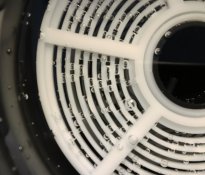
IMG_4908A.jpg
The water is store bought demineralized water (like for car batteries, steam irons etc.) so it should be soft – maybe not soft enough?

The peculiar thing is, that I have 2 old (40+ years) Paterson reels, where this problem do not occur. Is it the new plastic, which needs "breaking in"?

Anyone have any suggestions?

Thank you in advance.
Michael
 
Maybe there are some residues of some kind of detegrent in the new parts. Have you tried rinsing with hot water for some time?

rgds,
gerd.
 
Dear Michael,

Quite the puzzle. Are you getting air bells on your negatives or are the bubbles affecting the negative in any other way? Do you only see the bubbles after a final rinse? Do you see the bubbles at the end of fixing? I would never notice such a thing with my reels as I don't open the tanks until after a bath of Photo-flo and there is just a mass of foam.

Neal Wydra
 
As Neal says, one wouldn't usually notice any bubbles at all until the end of the fixer cycle or wetting agent cycle.

But isn't banging the bottom of the tank after each inversion every 30 to 60 seconds supposed to get rid of any bubbles like this? I do presume that you are doing this simple procedure?

And also as Neal asks, 'Are you getting air bells on your negatives...?'

Terry S
 
Are you getting air bells on your negatives or are the bubbles affecting the negative in any other way?

Yes, got these markings along the top of the film (when mounted in the reel/tank), which is why I started to investigate (a fancy word for wasting my time, I believe ;o) )
eddies.jpg

As Neal says, one wouldn't usually notice any bubbles at all until the end of the fixer cycle or wetting agent cycle.

I got the markings, searched the internet, and learned a lot about marks from foam (much more brutal) and the bubbles on the reel. So I tested various agitations/twisting etc. to see where the bubbles where, and they where in the pre-soak and developer. So I stopped the process there, and deduced that the problem most likely also is in stop/fix/blix/stab/what-have-you-not, depending on the process.

But isn't banging the bottom of the tank after each inversion every 30 to 60 seconds supposed to get rid of any bubbles like this? I do presume that you are doing this simple procedure?

Yes, banging, by now so hard my downstairs neighbour is wondering what is going on... tapping it hard on the table, smacking my hand against the bottom, striking the side of the tank with a plastik spatula. Nothing seems to loosen a large part of the bubbles with the new reels. My old ones, not a single problem...

Rgds
Michael
 
I thought we dealt with this on your other thread.
(there was a url link here which no longer exists)
 
I thought we dealt with this on your other thread.

Rick, I'm sorry, did I do something wrong? I thought since the problem is more generic than black&white dev, this would be a better place to discuss it? Please advice.

Rgds
Michael
 
Try some tap water instead.
 
I get tremendous amounts of foam during my development. Foam overflows whenever I remove the top of my Paterson tank. Far more foamier than any beer. It doesnt seem to affect the film during development so I just ignore it now.
 
Rick, I'm sorry, did I do something wrong? I thought since the problem is more generic than black&white dev, this would be a better place to discuss it? Please advice.

Rgds
Michael
You did nothing wrong. Frequently as things are discussed and discovered in one thread, a more generic or targeted problem statement comes about, as is the case here. By such time, people have tuned out the old thread and you've lost some audience. Here you've framed up the problem differently, and you're getting some fresh feedback.

That said, you're going to get a lot of the same stock responses: Use this or that water, bang harder, don't let your reels come in contact with wetting agent -- oh, but go ahead and add some to the developer (?!). It's a problem with a lot of variables. Change just one thing at a time as you're working through it.
 
You did nothing wrong. Frequently as things are discussed and discovered in one thread, a more generic or targeted problem statement comes about, as is the case here. By such time, people have tuned out the old thread and you've lost some audience. Here you've framed up the problem differently, and you're getting some fresh feedback.

That said, you're going to get a lot of the same stock responses: Use this or that water, bang harder, don't let your reels come in contact with wetting agent -- oh, but go ahead and add some to the developer (?!). It's a problem with a lot of variables. Change just one thing at a time as you're working through it.

OK, thanks, good to hear. I was worried I had violated som code of conduct.

I'll keep working the problems, just tested a friends Paterson reel with tap water, just a single air bubble no matter how hard I tried to invert or shake the tank.

Rgds
Michael
 
The "reel" question (pun intended) is not whether you have bubbles, but rather whether the bubbles move when you agitate.
I would recommend the Kodak agitation scheme (5 seconds every 30 seconds) or continuous rotary agitation if you are having problems with bubbles.
 
The "reel" question (pun intended) is not whether you have bubbles, but rather whether the bubbles move when you agitate.
I would recommend the Kodak agitation scheme (5 seconds every 30 seconds) or continuous rotary agitation if you are having problems with bubbles.

Hehe ;o)

The problem is that I can't get the bubbles to dislodge. My older reels, and also a friends Paterson reels don't have this problem.

The Kodak scheme is this (?): "Provide initial agitation of 5 to 7 inversion cycles in 5 seconds; i.e., extend your arm and vigorously twist your wrist 180 degrees. Then repeat this agitation procedure at 30-second intervals for the rest of the development time." If yes, the I don't think that will dislodge the bubbles after each interval.

Rgds
Michael
 
I would recommend the Kodak agitation scheme (5 seconds every 30 seconds) or continuous rotary agitation if you are having problems with bubbles.
Best to be informed if you go the route of continuous rotary agitation. It can introduce a whole new set of problems if you're improvising. I have a Uniroller auto-reversing motor base and thought I'd solve this problem (same as the OP's) by just putting the tank on its side and putting it on the motor base. It certainly did eliminate all airbells, foam and bubble marks from my film. And it introduced laminar flow marks in the form of increased density along the film edges. So I traded one problem for another. Also, some developers are more suited to constant agitation (XTOL) than others (HC-110). Something like a Jobo processor probably does it best, but that's a big investment. Of course, you could just do hand inversion for the entire development time if you're up to it. Just cut the development time by about 15%.
 
Perhaps you need a bit more water in the tank. The bubbles want to go to the surface and if your film is sitting right at the surface, that's where they're going to coalesce.
 
Hi all

I am trying to solve a problem with air bubbles sticking to my new Paterson reels, see image
View attachment 183790
The water is store bought demineralized water (like for car batteries, steam irons etc.) so it should be soft – maybe not soft enough?

The peculiar thing is, that I have 2 old (40+ years) Paterson reels, where this problem do not occur. Is it the new plastic, which needs "breaking in"?

Anyone have any suggestions?

Thank you in advance.
Michael
Have you tried gently taping the reels against the bottom of the tank to dislodge them?
 
Have you tried gently taping the reels against the bottom of the tank to dislodge them?

Yes, actually more forcefull than gently. The some bubbles dislodges, but far from every one like the older reels. I forgot to mention that in the original post, sorry for that.

Rgds
Michael
 
Perhaps you need a bit more water in the tank. The bubbles want to go to the surface and if your film is sitting right at the surface, that's where they're going to coalesce.

The reels are covered with the required 1 liter of liquid (tank size), and there is almost no room left for more liquid. Also my older reels and a friends reel doesn't show this problem with the same amount of liquid.

Rgds
Michael
 
Best to be informed if you go the route of continuous rotary agitation. It can introduce a whole new set of problems if you're improvising. I have a Uniroller auto-reversing motor base and thought I'd solve this problem (same as the OP's) by just putting the tank on its side and putting it on the motor base. It certainly did eliminate all airbells, foam and bubble marks from my film. And it introduced laminar flow marks in the form of increased density along the film edges. So I traded one problem for another. Also, some developers are more suited to constant agitation (XTOL) than others (HC-110). Something like a Jobo processor probably does it best, but that's a big investment. Of course, you could just do hand inversion for the entire development time if you're up to it. Just cut the development time by about 15%.

Thanks, but I have no intentions in going down the roller agitation path, or only using the spinner/twister/swirly-thingy, since my agitation routine works great with the older reels. Thus I'm not inclined to change that part. I'd rather complain to Paterson about receiving reels which aren't working properly. It could be a manufacturing defect in the plastic compound/coating.

Rgds
Michael
 
I remember years ago, Patterson made a faucet attachment that when to the center tube of the reel for washing film. Maybe running water down the middle might help? There's less turbulence if water went one direction entering from the center and exiting radially outward.
 
I remember years ago, Patterson made a faucet attachment that when to the center tube of the reel for washing film. Maybe running water down the middle might help? There's less turbulence if water went one direction entering from the center and exiting radially outward.

Yes they still make that and it is still available. I have one. It is called a "force film washer"

http://www.patersonphotographic.com/patersondarkroom-details3.htm#ss4-developing-tanks (scroll down page)

I also noticed more bubbles on some brand new reels as compared to my older reels. The actual plastic and construction seems exactly the same. I did not seem to do any harm and I kept using a firm few taps on the bench after inversions. Scientifically I did wonder what was happening; I speculated that the new reels were rougher and providing nucleation points for dissolved gasses to come out of solution (this may be completely wrong). With use of the new reels the problem seems to go away, possibly the microscopic roughness is abraded by passage of films or the surface becomes coated in some way.
 
Last edited:
A few years ago I had air bell issues with processing the photo of my test with a Paterson tank and reel looked almost identical. I added drops of wetting agent, and I mean a drop at a time until there was sufficient to cure the air bells, too much and you'll get foaming.

Surfactants are added to film emulsions so to aid coating, some suffer less than others. My water in Turkey is extremely hard, from a bore hole and we are on the coast so I add a few drops of wetting agent to my developer when I mix a new batch (from raw chemicals), that solved the problem.

It's not just water hardness it's dissolve gases and de-ionised or even distilled water re-absorbs Oxygen and Carbon Dioxide and a few other things depending on how stored.

Ian
 
"soft"
The water is store bought demineralized water (like for car batteries, steam irons etc.) so it should be soft – maybe not soft enough?
You refer to two issuess: the degree of surface tension, the content of "hardening" salts.
They are not directly linked.
 
Photrio.com contains affiliate links to products. We may receive a commission for purchases made through these links.
To read our full affiliate disclosure statement please click Here.

PHOTRIO PARTNERS EQUALLY FUNDING OUR COMMUNITY:


Ilford ADOX Freestyle Photographic Stearman Press Weldon Color Lab Blue Moon Camera & Machine
Top Bottom

