
• Welcome to Photrio!
    Registration is fast and free. Join today to unlock search, see fewer ads, and access all forum features.
    Click here to sign up

New Non-profit Supporting Traditional Film and Alternative Process Photography!

Filling In

H
Filling In

  • 1
  • 1
  • 9
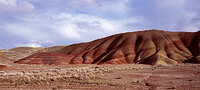
Painted Hills # 3.jpg

H
Painted Hills # 3.jpg

  • 4
  • 0
  • 71

Recent Classifieds

Forum statistics

Threads
203,208
Messages
2,851,375
Members
101,721
Latest member
rptn
Recent bookmarks
0

The Halide Project

Member
Allowing Ads
Joined
Oct 26, 2015
Messages
4
Location
Philadelphia
Format
Multi Format
Hi analog friends,

We just wanted to announce the founding of our new organization, The Halide Project, to this group of fellow analog users.

Founded in Philadelphia but maintaining a global outlook, The Halide Project seeks to support practitioners of traditional film and alternative process photography through exhibition opportunities, affordable workspace, and a residency program. We also seek to spread awareness to the greater public through education and outreach.

Our first exhibit will be held in December in Philadelphia and feature works by Bill Armstrong, Vincent Feldman, Joy Goldkind, Tricia Rosenkilde, and Sarah Van Keuren. We are in the middle of a Kickstarter campaign to finish raising funds for the exhibit. Right now we're over halfway there with 6 days until the finish line.

If you're interested in finding out more or would like to support our cause, check out these links:

Our kickstarter: Dead Link Removed
Our website: http://www.thehalideproject.org
Our facebook page: https://business.facebook.com/TheHalideProject

Thanks, and we hope to hear from you!
 
Sounds wonderful although I have already seen the website


Sent from my SAMSUNG-SM-G900A using Tapatalk
 
Exactly what is "emulsion-based photographic art"? Does this exclude alt process prints of images that don't originate on film?
 
Hi analog friends,

We just wanted to announce the founding of our new organization, The Halide Project, to this group of fellow analog users.

Founded in Philadelphia but maintaining a global outlook, The Halide Project seeks to support practitioners of traditional film and alternative process photography through exhibition opportunities, affordable workspace, and a residency program. We also seek to spread awareness to the greater public through education and outreach.

Our first exhibit will be held in December in Philadelphia and feature works by Bill Armstrong, Vincent Feldman, Joy Goldkind, Tricia Rosenkilde, and Sarah Van Keuren. We are in the middle of a Kickstarter campaign to finish raising funds for the exhibit. Right now we're over halfway there with 6 days until the finish line.

If you're interested in finding out more or would like to support our cause, check out these links:

Our kickstarter: Dead Link Removed
Our website: http://www.thehalideproject.org
Our facebook page: https://business.facebook.com/TheHalideProject

Thanks, and we hope to hear from you!

Exactly what is "emulsion-based photographic art"? Most alt processes are not "emulsion-based." Are these prints excluded if the images don't originate on film?
Maybe you mean "hand-coated" and not "emulsion-based"?
 
Exactly what is "emulsion-based photographic art"? Most alt processes are not "emulsion-based." Are these prints excluded if the images don't originate on film?
Maybe you mean "hand-coated" and not "emulsion-based"?

Spot-on question. There are so many layers of wrong info going on here.

Although I wholeheartedly salute the intent of their project, I also find myself very disappointed. The lack of knowledge about photographic technique, science, and history among far too many photo professionals is incredible. When I took the altprocess survey several months ago, I tried to point out to them that they had excluded silver gelatin dry plates and handmade silver gelatin emulsions. I still don't see any reference in the survey results. Dry collodion was never an important photographic process. Silver gelatin dry plate quite obviously was, although it was simply called dry plate. Several decades ago when the alternative processes became fashionable in art schools, "plate" photography was seen as exclusively collodion. Apparently, when photo educators see "dry plate" today, they must automatically (i.e., ignorantly) think "collodion dry plate."

If any of the big brains in APUG can think of a way to break through the Great Collodion Barrier at the end to the Universe, I love to hear your advice.
 
Spot-on question. There are so many layers of wrong info going on here.

Although I wholeheartedly salute the intent of their project, I also find myself very disappointed. The lack of knowledge about photographic technique, science, and history among far too many photo professionals is incredible. When I took the altprocess survey several months ago, I tried to point out to them that they had excluded silver gelatin dry plates and handmade silver gelatin emulsions. I still don't see any reference in the survey results. Dry collodion was never an important photographic process. Silver gelatin dry plate quite obviously was, although it was simply called dry plate. Several decades ago when the alternative processes became fashionable in art schools, "plate" photography was seen as exclusively collodion. Apparently, when photo educators see "dry plate" today, they must automatically (i.e., ignorantly) think "collodion dry plate."

If any of the big brains in APUG can think of a way to break through the Great Collodion Barrier at the end to the Universe, I love to hear your advice.

I have to agree -- the survey questions and categories need work. Ask the wrong questions and you will get the wrong answers. Silver printing on baryta and RC paper get their own listing (WHY?), but carbro and color carbon, for example, are completely absent. Collodion is listed umpteen times, as is pinhole. The term "emulsion" is used many times, mostly incorrectly. Does anyone really think "Lomography" is a technique? Why is a film developer (caffenol) a separate line item on the list of techniques? Photopolymer and photogravure are mentioned, but not collotype. The "This is another one of the main photographic techniques I use"
drop-down does not match the contents of the "I PRIMARILY use the following photographic technique" list. It's nice to see oil prints listed, but it should read "Rawlins" not "Rawlings."
 
Spot-on question. There are so many layers of wrong info going on here.

Although I wholeheartedly salute the intent of their project, I also find myself very disappointed. The lack of knowledge about photographic technique, science, and history among far too many photo professionals is incredible. When I took the altprocess survey several months ago, I tried to point out to them that they had excluded silver gelatin dry plates and handmade silver gelatin emulsions. I still don't see any reference in the survey results. Dry collodion was never an important photographic process. Silver gelatin dry plate quite obviously was, although it was simply called dry plate. Several decades ago when the alternative processes became fashionable in art schools, "plate" photography was seen as exclusively collodion. Apparently, when photo educators see "dry plate" today, they must automatically (i.e., ignorantly) think "collodion dry plate."

If any of the big brains in APUG can think of a way to break through the Great Collodion Barrier at the end to the Universe, I love to hear your advice.

hi D
i just took the survey ( different group than this this thread though, that group was the alt photo.com+dutch alternative group or something like that
there was a breakdown that said emulsion on glass .. it took me a bit of time to find it ...
also a " not found here, something else " button too ...
was a gigantic list of weird stuff, some of which i am still wondering what it is ..
 
Hi John,
In the one I took, it has "silver gelatin print on Barite paper", "silver gelatin print on glass plate", and "silver gelatin print on RC paper." I took it to mean emulsion transfer or something. Not sure why you'd call a negative a print. Perhaps you have a more recent, updated version. Hope so. That's a nice thought!
 
Last edited by a moderator:
Oops. I managed to post my previous comment here when it was meant for "Survey: Non-mainstream photographic processes are… - Name it!"
I am going to repost in that thread. I'm still in agreement with Denise. :smile:
 
Hello again from The Halide Project!

We appreciate your feedback about the confusion of the term "emulsion-based." We were hoping to use that as a catch all phrase for traditional darkroom and alternative processes, but you're absolutely right in that it could alienate practitioners of alternative processes that are not emulsion-based, so we've made some changes to our text.

Thank you for your help with that!

As for the comments on the survey, I think you're referencing another organization's survey, is that right? Does anyone have the link to that? We would be curious to check that out.

We actually have our own survey going as well, for anyone in the Philadelphia area. We are looking at the possibility of opening a community darkroom and trying to gauge what the interest is, and what people would like to see in such a space. If you're interested in participating, you can find it linked from our website: http://www.thehalideproject.org/

Thanks again for the feedback and we'd be happy to answer any other questions you might have about our goals.
 
Photrio.com contains affiliate links to products. We may receive a commission for purchases made through these links.
To read our full affiliate disclosure statement please click Here.

PHOTRIO PARTNERS EQUALLY FUNDING OUR COMMUNITY:


Ilford ADOX Freestyle Photographic Stearman Press Weldon Color Lab Blue Moon Camera & Machine
Top Bottom
