
• Welcome to Photrio!
    Registration is fast and free. Join today to unlock search, see fewer ads, and access all forum features.
    Click here to sign up

new darkroom... learning... wasting materials...wasting time... advice?

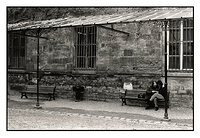
Amour - Paris

A
Amour - Paris

  • 0
  • 0
  • 39
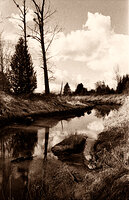
Bend in the river

H
Bend in the river

  • 2
  • 0
  • 58

Recent Classifieds

Forum statistics

Threads
203,235
Messages
2,851,848
Members
101,740
Latest member
Andrewford
Recent bookmarks
0
Welcome back! I was starting to wonder, if you got frustrated and left!! If you are being assisted and taught by an old darkroom guy, maybe newbie like me should not try to advise you.

It just seems to me you are doing a lot of work just to print B&W. I use Ilford multi-grade filters. I don't know if this is an option for you with your enlarger. If I want to increase or decrease contrast, I just put in different filter. #2 being the normal one, #3 higher contrast, #1 lower contrast, etc. They are calibrated so the development time does not change until I get to 3 1/2. Then it doubles. It's really an easy and reliable system.

What it really does is... highlight stays the same and shadow becomes lighter or darker, hence changing the overall contrast of the print.

Anyway, welcome back. I hope you got your chemical "thing" sorted out.... (and I hope you are not using D76 for paper)
 
If I were you, I'd get a set of contrast filters for B&W and not use the ones that you have been. It is possible to use those, but I think you're making it much more difficult than it needs to be (especially if any of them are mislabeled). Learn the basics then go back to those if you want, but the ones for B&W were designed to work with the multigrade paper and vice versa.
 

yep... oops! At first I was just developing negatives and scanning them and really it never occured to me that I should use something different for paper, I kinda figured developer was developer. HAHAHA well that solves that problem... I'm an idiot, what can I say? But hey, now I bet I'll be pretty damn good at working with an actual developer considering how I managed to get something out of nothing using that stuff...
 
Do you guys see light fall off? I don't. It looks to me, this is a shot of a scene at a bar or night club or something using flash. It looks to me, the flash just didn't reach wide enough and far enough.

Guy's face at left bottom is fairly well exposed but the background isn't.
Articles


I meant light fall off on the enlarger, not the negative... the bottom left quarter of this print was burned double time (I burn them all now so I didn't have a clear example), but in this one you can see I missed the corner. But burned double time you couldn't tell the difference, so that's how bad it is!
 
I'm not a great printer, but I do ok, most of the time. The swirly blacks are likely because of the D-76 or because you aren't developing fully. I use Ilford multigrade developer and do RC for 1 minute and fiber for 2 minutes. Always. And I time it with a digital kitchen timer. Doing things for exactly the same amount of time is how you get repeatability. If it's too dark with that time, then close down the aperture or use less exposure time.
For test strips, I cut a sheet into strips and uncover a little more every 2 seconds (using just one strip). Where you place it in the photo is key. If I have a spot where light meets dark, I'll put the strip along that border as much as possible. It does take experience, but you will learn. Making mistakes (as long as you can figure out you did them) does help in the learning process.

Yea I do time them, but it seems that d-76 seems to be the primary issue here... ehh lesson learned! Hehe, I can't stop laughing at myself...
 
I second the suggestion to get a help session with someone experienced. A lot of what you described can either be avoided, or is normal and you will learn to accept. Are you near any of the above posters? A few hours of help can be really great at the beginning of the learning curve.

I'm in the bay area CA. I don't know if anyone else is... but in any case I'll give it a shot with the dektol instead of d-76... which I am assuming is the primary issue here... that and the dichro head which will solve the stupid condenser problem... ahhh theres nothing like teaching yourself...
 
Hi angrykitty,

Art and good craft don't always look efficient, but I'm trying to do good photography, not good accounting.

I like it! I can tell I'm going to be that way as well... For some reason once I have the dektol and the dichro head I think I'll still be doing that many copies, just that they'll be better! I've given up on a lot of stuff I would like to do just because of the logistics involved in learning and using the d-76 and condenser head... with all those problems solved I think I'll really be able to get into it!
 
Hey, AngryK - glad to see the tone of these last 3 posts - you're feeling better. The most important thing is having fun and you need to feel better about all of this for that to happen.
Another possible resource - Jason Brunner has instructional videos on his site, might be one of them can help you if he has any on printing.
Hang in there.

George
 
Thanks for all the advice - I'm always so surprised how many people are willing to take time out of their day to help me out... that's so awesome! Thank you guys so much!

So when I get paid I'll be buying a fresh new stack of paper and some DEKTOL, lol! My special order piece finnally arrived and I attached my dichro head to the enlarger, so no more stinky filters! Yey!!!

Theres something about using color filters that I want to keep, the condenser just didn't really offer that. Even if it's just b&w I think the most subtle differences in adding that extra filtration are what's going to make my prints stand out. There is very clearly something there, so I can't wait to really explore it now that I have that ability.

It may be a little while before I get to buckle down and get back to work since I spent all my money on vacation (read - photography practice) and my cat decided he needed a biopsy, but I will let you guys know as soon as I can afford some fresh materials and get my butt back in there!
 
Enjoy your NEW developer!
 
Angrykitty - In addition to the already good advice you have recieved, I'll give you 2 more bits -

#1 - never forget that one of the most valuable pieces of equipment in your darkroom is the trash can - you learn tremedously from your failures.

#2 - read this article from the Michael and Paula website -
http://michaelandpaula.com/mp/onprinting.html

I have been printing for over 35 years and his technique called "outflanking the print" has saved me more paper than I ever could have imagined. I no longer make test strips as this method is super efficient.

Good luck.
Tim

My experience parallels Tim's. However, bear in mind that it's extremely difficult at first (at least it was for me) to force oneself to outflank the print as Michael describes. You must intentionally do them wrong by overshooting until you can't any more. Seems like you'd use more paper that way but you don't. I rarely need more than 5 sheets to get the best possible print from a negative, including dodging and burning. And once you've hit upon the optimal print, you can crank them out by the dozen per hour and they'll be absolutely identical.

Also bear in mind that this method of printing is impossible without a metronome. "Absolutely essential" means absolutely essential.
 
AK
get a big 500 sheet box of paper,
it will cost way less than a few boxes of lesser amounts.

have fun
 
Photrio.com contains affiliate links to products. We may receive a commission for purchases made through these links.
To read our full affiliate disclosure statement please click Here.

PHOTRIO PARTNERS EQUALLY FUNDING OUR COMMUNITY:


Ilford ADOX Freestyle Photographic Stearman Press Weldon Color Lab Blue Moon Camera & Machine
Top Bottom
