• Welcome to Photrio!
    Registration is fast and free. Join today to unlock search, see fewer ads, and access all forum features.
    Click here to sign up

Need advice: Tri-X and Rodinal development

Train

A
Train

  • 1
  • 1
  • 21
Train Station 1

A
Train Station 1

  • 0
  • 0
  • 22

Recent Classifieds

Forum statistics

Threads
201,784
Messages
2,830,149
Members
100,946
Latest member
李添翼
Recent bookmarks
0

removedacct3

Member
Allowing Ads
Joined
Mar 19, 2009
Messages
628
Location
-
Format
Multi Format
On a side note ... have you seen this image? A wonderful combination of Tri-X, Rodinal (called Adonal due to trademark issues) and grain.
 
OP
OP
Odot

Odot

Member
Allowing Ads
Joined
Oct 11, 2016
Messages
257
Location
Berlin
Format
Multi Format
By the way, your fixing worries me, 3 minutes with one ag. per minute. You should constantly agitate for at least the minimum time it takes to clear a scrap of leader, and fix for 2-3 times that tested time, with several ags. per additional minute. I really "scrub" the film with the fixer. Look how little space is between the coils of film on the roll - it's a different ballgame than a piece of leader floating in a dish of fix. You can't over-fix (reasonably speaking), but you sure can under-fix.I do use hypo clear on all my non-test rolls (sodium sulfite is cheap, my time ain't), and test every roll for adequate fixing and residual hypo.

hey, i am not sure what you mean. what is the minimum time you speak of? more agitation meaning the fix spreads better over the negative? as for the dilution of the fix, is it ok?
 
Joined
Jan 21, 2003
Messages
15,715
Location
Switzerland
Format
Multi Format
Tri-X in Rodinal.

I recommend shooting at an exposure index of 200, instead of box speed.
1+25 developer will probably work better.

Much of the artifacts in your pictures above I think are scanner related.

You control negative contrast by adjusting developing time. It isn't a function of the film developer as much as it is your skill.

Your pictures look OK. I'd say keep working hard at it, try different developing times, and different film exposure, until you actually learn the film and developer combination well enough.

Good luck!
 
OP
OP
Odot

Odot

Member
Allowing Ads
Joined
Oct 11, 2016
Messages
257
Location
Berlin
Format
Multi Format
Heres the thing, i have compared my scans with those of the lab and the difference is significant so its not so much scanner related. Except for the fact that my negs look more contrasty with Rodinal, my negs have pretty much all had the same "look", even with DDX so its not so much the scan, its me :smile:
 

TheToadMen

Subscriber
Allowing Ads
Joined
Sep 18, 2012
Messages
3,570
Location
Netherlands, EU
Format
Pinhole
Heres the thing, i have compared my scans with those of the lab and the difference is significant so its not so much scanner related. Except for the fact that my negs look more contrasty with Rodinal, my negs have pretty much all had the same "look", even with DDX so its not so much the scan, its me :smile:

Take a negative that was scanned by the lab and scan it yourself. Then compare the results.
 

~andi

Member
Allowing Ads
Joined
Mar 11, 2011
Messages
203
Location
here
Format
Multi Format
Heres the thing, i have compared my scans with those of the lab and the difference is significant so its not so much scanner related.

I'm curious, how do come to that conclusion? If your scans differ significantly to the lab scans, doesn't a scanning issue appear more likely than not?

Andi
 
Last edited:

Lachlan Young

Member
Allowing Ads
Joined
Dec 2, 2005
Messages
5,082
Location
Glasgow
Format
Multi Format
Heres the thing, i have compared my scans with those of the lab and the difference is significant so its not so much scanner related. Except for the fact that my negs look more contrasty with Rodinal, my negs have pretty much all had the same "look", even with DDX so its not so much the scan, its me :smile:

The stated times for Rodinal are for a gamma/ CI of about 0.65-0.7 - unless you work in very soft light, that's way too much. Knocking 20-30% off the stated times & increasing your shadow exposure sensibly is likely to be a good start. Given that it is not a grain solvent developer, & that the suggested times result in a high contrast index, it's no surprise that people state that rodinal negs are contrastier & grainier...

Also, Coolscans & Noritsu minilab scanners can produce some hideously oversharpened files that do nothing but turn actual grain structures into an aliased mess. Compromising a negative to fit a poor scanner is never a good practice.
 
OP
OP
Odot

Odot

Member
Allowing Ads
Joined
Oct 11, 2016
Messages
257
Location
Berlin
Format
Multi Format
I'm curious, how do come to that conclusion? If your scans differ significantly to the lab scans, doesn't a scanning issue appear more likely than not?

Andi
sorry i mean scanned negatives. the negatives from the lab simply look better (overall greytones, grain and sharpness) than mine
 

M Carter

Member
Allowing Ads
Joined
Jan 23, 2013
Messages
2,149
Location
Dallas, TX
Format
Medium Format
hey, i am not sure what you mean. what is the minimum time you speak of? more agitation meaning the fix spreads better over the negative? as for the dilution of the fix, is it ok?

When you start setting up to develop your film, you likely have fix that's been mixed per instructions (like Ilford Rapid, 1 part fix to 4 parts water). If you've already developed a few rolls or that mixture has been bottled up for a few days, you need to do a test.

You snip a piece of undeveloped film (usually a scrap of leader, just like a quarter inch or so) and pour the fix in (optimally) a clear or translucent graduate or pitcher - I just use a clear plastic measuring cup. Drop the scrap of leader in, dunk it under so it sinks, and start a timer. At some point, the scrap will turn translucent/clear - the matte emulsion will dissolve (thus the transparent dish - you can set it on a counter and tell when it's cleared easier than a dark container).

Fresh rapid fix will take about 30 seconds to clear that scrap of film, and the rule of thumb is double that fixing time. As the fixer gets more exhausted, it will take longer. When mine gets to 60+ seconds, I dump it. And you should agitate the tank for at least double the fixing time you came up with (test cleared in :30, agitate for :60). I agitate pretty strongly, too, really swirl and shake the tank. Then I might let it sit another minute while I prepare hypo clear or something, and give it a shake every 15 secs. or so.

You can't over-fix modern films (unless you get into actual days in the tank). So an extra minute or two is just really good insurance - there's always something to keep you busy, rinsing graduates or getting your film drying space ready.

I test every roll, too. After washing, I blot off some of the clear leader or tail with a paper towel or kim wipe. Put one tiny droplet of straight selenium toner on the emulsion side. If the spot yellows or is visible at all, you need to fix more. (Selenium is handy for negs even if you don't print - you can amp up the highs in a flat negative by a half-stop or so by soaking the neg and then rocking it in straight selenium. Or dilute selenium for less intensity).

I also test for washing, since I use hypo clear on my film I tend to try to wash less. There's a product called "residual hypo test", one drop on the same clear leader from the selenium test, time for 2 minutes, if it yellows, wash more! One bottle will last you ages.

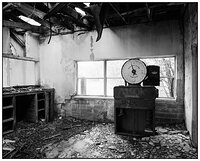
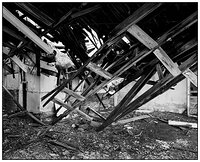
Many folks tell me I'm being too anal - hypo clear and then testing? For film? But I just developed 7 rolls from a desert trip, and the time my wife sat in the car thinking "I thought this was a vacation, dude??", stepping over mummified dogs in an abandoned factory, the hours and hours I spent on Google earth looking for cool stuff on our route and making maps keyed to those spots... and the projects I shoot with models and props and stylists ($$$! Time!!!) - to me an extra 4 minutes or so per roll is 100% worth it.
 
OP
OP
Odot

Odot

Member
Allowing Ads
Joined
Oct 11, 2016
Messages
257
Location
Berlin
Format
Multi Format
When you start setting up to develop your film, you likely have fix that's been mixed per instructions (like Ilford Rapid, 1 part fix to 4 parts water). If you've already developed a few rolls or that mixture has been bottled up for a few days, you need to do a test.

You snip a piece of undeveloped film (usually a scrap of leader, just like a quarter inch or so) and pour the fix in (optimally) a clear or translucent graduate or pitcher - I just use a clear plastic measuring cup. Drop the scrap of leader in, dunk it under so it sinks, and start a timer. At some point, the scrap will turn translucent/clear - the matte emulsion will dissolve (thus the transparent dish - you can set it on a counter and tell when it's cleared easier than a dark container).

Fresh rapid fix will take about 30 seconds to clear that scrap of film, and the rule of thumb is double that fixing time. As the fixer gets more exhausted, it will take longer. When mine gets to 60+ seconds, I dump it. And you should agitate the tank for at least double the fixing time you came up with (test cleared in :30, agitate for :60). I agitate pretty strongly, too, really swirl and shake the tank. Then I might let it sit another minute while I prepare hypo clear or something, and give it a shake every 15 secs. or so.

You can't over-fix modern films (unless you get into actual days in the tank). So an extra minute or two is just really good insurance - there's always something to keep you busy, rinsing graduates or getting your film drying space ready.

I test every roll, too. After washing, I blot off some of the clear leader or tail with a paper towel or kim wipe. Put one tiny droplet of straight selenium toner on the emulsion side. If the spot yellows or is visible at all, you need to fix more. (Selenium is handy for negs even if you don't print - you can amp up the highs in a flat negative by a half-stop or so by soaking the neg and then rocking it in straight selenium. Or dilute selenium for less intensity).

I also test for washing, since I use hypo clear on my film I tend to try to wash less. There's a product called "residual hypo test", one drop on the same clear leader from the selenium test, time for 2 minutes, if it yellows, wash more! One bottle will last you ages.

Many folks tell me I'm being too anal - hypo clear and then testing? For film? But I just developed 7 rolls from a desert trip, and the time my wife sat in the car thinking "I thought this was a vacation, dude??", stepping over mummified dogs in an abandoned factory, the hours and hours I spent on Google earth looking for cool stuff on our route and making maps keyed to those spots... and the projects I shoot with models and props and stylists ($$$! Time!!!) - to me an extra 4 minutes or so per roll is 100% worth it.

thanks for all of the info, i acutally brew up fresh chemicals every time i develop in hopes of getting the best results
 

M Carter

Member
Allowing Ads
Joined
Jan 23, 2013
Messages
2,149
Location
Dallas, TX
Format
Medium Format
thanks for all of the info, i acutally brew up fresh chemicals every time i develop in hopes of getting the best results

Fix will keep well if it's in a good container - I try to size the container so there's little or no air, I just save every photo chemical bottle and wash them out. If it clears the scrap of film, it's still good - just don't use the same fix for film and paper.
 
Photrio.com contains affiliate links to products. We may receive a commission for purchases made through these links.
To read our full affiliate disclosure statement please click Here.

PHOTRIO PARTNERS EQUALLY FUNDING OUR COMMUNITY:



Ilford ADOX Freestyle Photographic Stearman Press Weldon Color Lab Blue Moon Camera & Machine
Top Bottom