• Welcome to Photrio!
    Registration is fast and free. Join today to unlock search, see fewer ads, and access all forum features.
    Click here to sign up

ND filters - why use them?

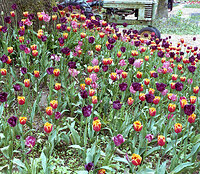
Tractor & Tulips

A
Tractor & Tulips

  • 0
  • 0
  • 22
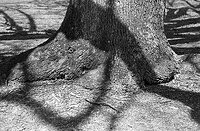
Tree with Big Shadows

Tree with Big Shadows

  • 3
  • 0
  • 80

Forum statistics

Threads
203,456
Messages
2,855,037
Members
101,853
Latest member
Expert Graphics Int.
Recent bookmarks
2

mr rusty

Member
Joined
Sep 7, 2009
Messages
827
Location
lancashire,
Format
Medium Format
Grad ND filters I get and have one and use it sometimes, likewise colour filters, but what is the benefit in using say a 3 stop neutral density filter rather than just changing the exposure by 3 stops? Some great images by Thomas B in the gallery using filters, but I don't understand what the ND filter adds.
 
Bigger aperture for less DOF, or a longer shutter speed.

I use a 2 stop ND when I want narrow depth of field so I can open my lens up more. I also use ND filters to lengthen exposure for movement effects... Smoothing out water, removing/making people in a scene blurry instead of defined, increasing motion blur of other moving objects, etc.

I find them totally necessary in my kit.
 
Sometimes you can't stop down or reduce shutter speed enough to get the effect you need. Some landscape photographers use these in multiples to blur water and cloud movements. Others in towns to avoid recording people on the move.
 
Want to blur a waterfall with a 4-second exposure, but all you can get is 1s at f/16? Either stop down to f/44 if you can and blur the whole lot with diffraction, or add a 3-stop ND.
Want to shoot wide open at f/1.4 at a max of 1/1000s, but the slowest film you've got is ei50 and sunny-16 says you need ei8? Add a 3-stop ND and you're at a sensible speed.
Want to shoot a building where people keep walking past? Add an ND to get to a few-minutes exposure and the people magically disappear.
Want to shoot the sun? (I've done it, it's fun). Add an ND10,000...
 
I use soft focus lenses where different apertures create different results. If I want to shoot at f5.6 and my ilex5 shutter only goes to 1/50 (or slower for a packard), I'm going to need some filtration to get exposure into the range the camera+lens can handle.
 
I use them for the same reasons as listed above... My primary use of them is to be able to open my lens wide open for shallow depth of field on a bright day. I have several, two of which are 8 and 9 stops each. Quite aggressive but they are really nice when you need that f/1.4 and your film is 400 or 200 and it's bright outside.
 
Like everybody else have mentioned already, it is to alter shutter speed or aperture. I use three varieties:
3-stop ND filter
9-stop ND filter
2-stop ND grad filter

It really is as simple as that. Once I used the 9-stop ND filter, hoping to show something underneath the water in a lake. It was windy and wavy, so the 9-stop filter, along with a polarizer and an orange filter (to cut through the blue/green water). If I remember correctly the exposure ended up being about 20 seconds. It worked, and I now have a photograph of a shipwreck that I otherwise wouldn't have.
It's a bit of a technical exercise, and you simply apply your tools to achieve what you want.
 
Like everybody else have mentioned already, it is to alter shutter speed or aperture. I use three varieties:
3-stop ND filter
9-stop ND filter
2-stop ND grad filter

It really is as simple as that. Once I used the 9-stop ND filter, hoping to show something underneath the water in a lake. It was windy and wavy, so the 9-stop filter, along with a polarizer and an orange filter (to cut through the blue/green water). If I remember correctly the exposure ended up being about 20 seconds. It worked, and I now have a photograph of a shipwreck that I otherwise wouldn't have.
It's a bit of a technical exercise, and you simply apply your tools to achieve what you want.

Well thought out, good job.
 
I use ND filters often. It of course depends upon the light. For me it's always the transition zone between light and dark in a scene. If shooting in a direction away from the sun I use standard Grad or ND's in 2 or 3 stop and in both soft and hard edges. If shooting towards the sun I use Reverse Grad or ND's and sometimes even stack those as required.
As I typically shoot only transparency film the exposure latitude is very narrow and the grads all help work through the shortcomings of the film.
The attached image was shot with a Reverse ND.
 

Attachments

  • Flor0773_A_APUG.jpg
    Flor0773_A_APUG.jpg
    307.6 KB · Views: 203
Last edited by a moderator:
A photographer used them as a seagull filter -- the longer exposures got rid of the sea gulls in the air that otherwise looked liked nasty spots in the sky.
 
I use ND filters often. It of course depends upon the light. For me it's always the transition zone between light and dark in a scene. If shooting in a direction away from the sun I use standard Grad or ND's in 2 or 3 stop and in both soft and hard edges. If shooting towards the sun I use Reverse Grad or ND's and sometimes even stack those as required.
As I typically shoot only transparency film the exposure latitude is very narrow and the grads all help work through the shortcomings of the film.
The attached image was shot with a Reverse ND.

That's beautiful! Well crafted.
 
I use ND filters often. It of course depends upon the light. For me it's always the transition zone between light and dark in a scene. If shooting in a direction away from the sun I use standard Grad or ND's in 2 or 3 stop and in both soft and hard edges. If shooting towards the sun I use Reverse Grad or ND's and sometimes even stack those as required.
As I typically shoot only transparency film the exposure latitude is very narrow and the grads all help work through the shortcomings of the film.
The attached image was shot with a Reverse ND.

Beautiful image. Excuse my ignorance but what is a "Reverse ND"?
 
A Tiffen 82Ø 0.9 (3•) is in my filter wallet but it doesn't get much use — I think I used it twice last October in an outback scene; I prefer to employ metering tricks instead of these.
 
Beautiful image. Excuse my ignorance but what is a "Reverse ND"?

Thank you for your kind comment on the image.
I've attached a couple links to Singh Ray filters. The first link shows and outlines what I use for a standard grad or ND. The second link shows the reverse grad style. Both have a bit of difference in the placement and density of the graduation if you will.

Standard Grad Neutral Density

Reverse Grad Neutral Density
 
As ever on Apug, you ask a simple question and get TONS of helpful replies. Thanks guys. :smile:
 
Reverse versus Standard graduated neut. dens. filters:

-) the reverse version has a maximum density zone in the center, falling off steeply to clear at one side and in a shallow way to grey at the other.

-) the standard version has the maximum density at one half, falling off at a transition zone at the center to clear at the other half.


(I just learned about that reverse version today, and am still not sure about its use other than landscapes with the sun just above the horizon.)
 
Last edited by a moderator:
(I just learned about that reverse version today, and am still not sure about its use other than landscapes with the sun just above the horizon.)

As you've mentioned here Agx, with the sun just above the horizon, is about the only use the grad was developed for, at least as far as I know. My example image was taken at the very beginning of that usage in a sunrise event. I could have used a regular grad in that event to start with, but did not feel comfortable in trying to change to the reverse once the sun had risen.

It reduces light intensity where camera setting can't go any further.
Ralph's made the general usage of grads very clear in a one line sentence IMO. Well stated.
 
I want a negative density filter which gives me more light when I put it on the lens.

I am working on that. Right now I have a prototype that increases the light by 8 times, but it has a filter factor of three stops.

I am also working on contrast filters for B&W. Filters lighten their own color and darken the opposite color. So I am working on white filters that lighten the whites (highlights) and darken the blacks (shadows), thus increasing contrast. Black filters lighten blacks and darken whites, thus decreasing contrast. But I am having trouble keeping the filter factors down with these also.
 
Mr Rusty I notice you are in the UK, you've got a built in ND filter where you live :D
 
I am working on that. Right now I have a prototype that increases the light by 8 times, but it has a filter factor of three stops.

I am also working on contrast filters for B&W. Filters lighten their own color and darken the opposite color. So I am working on white filters that lighten the whites (highlights) and darken the blacks (shadows), thus increasing contrast. Black filters lighten blacks and darken whites, thus decreasing contrast. But I am having trouble keeping the filter factors down with these also.

Oh I'd like one of the black filters! Detail in all the shadows, and hours spent dodging and burning!!:laugh::smile:
 
Mr Rusty I notice you are in the UK, you've got a built in ND filter where you live :D

But not built in soft focus (smog).
 
I want a negative density filter which gives me more light when I put it on the lens.
I can do it when I screw a +3 dioptre close-up lens on the front of my standard 8x10 lens; a Fujinon-W 300mm f5.6. The combination becomes (approximately) a 150mm f2.8 lens that covers 4x5. That's two stops gained and a lot of image quality lost.
 
Photrio.com contains affiliate links to products. We may receive a commission for purchases made through these links.
To read our full affiliate disclosure statement please click Here.

PHOTRIO PARTNERS EQUALLY FUNDING OUR COMMUNITY:


Ilford ADOX Freestyle Photographic Stearman Press Weldon Color Lab Blue Moon Camera & Machine
Top Bottom