
Thank you for the compliments. I'll ask next time I'm in the shop how they were developed. They don't do b%w on site but outsource it to a local man who comes in the shop fairly regularly. I'll be going there this Wednesday or Thursday so will endeavour to find out for you.Wonderful subject choice. Great results. Can you find out how it was developed? Developer,times and such? I'd love to see some big prints of #1 and 7.
-
Welcome to Photrio!Registration is fast and free. Join today to unlock search, see fewer ads, and access all forum features.Click here to sign up
- Home
- Forums
- Analog Workflow Forums (100% Analog/Traditional)
- Analog Equipment
- Miscellaneous Equipment
You are using an out of date browser. It may not display this or other websites correctly.
You should upgrade or use an alternative browser.
You should upgrade or use an alternative browser.
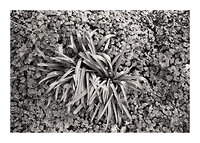
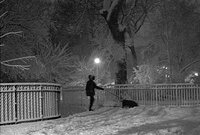
My first attempt with SFX200
-
A
- Thread starter Paul Manuell
- Start date
Recent Classifieds
-
Want to Buy Hasselblad tripod quick release plate... level
- Started by eli griggs
-
For Sale Fotodiox Pronto AF adapter
- Started by OAPOli
-
Under Offer 612 Holga modded body
- Started by OAPOli
-
For Sale Rodenstock Apo Sironar N 300mm RARE
- Started by x.rasenas
-
For Sale Leica M9 not working sensor _ for repair
- Started by Manual Camera
Forum statistics
Sorry, replied to wrong post.Did you use an R72 filter though?
Did you use an R72 filter though?My first try was with 2 different cameras, a postwar Zeiss Ikonta 6x6 with a novar lens and a prewar super ikonta 6x4.5 with a tessar. Both were developed in d-76 1+1, probably with excessive agitation, at a low temp off the bottom of the chart so I had extrapolate the time. For each scene I did a reference with no filter, metered at 200 iso, then add the filter and shot 1 each at +4, +5, +6 stops. The 6x6 film came out just terribly grainy, the 6x4.5 came out slightly better. The woods effect was rather mild.
Since then, I put another roll through the 6x4.5, all at +4 stops, and had it developed by a lab that uses D-76 full strength. They came out much better but not near anything you did. If you go into my media you can see 4 shots near the top from the San Diego Japanese Garden.
Did you use an R72 filter though?
Yes, I did one reference shot at 200 iso without filter, then added the R72 and shot at +4, +5 & +6 for the first 2 rolls. After seeing the results I stuck to +4 with the R72. Here are 4 from the SD Japanese Garden. These were done in early afternoon on a super bright SoCal day.
https://www.photrio.com/forum/media/san-diego-japanese-garden.57505/#media
http://www.photrio.com/forum/media/sdgarden2.57506/#media
https://www.photrio.com/forum/media/sdgarden3.57507/#media
https://www.photrio.com/forum/media/sdgarden4.57508/#media
- Joined
- Feb 26, 2009
- Messages
- 118
- Format
- Medium Format
Those all look great. I never have used the R72 filter on SFX. You should try a medium red filter on a few frames, it has a completely different look, well not completely. But it is nice. Here is what it do:
SFX (Ilford) (red filter no.25;EI32) HC-110h, 18 minutes, 30 sec, 3 inversions per 4 minutes, 68 degrees
Above is what I do, I really don't like the IR look (so only ever shot it in the winter when there were no leaves) but the above is my method for shooting this semi- IR film. Luckily it was one of those rare times when you shoot with a filter (who knows the X factor?) and develop with your standard developer and everything works. It has only happened twice in the last 18 years. Before that I use the same film for years with the same developers; that is when I started to get nervous about films disappearing.
All nice photos, but the 2nd and 3rd ones show the pseudo infrared look more than the other 2.Yes, I did one reference shot at 200 iso without filter, then added the R72 and shot at +4, +5 & +6 for the first 2 rolls. After seeing the results I stuck to +4 with the R72. Here are 4 from the SD Japanese Garden. These were done in early afternoon on a super bright SoCal day.
https://www.photrio.com/forum/media/san-diego-japanese-garden.57505/#media
http://www.photrio.com/forum/media/sdgarden2.57506/#media
https://www.photrio.com/forum/media/sdgarden3.57507/#media
https://www.photrio.com/forum/media/sdgarden4.57508/#media
Sorry if this seems flippant, it's genuinely not meant to be, but if you don't like the IR look, why shoot with SFX in the first place? The IR look is the whole reason I shot with it, and I assumed was everyone else's reason too.Above is what I do, I really don't like the IR look (so only ever shot it in the winter when there were no leaves) but the above is my method for shooting this semi- IR film. Luckily it was one of those rare times when you shoot with a filter (who knows the X factor?) and develop with your standard developer and everything works. It has only happened twice in the last 18 years. Before that I use the same film for years with the same developers; that is when I started to get nervous about films disappearing.

It's an interesting film on its own.Sorry if this seems flippant, it's genuinely not meant to be, but if you don't like the IR look, why shoot with SFX in the first place? The IR look is the whole reason I shot with it, and I assumed was everyone else's reason too.
A bit grainy, but in an interesting way.
From an entry to an Ilford competition many years (2009?) ago. 6x4.5 (I think):
- Joined
- Feb 26, 2009
- Messages
- 118
- Format
- Medium Format
I like SFX by Ilford looks. At least when I do it.Sorry if this seems flippant, it's genuinely not meant to be, but if you don't like the IR look, why shoot with SFX in the first place? The IR look is the whole reason I shot with it, and I assumed was everyone else's reason too.
Just had these done, my 2nd roll of SFX. Really happy with these too, though for most of them the exposures were slightly bright, despite using the same 4 stop principal as before. Was a quick fix for Jon on his computer in the shop though.
When doing model photography I usually spot meter from the subject's face, but with these I just used evaluative metering like with the first film, so maybe that explains the slight brightness before they were adjusted by Jon. Anyway, hope you like them and any feedback is welcome.


When doing model photography I usually spot meter from the subject's face, but with these I just used evaluative metering like with the first film, so maybe that explains the slight brightness before they were adjusted by Jon. Anyway, hope you like them and any feedback is welcome.
Ok, I've been told by the person who developed them that he used Rodinal but can't remember the dilution, and the development time was 15 1/4 minutes. Hope that helps.Wonderful subject choice. Great results. Can you find out how it was developed? Developer,times and such? I'd love to see some big prints of #1 and 7.
pentaxuser
Member
When you say Jon says that the negatives were slightly bright, do you mean that he thinks that less than 4 stops would have been better or simply that he thinks the evaluative meter just fooled into slightly overexposing? As these are adjusted reversals of a scan of the negatives, I presume, it is difficult for those of us who optically print to judge if the negatives are overexposed by much, if at all.Just had these done, my 2nd roll of SFX. Really happy with these too, though for most of them the exposures were slightly bright, despite using the same 4 stop principal as before. Was a quick fix for Jon on his computer in the shop though.
View attachment 204380 View attachment 204381 View attachment 204382 View attachment 204383 View attachment 204384 View attachment 204385 View attachment 204386 View attachment 204387
Still if you are a hybrid user I accept that is not your problem. Her skin may be slightly overexposed but that look of skin is typical of such film with a R72. Take her skin out of the equation and the rest certainly looks right
pentaxuser

MartinCrabtree
Member
Ok, I've been told by the person who developed them that he used Rodinal but can't remember the dilution, and the development time was 15 1/4 minutes. Hope that helps.
Thank you. That's just what I wanted to hear. Likely 50:1.
Sorry, I think you misunderstood me; Jon never actually commented on the photos, it was just my opinion of them when I saw them on his computer screen, that overall the photos were a bit light, so I asked him to darken them a tad. The model's skin was as I expected it to turn out, a sort of ghostly look to it, having seen others' people photos in infrared on various sites. I really like that look.When you say Jon says that the negatives were slightly bright, do you mean that he thinks that less than 4 stops would have been better or simply that he thinks the evaluative meter just fooled into slightly overexposing? As these are adjusted reversals of a scan of the negatives, I presume, it is difficult for those of us who optically print to judge if the negatives are overexposed by much, if at all.
Still if you are a hybrid user I accept that is not your problem. Her skin may be slightly overexposed but that look of skin is typical of such film with a R72. Take her skin out of the equation and the rest certainly looks right
pentaxuser
You're welcome, glad to helpThank you. That's just what I wanted to hear. Likely 50:1.

These are surreal. Spectacular.
Thank youThese are surreal. Spectacular.
It wasn't the skin that was my concern about overexposure - I was expecting the ghostly white look in that - it was more the overall brightness of the photos in general. The ones posted here are a mix of ones that came out ok and needed no adjustment and ones that were too bright but adjusted by Jon on his shop's computer to my instruction, as in he operates the computer (because I wouldn't have a clue how to) and I get him to make any adjustments then tell him when I'm happy.When you say Jon says that the negatives were slightly bright, do you mean that he thinks that less than 4 stops would have been better or simply that he thinks the evaluative meter just fooled into slightly overexposing? As these are adjusted reversals of a scan of the negatives, I presume, it is difficult for those of us who optically print to judge if the negatives are overexposed by much, if at all.
Still if you are a hybrid user I accept that is not your problem. Her skin may be slightly overexposed but that look of skin is typical of such film with a R72. Take her skin out of the equation and the rest certainly looks right
pentaxuser

Sirius Glass
Subscriber
Does the film see through the clothes or did the clothes just fall off in some one the photographs? I am confused. 
YawnDoes the film see through the clothes or did the clothes just fall off in some one the photographs? I am confused.
pentaxuser
Member
Paul, thanks for clarifying what Jon did. It certainly sounds as if most and probably all of the negatives would produce decent prints under an enlarger at an ei of 12( 4 stops under). What I was trying to arrive at was whether an ei of 20 would have been OK and it sounds as if it might be, based on your findings.
It might be that an ei 25 is OK which is even better, if a little surprising based on what I will call "conventional wisdom"
pentaxuser
It might be that an ei 25 is OK which is even better, if a little surprising based on what I will call "conventional wisdom"
pentaxuser

Does the film see through the clothes or did the clothes just fall off in some one the photographs? I am confused.
I’m not confused at all. In fact, I like what I see in those photos.
 Oh, to the OP/author, the photos are great, not only the model.
I mainly shot my first roll at 4 stops over the non filtered, metered shutter speed at my chosen fstop (so the equivalent, I suppose, of shooting the 200iso film at 12iso), but with a couple of them I also bracketed at 5 and 6 stops over because I wanted to make sure I had a 'keeper' for each of those particular shots. But in their instances the 4 stop shots were still the best, so I exposed the whole of the 2nd roll (the model shots) at 4 stops over. Although most of them came out fine, a few of them were, in my opinion, a bit light, as if exposed at the 5 or 6 stops over mark. They certainly weren't over exposed beyond recovery and Jon only had to darken them down a little bit on the computer, but would've been nice to get consistently 'correct' exposures in camera.Paul, thanks for clarifying what Jon did. It certainly sounds as if most and probably all of the negatives would produce decent prints under an enlarger at an ei of 12( 4 stops under). What I was trying to arrive at was whether an ei of 20 would have been OK and it sounds as if it might be, based on your findings.
It might be that an ei 25 is OK which is even better, if a little surprising based on what I will call "conventional wisdom"
pentaxuser
With regards to the *ei20 and 25 part of your question; with *ei25 being only 3 stops over, I'm not sure if that might produce a slightly too dark picture, and *ei20 maybe a bit better. To me, the 4 stops over seemed spot on on those that didn't come out too light.
*a term I'm not too familiar with, other than seeing it on this site and realising it's another term for iso or asa.
Last edited:
Thank you for the compliment, much appreciated.I’m not confused at all. In fact, I like what I see in those photos.
Actually, a film will only have one single ISO (formerly ASA) speed. If you are metering using a different rating, you are using a different Exposure Index ("EI").With regards to the *ei20 and 25 part of your question; with *ei25 being only 3 stops over, I'm not sure if that might produce a slightly too dark picture, and *ei20 maybe a bit better. To me, the 4 stops over seemed spot on on those that didn't come out too light.
*a term I'm not too familiar with, other than seeing it on this site and realising it's another term for iso or asa.
Even the film manufactures use EI when referring to customized changes in film ratings.
And
But in their instances the 4 stop shots were still the best, so I exposed the whole of the 2nd roll (the model shots) at 4 stops over. Although most of them came out fine, a few of them were, in my opinion, a bit light, as if exposed at the 5 or 6 stops over mark. They certainly weren't over exposed beyond recovery and Jon only had to darken them down a little bit on the computer, but would've been nice to get consistently 'correct' exposures in camera.
When it comes to IR work, you will never be able to count on getting "consistently correct" in camera exposures, because your meter cannot meter IR. It only meters visible light, and we use informed guesses about how much IR light accompanies that visible light. Those guesses are, at best, imprecise - the ratio of IR to visible is quite variable.
All that being said, your results are impressive!
| Photrio.com contains affiliate links to products. We may receive a commission for purchases made through these links. To read our full affiliate disclosure statement please click Here. |
PHOTRIO PARTNERS EQUALLY FUNDING OUR COMMUNITY:  |