• Welcome to Photrio!
    Registration is fast and free. Join today to unlock search, see fewer ads, and access all forum features.
    Click here to sign up

My filters consistently decrease my negative contrast - what am I doing wrong?

Recent Classifieds

Forum statistics

Threads
203,292
Messages
2,852,472
Members
101,766
Latest member
Onetrick
Recent bookmarks
0
As per metering thru filters, TTL etc : What specific film is your meter calibrated to? What spectral transmission is it matched to? If this were a multiple choice question, the correct answer would be, None of the above! That's why even different pan film tech sheets recommend different filter factors. But not all brands of filters are identical either. There simply is no substitute for actually testing any hypothetical filter factors with a neutral gray target and comparing the result, preferably with a densitometer.
 
Gosh, Ralph, I've got entire binders of full densitometer plots with TMax films, with perfectly matched (overlapping) RGB curves.
 
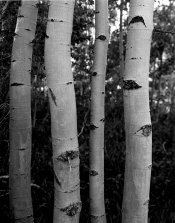
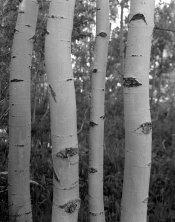
I used the same factor for each sheet of film to ensure correct color balance. The 3 images were mixed in PS and No color correction was applied. All three filters, Lee Polyester technical Separation, read within 1/3 stop of each other.
The color fringing in the shadow edge is from the the afternoon's sun movement. The second shot of the same subject has rainbow like color streaks while the tomato remains the same color from the later in the day sun movement.
www.flickr.com/photos/thirteenthumbs

that's how i do it too :smile:
tri chromes (modern) are a blast !
 
When one uses filters, one needs to adjust the exposure. That includes doing the adjustment before calculating the N+1, N-1, ... exposures.
 
In this particular case, it might be hard to even first base if the bat keeps breaking ! - referring to filters of dubious quality or application to begin with.
 
In this particular case, it might be hard to even first base if the bat keeps breaking ! - referring to filters of dubious quality or application to begin with.

I agree. Use screw in glass filters or slip on Series filters. Do not bother with filter sheets which may not be close enough to the lens.
 
Thanks all for the insights.

Sounds like there are some simple steps I can take to troubleshoot. Taping the edges of the filter to ensure I don't have light piping in from the sides and causing flare is an easy first thing to try.

I do suspect part of it is just my own inexperience with filters. I'll need to be aware of how blue shaded light is in particular as I do a lot of my work in the shade. I'll probably need to continue to experiment as well as finding what works best for my own filter factors. Sounds like an experience game.

For those interested, here are the two negatives I spoke of from this past summer:

1. FP4+, (N+1) development in Rodinal 1:50. No filter. f/18 and 1/2 second. EI 64 per my own Zone System calibrations for this film/developer combo. As you can see, I got better contrast from this one.
FP4.jpg


2. HP5+ (N+1) development in HC-110 Dil H. Orange filter. f/18 and 3 seconds (+3 EV over the FP4+ exposure to compensate for the orange filter, plus an extra 2 seconds to compensate for reciprocity failure). Taken within less than a minute of the first one. EI 250 per my own Zone System calibrations for this film/developer combo. Despite the orange filter, I got less contrast with this one.
HP5.jpg
 
In all fairness comparing different films in different developers is akin to comparing different types of apples and expecting their textures to be the same.
Use the same film, developer, scene to determine the filter compensation to get the desired results.
IMO the FP4 example could have used an additional 1/2 stop of exposure and 10% less development, the HP5 example could have used 1/2 stop less exposure and 10% more development.
 
Thanks all for the insights.

2. HP5+ (N+1) development in HC-110 Dil H. Orange filter. f/18 and 3 seconds (+3 EV over the FP4+ exposure to compensate for the orange filter, plus an extra 2 seconds to compensate for reciprocity failure). Taken within less than a minute of the first one. EI 250 per my own Zone System calibrations for this film/developer combo. Despite the orange filter, I got less contrast with this one.
View attachment 196539

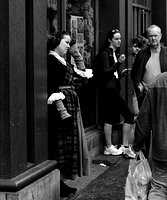
According to Ilford's datasheet, an indicated exposure of 3 seconds (wouldn't 3 ev over 1/2sec. be 4 seconds?) should be an adjusted exposure of 10-12 seconds or so. I find both shots to be underexposed here.
 
Filter factors vary from film to film. Ilford lists specific factors for each filter type for each film type in their film info sheets.
 
Thanks all for the insights.

Sounds like there are some simple steps I can take to troubleshoot. Taping the edges of the filter to ensure I don't have light piping in from the sides and causing flare is an easy first thing to try.

I do suspect part of it is just my own inexperience with filters. I'll need to be aware of how blue shaded light is in particular as I do a lot of my work in the shade. I'll probably need to continue to experiment as well as finding what works best for my own filter factors. Sounds like an experience game.

For those interested, here are the two negatives I spoke of from this past summer:

1. FP4+, (N+1) development in Rodinal 1:50. No filter. f/18 and 1/2 second. EI 64 per my own Zone System calibrations for this film/developer combo. As you can see, I got better contrast from this one.
View attachment 196538


2. HP5+ (N+1) development in HC-110 Dil H. Orange filter. f/18 and 3 seconds (+3 EV over the FP4+ exposure to compensate for the orange filter, plus an extra 2 seconds to compensate for reciprocity failure). Taken within less than a minute of the first one. EI 250 per my own Zone System calibrations for this film/developer combo. Despite the orange filter, I got less contrast with this one.
View attachment 196539
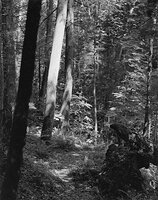
There is plenty of contrast in the unfiltered image. Why would you want more? Personally, I think the filtered image looks better...
 
Gosh. This is getting nonsensical. Contrast effect is directly related to the colors in the subject. Implying that a particular yellow filter gives more contrast than a particular orange in an aspen shot is irrelevant to many other potential applications, including how clouds in blue sky are rendered. There is something called the color wheel, you know, with the maximum effect right across the wheel. It's a better starting point, at least, than willy-nilly hearsay. After that, do test shots of a variety of scenes and colors using various color filters, hopefully better than polyester!
 
related to the colors in the subject
It sure is. Then those colors are in turn related to the colors that the film records. If this were not the case then terms like "Orthochromatic" and "Panchromatic" or "IR" would make no sense at all...
Some films have a deeper Red sensitivity, for example, while others are affected by Ultraviolet in the scene.

Way back when I was working on low end digital-to-film recorders I was acquainted with a couple Polaroid engineers who loved going to their company gatherings in specially chosen Brown colored suits that would photograph completely differently in their instant process...

My point is that removing the film's sensitivity curves from the equation here isn't going to make any sense because it's integral to the final result.

Fun conversation overall, I give this whole thread 9/10!
 
A plastic filter in front of the lens without a lens shade covering the filter will cause loss of contrast.

Exactly, simple as that. You are also loosing contrast when no shade is used on a lens, the filter is just an extra surface in front of it, and probably a very bad one.
 
In short, you are under exposing your negatives.
 
Ok. Some more mundane things.
  1. A filter factor actually has little real-world application - except that it's what it takes to compensate for the exposure hit that an 18% neutral grey object takes. A filter works far more powerfully on complimentary colors. So take a G filter - your factor of 3x (shooting at 160 instead of 400). The filter factor would bring a limestone or concrete object to middle grey - but not fully compensate a blue sky, which might otherwise be dropped by many more stops.
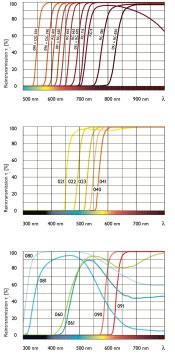
  2. If your scene is predominated by the complimentary color to the filter, you might as well be using an ND. An orange filter hits zero transmission in the greens. When you slap it on and photograph bluish shadows, you might as well be using a very heavy ND filter. See the attached chart.
  3. If your scene is relatively flat in terms of color variety or contrast, a filter won't make it better. That's just push processing you need.
  4. Don't rely on TTL meters, especially CdS ones, to compensate.
The easiest way to figure out how to use use a filter for a particular scene is to make a matrix of exposures at 0, +1, and +2 compensation (or up to 3 if you have a red filter) and development times of N, N+1, and N+2.
 

Attachments

  • bwcurves.jpg
    bwcurves.jpg
    330.9 KB · Views: 111
Ok. Some more mundane things.
  1. A filter factor actually has little real-world application - except that it's what it takes to compensate for the exposure hit that an 18% neutral grey object takes. A filter works far more powerfully on complimentary colors. So take a G filter - your factor of 3x (shooting at 160 instead of 400). The filter factor would bring a limestone or concrete object to middle grey - but not fully compensate a blue sky, which might otherwise be dropped by many more stops.
  2. If your scene is predominated by the complimentary color to the filter, you might as well be using an ND. An orange filter hits zero transmission in the greens. When you slap it on and photograph bluish shadows, you might as well be using a very heavy ND filter. See the attached chart.
  3. If your scene is relatively flat in terms of color variety or contrast, a filter won't make it better. That's just push processing you need.
  4. Don't rely on TTL meters, especially CdS ones, to compensate.
The easiest way to figure out how to use use a filter for a particular scene is to make a matrix of exposures at 0, +1, and +2 compensation (or up to 3 if you have a red filter) and development times of N, N+1, and N+2.
Your post suggests. I think, that filters are of much less value than most users seem to think. If we should be more sparing with their use, can you say in which circumstances a colour filter for B&W has real value.

Thanks

pentaxuser
 
Your post suggests. I think, that filters are of much less value than most users seem to think. If we should be more sparing with their use, can you say in which circumstances a colour filter for B&W has real value.

Almost every compelling use case revolves around bright sunlight. I use primarily T-Max 400, which is less filter dependent to get a "normal" looking tone balance. With old-school films, yellow filters are more useful than with T-Max. If you shoot d-----l monochrome, you already have a built-in light green, so yellows and oranges have an exaggerated effect. With TMY:

More useful
  • "Yellow" 023 (G, 15, Y52, dark yellow) - cuts blue skies and moderately darkens greens. Sometimes looks like a golden yellow, sometimes looks bright orangish
  • Green 061 (x1, 13) - cranks up the midtone contrast with predominantly green scenes. upsets some subjects with less than perfect skin
Moderately useful
  • Blue 080, 081 - increases haze/fog look; brightens blue irises. Provincial, but sometimes you want to lower contrast.
  • Light Green (060, X0) - darkens skies a little without killing the greens. Substitute for a mid-yellow.
  • Orange 040 - substitute for an 023/G/15, but it really puts the hurt on greens and blues. Cuts mountain haze well.
Less useful or tough to use
  • Yellow 021 (light) - not much real use beyond killing UV
  • Yellow 022 (medium, Y48, K2) - pretty much obsolete with T-Max films but still useful with other types
  • Orange 041 (dark, 22) - too much blue cut for my taste; can cause focus problems with AF cameras
  • Red 090 (25A, 25) - unless you like a lunar-black sky or want quasi-infrared effects, this one is not fun, esp because it will throw AF off
 
I just received a set of RGB filters from Cokin to see if I can make trichromes with them. Cokin is new to me so I also plan a supplementary test for contrast out of curiosity. Perhaps I can modify a Hasselblad lens shade 40739 (Proshade 6093T) or 40676 for that with a 3D printed adapter to fit to the filter holder.

Als has been mentioned before I also think that contrast is harmfully influenced by light entering the sides of the filter and by not using a hood. The latter has already been proved by many tests on the interwebs.
 
I find this thread odd, I've been using Cokin filters since their introduction 40 years ago, I've never metered through them and have always used the factors given on their cases and never had any issues.

Ian
 
  • Orange 041 (dark, 22) - too much blue cut for my taste; can cause focus problems with AF cameras
  • Red 090 (25A, 25) - unless you like a lunar-black sky or want quasi-infrared effects, this one is not fun, esp because it will throw AF off
Thanks for the summary. The effect on AF of orange and red is a new one on me.Can you say what it is about orange and red that can throw AF off and are there some AF cameras more susceptible to this phenomenon than others ?

Thanks

pentaxuser
 
Thanks for the summary. The effect on AF of orange and red is a new one on me.Can you say what it is about orange and red that can throw AF off and are there some AF cameras more susceptible to this phenomenon than others ?

Dark orange and red filters tend to induce backfocus at the film plane with a lot of non-APO lenses, and CCD AF sensors and rangefinders aren't really equipped to compensate for this (the CCD performance is also degraded by the huge amount of light cut by the filter). APO lenses have red corrected to the same focusing plane as green and blue, so it's not so bad. And stopped down, it's often eliminated by DOF.
 
Lots of subjective nonsense on some of these posts. Filters are optional tools but can have a significant effect. Filter factors are highly predictable if you test for SPECIFIC film and filter combinations. This is best done using a neutral gray target. It works. But the net effect on complementary colors in nature takes some experience shooting and printing. Just like learning to ride a bicycle. Expect a few bruises at first.
 
Photrio.com contains affiliate links to products. We may receive a commission for purchases made through these links.
To read our full affiliate disclosure statement please click Here.

PHOTRIO PARTNERS EQUALLY FUNDING OUR COMMUNITY:


Ilford ADOX Freestyle Photographic Stearman Press Weldon Color Lab Blue Moon Camera & Machine
Top Bottom