• Welcome to Photrio!
    Registration is fast and free. Join today to unlock search, see fewer ads, and access all forum features.
    Click here to sign up

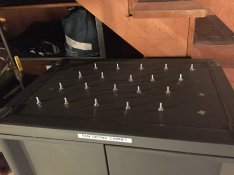
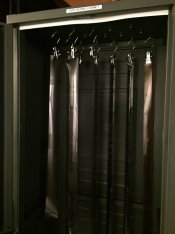
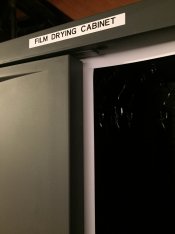
MY DIY film drying cabinet

Recent Classifieds

Forum statistics

Threads
201,759
Messages
2,829,627
Members
100,927
Latest member
Rudy Bachelor
Recent bookmarks
0

mgb74

Subscriber
Allowing Ads
Joined
Jan 24, 2005
Messages
4,783
Location
MN and MA US
Format
Multi Format
But why? As someone noted, you must have a LOT of film to dry at once. ...

In my case, with a community darkroom, may well be many rolls drying at once.

 

MattKing

Moderator
Moderator
Joined
Apr 24, 2005
Messages
55,131
Location
Delta, BC Canada
Format
Medium Format
If you have a large number of films to deal with, a wide and shallow cabinet will be more useful than one with a more square footprint.

And if there is a possibility of needing it for sheet film, the ability to add lower hanging bars could be useful.
 

Daniel Huiting

Member
Allowing Ads
Joined
Aug 11, 2016
Messages
59
Location
Minneapolis, MN
Format
Medium Format
Hi All! Just coming back to this thread. I bought the Amazon Cabinet that Nbagno suggests in the first post. Drilled small 3/16" holes in the top and screwed some eye bolts into the ceiling of the cabinet for my film clips to hang from. And i added some adhesive door sweep material to the spaces between the two front doors to keep dust out. Looks like it will work great. Now I just have to decide on an airflow solution, and a material to cover the sides of the doors where the hinges are. I am not in any hurry to dry film quickly, but maybe in the future I will have a situation where I want negatives dried within an hour or so, so I thought it might be nice to have the option. The 120mm computer fan and 120mm pre-made filter solution from MicroCenter that was suggested on this thread (http://www.microcenter.com/product/391504/120mm_Fan_Filter) seems like it will work great. Has anyone tried this and can report back on how well it has worked?

Seems like if I put two fans of this kind on top forcing air in, and then drill holes around the lower parts of the cabinet equal to the square inches of space that the fans are taking up, I'll be good. My questions are:

1. What should I cover the air intake holes that I will drill on the lower part of the cabinet with? More of the same 120mm filters that I will use to cover the 120m fans?

IMG_7665.JPG IMG_7666.JPG IMG_7667.JPG

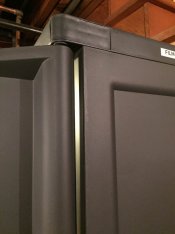
2. What would be a good material to cover the hinge areas of the cabinet on the sides where the doors open? They will need to bend a little when the door opens, so simply using gaff tape won't work, and the door sweep material I used on the front part of the doors won't work, because when the doors are closed it's just fine and covers the crack where air would get in, but when the door is open, dust can get through because the crack is now larger.
IMG_7668.JPG

I appreciate anyone's suggestions. Thanks!
 

Neal

Subscriber
Allowing Ads
Joined
Dec 3, 2004
Messages
2,027
Location
Chicago, West Suburbs
Format
Multi Format
Dear Daniel,

1) You can use the same sort of filters as you found. They will screw on nicely to the plastic.

2) When the door is open I would think the dust coming in through the open door would be much greater than that from the hinge area. I would ignore it and see if there are issues. In fact, if it works great now, why add air flow?

Good luck,

Neal Wydra
 

DWThomas

Subscriber
Joined
Jun 13, 2006
Messages
4,623
Location
SE Pennsylvania
Format
Multi Format
With a positive pressure situation; e.g., a filtered fan blowing into the cabinet, filtered air should be blowing out of the other slits and vents, carrying dust away. So filtering any outlets shouldn't be necessary -- other than perhaps some screening to keep bugs out when it's not in use.

My 1.3 (after tax) cents
 

Daniel Huiting

Member
Allowing Ads
Joined
Aug 11, 2016
Messages
59
Location
Minneapolis, MN
Format
Medium Format
One more thought, DWThomas, if I don't cover the holes, when the fan is off, won't dust get in there? I would think the bug screening wouldn't be enough to keep it out.
 
OP
OP
nbagno

nbagno

Subscriber
Allowing Ads
Joined
Oct 19, 2012
Messages
749
Location
SF Bay Area
Format
4x5 Format
One more thought, DWThomas, if I don't cover the holes, when the fan is off, won't dust get in there? I would think the bug screening wouldn't be enough to keep it out.

I didn't cover the vent holes I made in the sic
One more thought, DWThomas, if I don't cover the holes, when the fan is off, won't dust get in there? I would think the bug screening wouldn't be enough to keep it out.

Daniel,

I added one of these at the bottom on both sides to let the air from the Jobo heater on top escape. Most times I don't turn on the heat an use only the fan. I don't have the hinges sealed or a door sweep and I have zero issues with dust. My cabinet is in the garage which can get plenty of it especially when I open the garage door. Give it a try without it and let us know how it works out.
 

DWThomas

Subscriber
Joined
Jun 13, 2006
Messages
4,623
Location
SE Pennsylvania
Format
Multi Format
One more thought, DWThomas, if I don't cover the holes, when the fan is off, won't dust get in there? I would think the bug screening wouldn't be enough to keep it out.
Hmmm -- if there are non-filtered openings on a horizontal surface at the top it could happen, but openings toward the bottom, vertical on the sides or in the bottom I wouldn't expect much to happen, unless you've got the cabinet in the middle of a woodworking shop or some other serious producer of heavy clouds of dust. Dust tends to travel floating along with flowing air, so if there's no airflow, there shouldn't be much dust coming in. The only other condition could be where some non-photographic activity generates major air currents as well as dust.

Please note this is all speculative -- I hang my films in a basement laundry room where my washing sink is located and haven't seen any problem, so I assume if they were further enclosed there would be even fewer problems. I always worry about people using canned air or other gas to "blow dust off" things because that disperses it into the air and Zeus knows where -- sometimes a wipe with a damp cloth or just leaving things undisturbed would be less troublesome. (But then My Faire Spouse thinks I'm "cleaning impaired!" :laugh: )
 

Daniel Huiting

Member
Allowing Ads
Joined
Aug 11, 2016
Messages
59
Location
Minneapolis, MN
Format
Medium Format
Copy that. I think I am going to put filters over the intake holes that I will drill around the sides of the cabinet, more for peace of mind than anything else. But thank you very much for your opinion! it's been very helpful. :smile:
 

cliveh

Subscriber
Allowing Ads
Joined
Oct 9, 2010
Messages
7,789
Format
35mm RF
I don't think drying cabinets are a good idea, as they blow dust into wet emulsion. Just dry the film in an airing cabinet or ambient temperature over 24 hours. patience is a virtue and will give you cleaner films.
 

Daniel Huiting

Member
Allowing Ads
Joined
Aug 11, 2016
Messages
59
Location
Minneapolis, MN
Format
Medium Format
cliveh, Last night I was standing in front of my cabinet about to drill the holes for the fans, and I thought the same thing. My fear is, with the doors shut and the door sweep material covering the cracks between the doors, is too little air getting in? I have been leaving overnight and coming back in the morning and my films are dry, so I guess its fine.

But yes, something about forcing air right onto my wet films freaked me out and I decided to wait and do a little more research.
 

MattKing

Moderator
Moderator
Joined
Apr 24, 2005
Messages
55,131
Location
Delta, BC Canada
Format
Medium Format
Personally, I would filter the input and use the fan to extract air. It won't dry with heated air, but it will still dry quickly.
 

Daniel Huiting

Member
Allowing Ads
Joined
Aug 11, 2016
Messages
59
Location
Minneapolis, MN
Format
Medium Format
I have that option. I bought enough filters and fans to do it however makes the most sense. So i appreciate you all weighing in!
 

jlbruyelle

Member
Allowing Ads
Joined
Jul 20, 2016
Messages
69
Location
Lille
Format
Multi Format
If you use the fan as an extractor, the cabinet will be at a negative pressure and all the air (and dust) leaking through unnoticed openings (holes, cracks...) will flow into the cabinet. This is not good if your goal is to avoid dust. This is why you must use a fan equipped with a filter (important!), to push air into the cabinet and create a positive pressure. Then the dust will be pushed outside through the air leaks. It's the exact same principle as a clean room: make the contaminants flow to where they are harmless - in this case, outside.
 

Daniel Huiting

Member
Allowing Ads
Joined
Aug 11, 2016
Messages
59
Location
Minneapolis, MN
Format
Medium Format
Ok! The filters I bought are for the 120mm computer fans I bought, so they fit on perfectly.

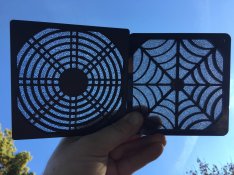
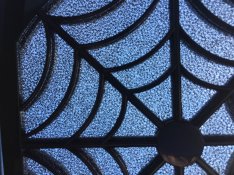
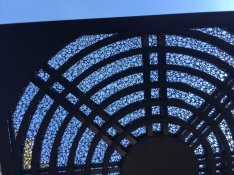
Jlbruyelle, the only thing I wonder is, when I look through these filters with light behind them, the holes seem slightly larger than I would think would be acceptable for dust. But is says right on the packaging, they keep dust out.

As you can see from the pics, the spider web design filter has finer holes, but they still they seem a little bigger than I would think for dust. Should I cover the filters with some kind of cloth or microfiber or something in addition to the material that the filters already employ? Or should I trust these "dust filters" to do their job as-is?

These are the filters I bought:
IMG_7690.JPG IMG_7691.JPG IMG_7692.JPG
 

jlbruyelle

Member
Allowing Ads
Joined
Jul 20, 2016
Messages
69
Location
Lille
Format
Multi Format
You are right, those filters look really wide for the small dust particles. This is because they are made primarily for computers and other electronic equipment , in which cooling is the first priority and the purpose of dust filters is to prevent the clogging of the fans and radiators in dusty/industrial/outdoor environments. Domestic environment is considered benign for this use - contrary to film drying, for which keeping the dust out is the goal. You may give these filters a try, maybe with a sacrificial old film, and if dust adheres to the film (likely to happen with time, when dust accumulates on the filters and eventually gets sucked inside by the fan) you may want to open the filter frame and replace the foam with something more effective - the dust filter of a vacuum cleaner should be fine, or the acoustic foam used to refurbish the front cover of speakers, or even the thick foam used as grease filter in extractor hoods, that you cut to the size of the original foam and insert in the frame instead of it. The pressure inside the cabinet will probably be reduced, but you don't need a large pressure anyway, as long as it is higher than the atmospheric pressure.

BTW I've just checked the brochure of the Deville drying cabinet (if you can read French: http://www.plastique-deville.com/files/armoire_de_sechage_pour_film.pdf ), it is more sophisticated with a fan and a resistor in the top of the cabinet, pushing warm air down through a duct in the wall behind the films. Then it goes back up throughout the height of the cabinet and is evacuated through a 5" chimney. Apparently the air path is such that a filter is not necessary, in any case they don't mention one. Needless to say, this is much more complicated to build than the ordinary drying cabinet a la Durst UT100, with just a fan on top and holes in the bottom, even though the latter requires a dust filter.
 

Tim Stapp

Member
Allowing Ads
Joined
Dec 21, 2012
Messages
561
Location
Big Rapids, MI
Format
4x5 Format
In industrial applications, I have resorted to putting hair net (as used in the food prep industry) over the open pore filters to help filter smaller particulate. In some instances, I've had to double up the layers.
 
Photrio.com contains affiliate links to products. We may receive a commission for purchases made through these links.
To read our full affiliate disclosure statement please click Here.

PHOTRIO PARTNERS EQUALLY FUNDING OUR COMMUNITY:



Ilford ADOX Freestyle Photographic Stearman Press Weldon Color Lab Blue Moon Camera & Machine
Top Bottom