
• Welcome to Photrio!
    Registration is fast and free. Join today to unlock search, see fewer ads, and access all forum features.
    Click here to sign up

Multiple exposure with change of focus

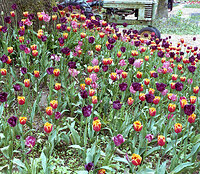
Tractor & Tulips

A
Tractor & Tulips

  • 0
  • 0
  • 12
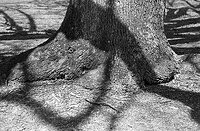
Tree with Big Shadows

Tree with Big Shadows

  • 2
  • 0
  • 71

Forum statistics

Threads
203,456
Messages
2,855,030
Members
101,853
Latest member
Expert Graphics Int.
Recent bookmarks
0

cliveh

Subscriber
Allowing Ads
Joined
Oct 9, 2010
Messages
7,951
Format
35mm RF
You might have to be a bit more specific, that just takes me to a search of his images on google and not 1 of the 20 there show a face...
 
In installment 3 of the videos on the first link, he explains... He told Peter Rose Pulham he wanted a camera with a very wide angle that he could get rooms with their ceilings. Peter told him that camera exists and where he could get one.

I think the lighting in his photographs is remarkable. That room must have had two sets of windows.
 
Last edited by a moderator:
I do not get any video(-link) at that first link at all...

from another site:
"London Child" Here we see a giant child filling a room. Actually the kid wasn't that big, but by controlling my depth-of-field I was able to make it look like he was a giant. (No photoshop was used here.)
 
The foreground face is not in focus, so, no, I don't think it is a double exposure.
 
The image was almost certainly created in the darkroom from two separate negatives. Look at the work of Jerry Uelsmann for examples of what can be done with multiple negatives. Uelsmann was a master of this technique often combining 4 to 6 separate negatives into a print.

http://www.uelsmann.net/

Look at the example of the cupped hands with the landscape in the background.
 
Last edited by a moderator:
Jerry Uelsmann is certainly a master (maybe THE master) when it comes to multiple negative printing.

But in the video interview of Bill Brandt, he explains... "paid 5 shillings for it" "doesn't have a shutter, I had to open and close it with my hand" and "It was the camera that produced this effect, I never planned it, never thought about it, didn't know it would happen".

I'm convinced it's a pinhole camera. I'll add that I think Bill Brandt used it with amazing imagination, and this is an example where it's not the camera... It's the photographer.

Now I've appreciated good pinhole photographs before, but never really wanted to get into it. But these photographs are inspiring... I might have to try and see if that's what it really was.
 
Last edited by a moderator:
Personally I would say it's all done in camera, indeed the wide angle police camera he famously used. Most of the nude work from that period has the same feeling of depth and 'deep focus' reminiscent of Citizen Kane. He shot a lot of work in his flat at that time with same look, though a lot had far more distortion from the extreme wide angle. Really worth looking out for Paul Delany's illustrated biography of Brandt which has a lot about this (mid - later) period of Brandt's work and life.

Just to add some confusion, in the last few years of his life, he did use the printer, Bill Rowlinson to print his work, having previously always printed his work himself. Bill R was a father figure to us London printers. One time at his flat, I asked him about the framed Brandt print on his wall, signed by both Bill's, and one of his most famous images: http://billbrandtarchive.photoshelter.com/gallery-image/Nudes/G0000Fq7HOfGjFnU/I0000Jb5s4.lx3.c

By all accounts it was a tricky one as Bill R told us it was from a sandwich of two negs held together with tape, so not impossible the other one is a comp, and is from the same period, but looking again would still say it's too precise to be anything other than a straight wide angle shot.
 
Brandt did use montage, combining portions of two negatives in one print with the one of the seagull being particularly well known. However, the photograph in question and many of the others in Perspective Of Nudes were taken with a police scene of crime camera (it is rumoured that it was developed for use by policemen without photographic training) with an extreme wide angle lens, very small aperture and prefocused on infinity that he later superseded with a Hasselblad SWC. The images in Perspective of nudes started in 1945 when he first bought that camera.

You can find out more about his approach in a well written article in Camera Owner magazine:

Dead Link Removed

Bests,

David.
www.dsallen.de
 
I think Gerald may be right. It certainly looks like a composite image to me.
 
My guess is in-camera, using the great DOF of a wide angle lens, and a light source for the face that balances with the light outside of the windows shown in the pic.
 
That it was made with a pinhole makes sense. When you use a regular lens and change the point of focus the relative sizes of objects change. This causes a certain ghosting around objects which is not seen in this print. This was why I considered multiple negatives.
 
Gerald,

Liked your poem by the way...

I agree that multiple focus would cause a ghosting. So agree that theory is out.

As for the multiple negatives, I accept that Bill Brandt used montage. But there is an area of sharp black and also an area of bright white on the dividing line between foreground and background. I would think that makes it difficult to combine, either as a sandwich or multiple printing montage.

The line between foreground and background is too clean, does not seem to reveal hand-work.

My guess now is that he used that 8.5 cm lens at a small aperture with the camera placed very close to the model, taking advantage of every inch that depth of field would allow.

Now my question is... Suppose he got the camera in 1945... when was this photograph taken, how long had he used the camera by that point (was he still getting used to its depth of field or had he already gotten a good feel for it by then)?
 
Gerald,

Liked your poem by the way...

I agree that multiple focus would cause a ghosting. So agree that theory is out.

As for the multiple negatives, I accept that Bill Brandt used montage. But there is an area of sharp black and also an area of bright white on the dividing line between foreground and background. I would think that makes it difficult to combine, either as a sandwich or multiple printing montage.

The line between foreground and background is too clean, does not seem to reveal hand-work.

My guess now is that he used that 8.5 cm lens at a small aperture with the camera placed very close to the model, taking advantage of every inch that depth of field would allow.

Now my question is... Suppose he got the camera in 1945... when was this photograph taken, how long had he used the camera by that point (was he still getting used to its depth of field or had he already gotten a good feel for it by then)?

I can see Bill taking this on as a challenge, as he did with the Otto Steinert foot picture.
 
I believe it was done with a pinhole camera (that's what magazine articles of the time said, anyway), and there are a bunch of nudes done the same way.

edit, more: Here's the story on the BillBrandt.com site:
Dead Link Removed
 
Last edited by a moderator:
I believe it was done with a pinhole camera (that's what magazine articles of the time said, anyway), and there are a bunch of nudes done the same way.

Here's the story on the BillBrandt.com site:
Dead Link Removed

I once did an inside room picture with a pinhole camera and one wall of the room was mostly windows. The exposure took 2 days. Unless the boy is dead, I doubt it.
 
Haaa, but they weren't allowed to use them during the Blitz!

I see a couple suitable lenses on eBay, from one seller who puts up many good photos of the lenses. A little above my budget today... But I'll be on the lookout.
 
Hate to be the one to have to tell you this, but they had electric lights even back then.

Hate to be the one to have to tell you this, but electric light compared to open sunlight is very different in terms of luminance.
 
The boy's facial features are more out-of-focus than the edge of his face compared to the background. That's a composite image. If we were daring to compare analog with digital... nearly EVERYONE would say... Photoshopped.
 
Photrio.com contains affiliate links to products. We may receive a commission for purchases made through these links.
To read our full affiliate disclosure statement please click Here.

PHOTRIO PARTNERS EQUALLY FUNDING OUR COMMUNITY:


Ilford ADOX Freestyle Photographic Stearman Press Weldon Color Lab Blue Moon Camera & Machine
Top Bottom
