Mixed lighting or ambient only is preferred. A flash-only exposure outdoors would tend to show very little background exposure. But if you wanted to get into painting with light using your strobe handheld off-camera that would be perfectly cool too!


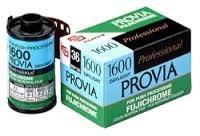
Some Ektar, Portra, and Provia100f (by accident... I meant to bring Velvia50 and instead grabbed the Provia400X!! ugh... so opted for the 100 since the 400X is my PRECIOUS... haha)
Almost full moon overhere. I would like to make some nightly exposures (don't know what or where yet).
I'm gonna shoot ISO 400. What would be an appropriate aperture and shutter speed?
Too long an exposure will make the moon blurry because it moves too fast, I guess?
Any tips?
For a moon shot, you'll need a shutter of about 1/200th plus or minus, as well as F/8 or f/11 (this is on a 35mm camera) and more than 300mm lens to get anything useful. Probably closer to 500mm or 600mm ... if you have a 300mm lens and a 2x extension that's probably best. If you have the 2x extension AND 400mm+ lenses... well can I come?? haha

The moon will streak with exposures longer than about 1s depending on your focal length. It moves its own diameter every 2 minutes, so that should tell you how much it smears in a long exposure. It's fast.
Getting the moon to a midtone (and therefore revealing the details in it requires a sunny-11 exposure, e.g. ISO100 1/100s f/11. It's a short exposure because the moon is in full sun! However that's likely to be a gross underexposure for your foreground scene at night which could be several seconds (city) to an hour (dim landscape).
Here's an Dead Link Removed with multiple exposures. All are ISO100 f/11; the detailed moons are each 1/125 and three minutes apart, the really bright moon (and background city) is 4s.
He has 400 film hence why I said 200/th second. But I would get some blur on close ups any slower than 1/30 if I recall, it's been a while, I lost my interest when I realized to get a really blow yoir eyes out shot I needed an 800mm lens
~Stone | Sent w/ iPhone using Tapatalk
He has 400 film hence why I said 200/th second. But I would get some blur on close ups any slower than 1/30 if I recall, it's been a while, I lost my interest when I realized to get a really blow yoir eyes out shot I needed an 800mm lens
Sorry... to answer the actual question, try a long exposure with the moon below the horizon and a fast exposure with the moon in the scene.
If you're a cheater, shoot the moon exposure with a really long focal length and then the scenery with a short focal length; the moon will look huge.


CLOUDS ALL OVER !!!
Ok folks- I was really busy the last few days and completely forgot about the end of the MSA for July/August. The winner is:
Martin James, with "Twilight Street" - (there was a url link here which no longer exists)
Congrats, and I hope you pick a good new topic!
Stone- my sympathies, but you did have two months... better luck next time.
Yes I'm aware I had 2 months... and I certainly shot images for this, but that doesn't mean I was able to process them, life and finances are hard on the color shooter...
Also, I can't find the new MSA where is it?

| Photrio.com contains affiliate links to products. We may receive a commission for purchases made through these links. To read our full affiliate disclosure statement please click Here. |
PHOTRIO PARTNERS EQUALLY FUNDING OUR COMMUNITY: ![]() |