
• Welcome to Photrio!
    Registration is fast and free. Join today to unlock search, see fewer ads, and access all forum features.
    Click here to sign up

Modern film with thick emulsion

feeling grey

A
feeling grey

  • 0
  • 0
  • 16
Inconsequential

H
Inconsequential

  • 2
  • 0
  • 31

Recent Classifieds

Forum statistics

Threads
201,798
Messages
2,830,384
Members
100,961
Latest member
pisimimail
Recent bookmarks
0

baachitraka

Member
Joined
Apr 6, 2011
Messages
3,646
Location
Bremen, Germany.
Format
Multi Format
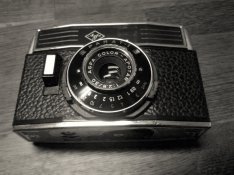
I have this nice Agfa Silette LK Sensor, pretty smooth camera with a triplet lens.

The problem is the film advance, occasionally it tears the socket holes and no advancement after that.

So far the failed films are Agfa APX 100 and Color plus from Kodak.

Are there any other film with thick emulsion?
 

MattKing

Moderator
Moderator
Allowing Ads
Joined
Apr 24, 2005
Messages
55,167
Location
Delta, BC Canada
Format
Medium Format
It is not a problem with the emulsion of the films. Film emulsion is microscopically thin compared to the substrate it is coated on.
If your camera is tearing that substrate, the film transport system is either out of alignment, or some part of it is not turning as freely as it should.
Alternatively, there is some foreign object interfering with the film transport.
 

AgX

Member
Allowing Ads
Joined
Apr 5, 2007
Messages
29,972
Location
Germany
Format
Multi Format
To be in line with your idea of finding a solution I should advise film with a polyester base, as that is stronger.
But actually I say try to find out what is retarding or blocking film transport. The Silette LK has an unorthodox transport mechanism, likely the counter wheel is blocking transport.
The same time it is a quite common model in Germany, sooner or later you will come across another sample.
 

MattKing

Moderator
Moderator
Allowing Ads
Joined
Apr 24, 2005
Messages
55,167
Location
Delta, BC Canada
Format
Medium Format
If the camera tears acetate based film, polyester based film might damage the camera!
 

Leigh B

Member
Allowing Ads
Joined
Jan 17, 2011
Messages
2,059
Location
Maryland, USA
Format
Multi Format
Your problem is... The camera is broke.
This could well be caused by some lubricant that has solidified or gummed up.

No selection of film is going to change that.

Take it to a repair shop or fix it yourself.

- Leigh
 

MattKing

Moderator
Moderator
Allowing Ads
Joined
Apr 24, 2005
Messages
55,167
Location
Delta, BC Canada
Format
Medium Format
It seemingly already is...
Okay: "If the camera tears acetate based film, polyester based film might damage the camera more!"
 

Pioneer

Member
Joined
May 29, 2010
Messages
3,991
Location
Elko, Nevada
Format
Multi Format
I own a nice looking little Agfa 35mm from the 1950s with the identical problem. The timing between the sprocket teeth and the take up reel is out of alignment so the film holes tear out. The sprockets seem to turn all right when they are not under tension, but once you close the film door the dynamics are changed. I am told this problem is not uncommon with these cameras. I have not torn mine down as I have many other cameras to keep me occupied. I don't believe it is lubrication, rather the parts in the transport system are not of the highest quality and the eventually just start to wear out. But, of course, this is only speculation on my part.

Remember, most of these cameras were relatively inexpensive compared to other models and I really don't think that anyone had any idea that we would still be trying to use them over 50 years later. They are certainly not built to Leica standards and even those cameras require occasional attention now days.

If you do tear yours down and find the problem let us know what you find.
 
OP
OP
baachitraka

baachitraka

Member
Joined
Apr 6, 2011
Messages
3,646
Location
Bremen, Germany.
Format
Multi Format
Feels bit sad and I presume it is problematic for all Silettes...
 

AgX

Member
Allowing Ads
Joined
Apr 5, 2007
Messages
29,972
Location
Germany
Format
Multi Format
I own a nice looking little Agfa 35mm from the 1950s with the identical problem. The timing between the sprocket teeth and the take up reel is out of alignment so the film holes tear out.

The standard approch is that take up reel and sprocket wheel are connected by friction coupler.
With that Silette it may be different due to their different design, but there sure will not be a fixed mechanical coupling.
 
OP
OP
baachitraka

baachitraka

Member
Joined
Apr 6, 2011
Messages
3,646
Location
Bremen, Germany.
Format
Multi Format
Its the smoothest of all the cameras I own. I have no idea how smooth the Leicas are but this camera is a joy to operate.

* I really adore those half-frame beauties from Agfa.
 

Attachments

  • AgfaParat.jpeg
    AgfaParat.jpeg
    864.1 KB · Views: 168
Last edited:

Pioneer

Member
Joined
May 29, 2010
Messages
3,991
Location
Elko, Nevada
Format
Multi Format
The standard approch is that take up reel and sprocket wheel are connected by friction coupler.
With that Silette it may be different due to their different design, but there sure will not be a fixed mechanical coupling.
Thanks Agx. I've never disassembled it so don't know how the film transport is designed. I do know that the teeth and take up reel turn together when the film advance lever is used so have always assumed they were connected somehow. Beyond that I will be the first to admit I know very little about how the little Silette advances the film.
 

AgX

Member
Allowing Ads
Joined
Apr 5, 2007
Messages
29,972
Location
Germany
Format
Multi Format
The classic approach is to have the sprocket wheel directly in front of the take-up spool and the sprocket wheel doing the primary pulling.
But the sprocket wheel also may be used for pushing action instead.
Or the primary pulling could be be done by the take-up spool and the sprocket wheel acting as "framing" control.


At the Sillette the sprocket wheel is located near the cassette, thus on the near side of the image frame.
One would have to see whether without film that wheel turns when activating the transport lever.

A pushing sprocket wheel for instance is used at type Rapid cameras.
 

grussmir

Member
Allowing Ads
Joined
Nov 24, 2013
Messages
22
Location
Bavaria
Format
35mm
Try the basic friction on the take up spool, I guess its rather loose? At last it was when my last Silette began eating film... I use these (normal silettes) for pinhole conversions as they are cheap and usually the shutter hangs, so they sell for a symbolic price :smile: But when the take spool looses its friction... its over.
 

AgX

Member
Allowing Ads
Joined
Apr 5, 2007
Messages
29,972
Location
Germany
Format
Multi Format
In the Sillette the take-up chamber is lighttightly covered by a hatch. One would have to dissamble the camera to have a look on that spool.
 
OP
OP
baachitraka

baachitraka

Member
Joined
Apr 6, 2011
Messages
3,646
Location
Bremen, Germany.
Format
Multi Format
During the initial load and closing door and advancing is not causing the problem(May be I am lucky). But if I leave it and start shooting after couple of days the first advancement is stiff and giving a bit more pressure to the lever then for sure it is causing the tear.
 

Gerald C Koch

Member
Allowing Ads
Joined
Jul 12, 2010
Messages
8,131
Location
Southern USA
Format
Multi Format
The sprocket wheel does not move the film. The take up spool does that. Its purpose is to determine that the same amount of film is advanced after each exposure and the exposure counter increments. This is necessary since the effective diameter of the take up spool varies as film is wound onto it. Without the sprocket wheel the spacing between negatives would also change with each exposure. Something is preventing the sprocket wheel from turning. Perhaps dried out lubricant.
 
OP
OP
baachitraka

baachitraka

Member
Joined
Apr 6, 2011
Messages
3,646
Location
Bremen, Germany.
Format
Multi Format
They are moving freely. This evening I will try to make a video of it.
 

AgX

Member
Allowing Ads
Joined
Apr 5, 2007
Messages
29,972
Location
Germany
Format
Multi Format
The sprocket wheel does not move the film. The take up spool does that. Its purpose is to determine that the same amount of film is advanced after each exposure and the exposure counter increments. This is necessary since the effective diameter of the take up spool varies as film is wound onto it. Without the sprocket wheel the spacing between negatives would also change with each exposure. Something is preventing the sprocket wheel from turning.


As said, in the classic design the sprocket wheel is the primary thing that pulls the film.
The take up spool is geared to it in a way that at the start it takes as much film as the sprocket wheel delivers.
To compensate for the growing circumference the take up spool is connected to the sprocket wheel by friction coupling.

A lot of 35mm cameras do not even have a take up spool!
 

Gerald C Koch

Member
Allowing Ads
Joined
Jul 12, 2010
Messages
8,131
Location
Southern USA
Format
Multi Format
I decided to actually count the number of teeth in a horse's mouth. The sprocket wheel serves two purposes. It counts out the correct length for a frame and also provides for the film transport. I based my comment on the fact that the sprocket wheel turns freely when there is no film present while there is tension on the takeup spool. However removing the top plate and looking at the actually gearing it is the sprocket wheel that supplies tension when the wind lever is engaged. I will therefor symbolically fall on my sword. :smile:
 

AgX

Member
Allowing Ads
Joined
Apr 5, 2007
Messages
29,972
Location
Germany
Format
Multi Format
As said there are many different approaches to film transport.

At the classic design though the sprocket wheel is geared to the transport lever mechanism, unless that rewind button is pushed, thus unlocking that linkage.
 

Gerald C Koch

Member
Allowing Ads
Joined
Jul 12, 2010
Messages
8,131
Location
Southern USA
Format
Multi Format
Getting back to the original question. Eastman 5222 Double-X cine film is supplied on a thicker acetate base than other B&W films.
 
Photrio.com contains affiliate links to products. We may receive a commission for purchases made through these links.
To read our full affiliate disclosure statement please click Here.

PHOTRIO PARTNERS EQUALLY FUNDING OUR COMMUNITY:


Ilford ADOX Freestyle Photographic Stearman Press Weldon Color Lab Blue Moon Camera & Machine
Top Bottom