

• Welcome to Photrio!
    Registration is fast and free. Join today to unlock search, see fewer ads, and access all forum features.
    Click here to sign up

Mishandling FB prints - squegee or not?

Filling In

H
Filling In

  • 1
  • 2
  • 28
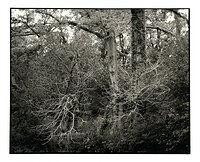
Painted Hills # 3.jpg

H
Painted Hills # 3.jpg

  • 4
  • 0
  • 76

Recent Classifieds

Forum statistics

Threads
203,208
Messages
2,851,395
Members
101,724
Latest member
Pituck
Recent bookmarks
0

negativefunk

Member
Allowing Ads
Joined
Aug 8, 2022
Messages
141
Location
Spain
Format
Multi Format
Hi all,

So i seem to have a recurring problem in that I tend to mishandle FB papers in a variety of manners.

The latest though is something it never occurred to me as I often squegee prints, but this is with Foma papers that are relatively new to me, and after a toning session (so long soaking times overall).

On the 30x40 cm print there are those marks that are precisely the ones of the "squegee-er". They are visible on certain angles only, but persistent (I re-washed hoping to take them out, to no avail).

Do you have any recommendation on this bit of the process?

2023110sss6_200003.jpg
 
Foma papers have a softer top layer in my experience than some other papers (Ilford, Adox, etc.) I'm not surprised you run into trouble squeegeeing them; if you do so, make sure the squeegee is soft and supple, and thoroughly cleaned. Squeegee gently without pressure.

I prefer to usually just hang my FB prints from a corner. I do squeegee when I tape them to a glass plate to let them dry perfectly flat. I've had no trouble doing this with Fomabrom and Fomatone, but I make sure to be very gentle with the squeegee.
 
After having ruined prints with a squeegee a few times, I figured out that the emulsion surface of a print and a squeegee should never meet. By far the most sensitive emulsion is that of a color print. It is unusually susceptible to damage from abrasion. A squeegee can damage an emulsion because it has hard particles stuck on or embedded into it. The rubber blades of old squeegees can get so hard that the worn edge has little “teeth” that can tear into the emulsion.

I use a squeegee on the backs of prints only and for wiping the countertop on which I handle films and prints for the first step in drying. I start my print drying by first cleaning the smooth surface of a plastic-coated countertop. I lay the wet print face down on the countertop, squeegee the water off the back, remove the print, squeegee the countertop dry, lay the print down face up, and very slowly and gently wipe the face of the print with a scrupulously clean fine-pore sponge that has been wetted and well wrung out. I use no downward force on the sponge.

I dry films in the same way but using a sponge on both sides. The sponge is then well rinsed, wrung out and allowed to air dry in a dust free area. When dry, I store the sponge in a clean plastic bag. The sponge is reserved for film and print drying only so that it won’t become contaminated with particles or other contaminants.
 
Last edited:
Thanks. A matter of being more gentle then. I don't mind them not being perfectly flat as foma does not seem to be too riotous and can press it later.
I think these papers are beautiful btw - both Fomabrom and Fomatone, but especially the latter.
 
I think these papers are beautiful btw - both Fomabrom and Fomatone, but especially the latter
Certainly!
If you're going to press the prints anyway, I'd not bother with the squeegee and just hang them up to dry.

By far the most sensitive emulsion is that of a color print.

Kodak more so than Fuji, but yeah, they scratch easily in very pretty yellow and red colors on dark areas.
 
I pretty much use fiber based paper exclusively. I always squeegee my prints using a long windshield wiper blade. You're essentially sweeping free water off the print, not moving a rubber edge
across a dry print. I'm careful not to apply too much pressure and have never had problems with marks. I dry my prints on stacked up screeens, so i don't want free water dripping onto the prints below. I use lots of Foma paper when i can get it...it's one of my favourites.
 
Last edited:
Never a squeegee, but always a roller. I place the print on a large sheet of glass and use a roller to remove much of the excess water. Then I put the roller away and do not use it again on the print. That way I have not had any roller marks on print. And of course, without having a squeegee, I never have squeegee marks.
 
FWIW, the only time I use hardener is when I tone prints - it is to help prevent this. That means either a final hardening fixer stage as part of the toning process - followed by HCA and wash, or separate fixer and hardener baths instead of the hardening fixer.
 
I use Fomabrom a lot and have never had this problem. I squeegee with a new, clean, windshield wiper. The print goes face-up on the bottom of a flat-bottomed tray. I gently squeegee the surface, lift the print, squeegee the tray, slap the print back face-down, squeegee that and then transfer the print to the drying screen.

Maybe your squeegee is too stiff or you are exerting too much pressure. If your toning is making the emulsion quite soft, then only squeegee the back. Make sure the surface you are using is clean and smoooooth.

Using hardener, as Matt suggests, will help if your toning is really softening the emulsion.

Doremus
 
I selenium tone all my final prints and don't use hardener.... i think gentle careful handling is the key element. I have several different sizes of plexiglas (12x18 & 20x30) that i place the prints on before using the squeegee.
 
Last edited:
The two stage toners - bleach and redevelopment toners like sepia toner - are probably the most likely to cause issues with softened emulsions.
 
Thanks. A matter of being more gentle then. I don't mind them not being perfectly flat as foma does not seem to be too riotous and can press it later.
I think these papers are beautiful btw - both Fomabrom and Fomatone, but especially the latter.

Fomatone is absolutely amazing. It's better than Forte Polywarmtone IMHO, I have a box of Fomabrom I'm going to try next. I have finally stopped using hardener in fixer, except for fiber prints because I tone most everything.
 
I use a silicone blade squeegee that is soft and flexible. I still take care when working with Ilford Art paper that has a tendency to be easily damaged when wet.
 
Thanks, this is all useful.
The two stage toners - bleach and redevelopment toners like sepia toner - are probably the most likely to cause issues with softened emulsions.

While I need to put more care in general, this can definitely be the case too. I tried dual toning sepia + selenium on the prints where marks are more visible, and that implies a lot of wet time too overall.
 
Simply drying them might leave watermarks. And a classic old genuine film chamois might leave residue. Or you could try a well shaken and rinsed out soft microfiber cloth.
Cheap squeegees are often hard with potentially sharp ends. You want a supple high quality one. Swipe the edge with a wet cloth each usage to remove any contaminants. Make sure your print is tight up a flat glass surface, and gently draw the squeegee across the print in a consistent single motion.
 
Photrio.com contains affiliate links to products. We may receive a commission for purchases made through these links.
To read our full affiliate disclosure statement please click Here.

PHOTRIO PARTNERS EQUALLY FUNDING OUR COMMUNITY:


Ilford ADOX Freestyle Photographic Stearman Press Weldon Color Lab Blue Moon Camera & Machine
Top Bottom
