
• Welcome to Photrio!
    Registration is fast and free. Join today to unlock search, see fewer ads, and access all forum features.
    Click here to sign up

Michael Wesely

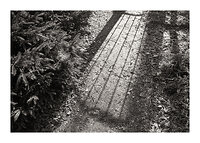
Grill

H
Grill

  • 0
  • 0
  • 32
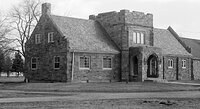
Cemetery Chapel

H
Cemetery Chapel

  • 2
  • 0
  • 58

Recent Classifieds

Forum statistics

Threads
202,775
Messages
2,845,393
Members
101,516
Latest member
DDX
Recent bookmarks
0

mauro35

Member
Allowing Ads
Joined
May 28, 2013
Messages
219
Location
Finland
Format
35mm
Since I started doing film photography I became interested in experimenting with long exposures or just make the best possible use of available light. I have recently discovered photographer Michael Wesely and I am thrilled by his work. I have searched but found little specific information. Do you know how is it technically possible to achieve such long exposures without burning the image? I know he used some specifically designed pinhole lenses with large format film, but I' d like to hear what you think and how would you approach a one-year-exposure.

Some reference links:
http://www.wesely.org/wesely/gruppe.php?var=openshutter#
Dead Link Removed
 
The year-long pinhole exposures that I am aware of (not sure whether they were by Wesely) were taken using enlarging paper, not film, and were not developed. Development acts like an "amplifier" of the latent image, so by not developing you lose masses of sensitivity. I read an acount where the phtographer said he scanned the images, with the light of the scanner destroying them; I'm not sure why he didn't fix them first.
 
That´s interesting. So the result is a paper negative, right? It makes more sense, I could not figure out how that would be possible with film.
 
have a google for "solargraphy"
 
So, after the exposure, is it possible to print paper negatives in any other way than from a digital capture? And how can color images be achieved as well? Sorry if the questions are basic, but I lack any technical knowledge on this.
 
I'm pretty sure that Michael Wesely is using film. Probably has heavy ND in front of the pinhole. Perhaps also stacked film in the camera - top sheet might be overexposed, but one of the sheets behind comes out with the correct exposure - I've heard of that being done in the past with very long pinhole exposures. Reciprocity will also play a part.
 
I just think the sharpness of his results is unbelievable, it doesn´t even look like the photographs have been taken through a pinhole. The stack of films can definitely explain how the exposures are so good after more than one year of daylight. Can the first sheet of film work somehow as a compensating filter letting more light go from the shadows and less from the highlights to the next sheet after being exposed for some time?
 
is the shutter continuously open on the 5x4 ones? or could the same effect be achieved by opening the shutter for one or two seconds every day for a year?
 
I'm pretty sure that Michael Wesely is using film. Probably has heavy ND in front of the pinhole. Perhaps also stacked film in the camera - top sheet might be overexposed, but one of the sheets behind comes out with the correct exposure - I've heard of that being done in the past with very long pinhole exposures. Reciprocity will also play a part.

This was my understanding of his technique.

The OP might also like to look at the 1h project by Hans-Christian Schink which uses long exposures facing the sun resulting in black lines in the sky (sort of extended version of Ansel Adams' Black Sun image).

http://www.hc-schink.de/1h.html

Bests,

David
www.dsallen.de
 
Thank you for the link to the 1h project. I find these absolutely impressive. Is that actual solarization (burned emulsion) or is it achieved chemically?
 
I actually enlarged those prints for him. Yes they are Solarization as Allen said. Made on 4x5 Efke film. He couldn’t get the effect using modern film from Kodak or Ilford as he wanted.

They have a lot of blotches and stripes and marks from the vagabonding light. You can imagine from a 1 hour exposure into the sun.
Actually the negatives where scanned, some blotches, marks and pinholes where removed. New negatives where made on 8x10 film and enlarged. The new negatives where still rather bad and it was a very frustrating job.
 
mauro35 said:
Thank you for the link to the 1h project.

I'll add my thanks too.

Very creative thinking, and strong images even when just seen on a 'puter.
 
I actually enlarged those prints for him. Yes they are Solarization as Allen said. Made on 4x5 Efke film. He couldn’t get the effect using modern film from Kodak or Ilford as he wanted.

They have a lot of blotches and stripes and marks from the vagabonding light. You can imagine from a 1 hour exposure into the sun.
Actually the negatives where scanned, some blotches, marks and pinholes where removed. New negatives where made on 8x10 film and enlarged. The new negatives where still rather bad and it was a very frustrating job.


Really amazing work! I can imagine the negatives were a pain, but the results look great.
 
Photrio.com contains affiliate links to products. We may receive a commission for purchases made through these links.
To read our full affiliate disclosure statement please click Here.

PHOTRIO PARTNERS EQUALLY FUNDING OUR COMMUNITY:


Ilford ADOX Freestyle Photographic Stearman Press Weldon Color Lab Blue Moon Camera & Machine
Top Bottom
