

• Welcome to Photrio!
    Registration is fast and free. Join today to unlock search, see fewer ads, and access all forum features.
    Click here to sign up

Medium Format Less Sharp?

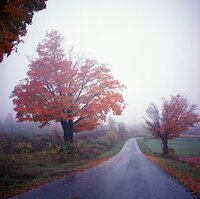
Rainy Day Trees

A
Rainy Day Trees

  • 4
  • 0
  • 59
One Way

A
One Way

  • 1
  • 1
  • 57

Forum statistics

Threads
203,153
Messages
2,850,621
Members
101,700
Latest member
Cpeason301
Recent bookmarks
1
I have RB and Nikon. I've seen quite a difference in sharpness between lenses of the same format. I've also seen significant differences between samples of the same lenses, and pre and post calibration by the manufacturer of the same lens. It would be difficult for me to say which is sharper IF we are talking about per-square-cm of film sharpness.

Also, I had my camera body calibrated for focus. It made difference, too.... Maybe, just maybe, OP's RZ could use calibration? Or, if we are talking of lenses of different vintage, maybe difference in technology, such as design technique making difference? Some of my Nikon lenses are QUITE good....

Just some random thoughts by me....
 
I like that BetterSense.

Nathan King, while there are certain things in photography that are "straight forward and simple", I would not classify "visual effects" or "comparing shots from different formats and lenses" in that category.

A single lens is even hard to compare to itself because the characteristics of most any given camera lens varies between f-stops and in relation to extraneous light. The corners may get soft as you open up, the effect flare changes, the propensity for ghosting changes... I had been using a 50mm AF-D Nikon lens for my main studio lens for a while and picked up a 35mm Nikkor "O" lens and was having great fun with it in the field and needed to shoot a small group so I slapped it on the camera for a few test shots well ahead of time thank goodness. That Nikkor "O" without a hood turned properly exposed shots into visions of a snowstorm because there was so much flare.

The point I'm getting at is that shots from different setups and situations will look different for a variety of reasons.

With that said, it is important for me to remember that all the issues I've ever had with lack of sharpness have been traceable back to my use or my choice of the tools.

Surely is and nothing is worse han a sharp picture of a fuzzy concept (AA):wink:
 
I have noticed when enlarging my 6x7 negatives they show far less grain than my 35mm prints; however, the 35mm prints still appear slightly sharper. I am using the same enlarger for both, and lenses used for each format are the same Rodenstock model lens with only the obviously differing focal length. It's difficult to judge from the small contact prints if the negatives themselves are sharper or if something is going on during enlarging. I use the Mamiya with a tripod and mirror lock up, so I can't imagine technique is an issue. Out of curiosity I had a pro lab do some scans, and the results were in line with what I have been seeing from the darkroom. What gives?

Could it be that my Leica camera lenses are simply noticeably sharper than those for my Mamiya RZ67? I'm not sure if it's a film flatness issue because within each print every area is uniformly sharp.

P.S. Yes, I know sharpness isn't everything. I'm just really curious.

Lenses can be corrected for abberrations in proportion to their focal length - so, all other things being equal, a lens of shorter focal length can made optically better than a similar lens of longer focal length. So you may well expect your relatively short focal length Leica lens to be better corrected than your Mamiya RZ lens.
A characteristic of enlarging small format negs compared to larger ones is that for any given print size, the micro-imaging properties of the small film will be relatively more obvious. This would include the inter-image effects, caused by local development exhaustion that can raise the contrast locally at image edges, giving rise to a sharpening effect - not unlike the unsharp mask filter in Photoshop.
So taking the two effects together, small format photography can appear to produce sharper looking pictures than larger formats if the print size is not too large. What it cannot do is match the superior tone reproduction possible with larger formats - and it's this ability to convincingly reproduce subtle changes in tone that help to make larger format photography produce results showing a more three-dimensional quality.
 
Light tables are great, but a blank, white computer screen web page is a decent substitute until you get one.

Try this one: http://blank.org/

I have a lightbox app for my android tablet which works quite well. It's a good deal more portable than a desktop PC monitor, too. The downside is that when looking through a loupe, I see pixels. YMMV.
 
To make my RB67 more sharp, I will shoot razor blades.:laugh:

Jeff
Good one. Whetstones make things sharper, so I will shoot those instead of razor blades. :laugh:
 
I would first like to thank everybody that responded to my thread or private messaged me with helpful suggestions. This is a wonderful forum! :happy:

I purchased a small light table and compared a few negative frames I had made prints of from both 35mm and 6x7 formats. Both formats appeared identical in sharpness through a loupe. This told me that something was going on during the enlarging process. Long story short it appears that my Beseler medium format negative carrier is not pressing the negative down firmly like the 35mm carrier does. I'm not sure if one side is bent or the joint attaching each half is loose, but something is wrong with how it is holding the negative. I can push on the 6x7 negative and it will jiggle up and down very slightly. The 35mm negative will not move.
 
Good Evening, Nathan,

The ordinary Beseler negative carriers are just simple, flat metal; any distortion or warping should be immediately obvious. As you have noted, 120 negatives can often show a bit of movement when in the carrier, but my experience has been that this is irrelevant. Once the negative is in place in the enlarger, there is nothing to move it, except for the remote possibility that heat from the lamp might cause it to "pop." That's something I've never seen happen with my Beseler equipment. I've quickly scanned the comments above and don't recall anyone's mentioning the possibility of enlarger misalignment, although that might well show up in prints from 35mm also.

Have you tried printing a different apertures to see if overall sharpness varies? If you're using ƒ8, you might try ƒ11 at twice the exposure time or ƒ16 at four times.

Konical
 
Ha! What's the point of all the fuss in this or that camera lens discussion if you're neg doesn't even lie flat in the carrier? You're only as good
as your weakest link.
 
I have heard that most 35mm lenses are (generally) sharper than medium and large format lenses because of the amount of magnification a 35mm negative or slide has to go through for printing.

Not quite.

Smaller format lenses have inherently better resolution than larger format ones.

But that decrease in lens resolution with increasing format is overcome by much faster rise of negative size and thus smaller enlargement.
 
The OP may have noticed that as the film format increases the depth of field appears to decrease vis-a-vis the changes of the circle of confusion related to the format size.
 
The OP may have noticed that as the film format increases the depth of field appears to decrease vis-a-vis the changes of the circle of confusion related to the format size.

I took a few samples to my camera club meeting, and the consensus was indeed my error with regard to depth of field and format size. Apparently my camera has schooled me in the laws of optics. :pinch:

P.S. I can't even imagine what large format photographers have to do to get a reasonable depth of field!!
 
They have to stop down quite a lot and then make long exposures. That's why they are mostly used for static subjects.
 
We LF types control depth of field by things like swing and tilt. That's why we get far more in acute focus than people using conventional gear.
In a receding perspective, everything from your feet to infinity can be placed in correct focus. So it's actually a far easier problem with big view
cameras.
 
We LF types control depth of field by things like swing and tilt. That's why we get far more in acute focus than people using conventional gear.
In a receding perspective, everything from your feet to infinity can be placed in correct focus. So it's actually a far easier problem with big view
cameras.

Unless the subject is more than about 6 feet away.
 
I took a few samples to my camera club meeting, and the consensus was indeed my error with regard to depth of field and format size. Apparently my camera has schooled me in the laws of optics. :pinch:

P.S. I can't even imagine what large format photographers have to do to get a reasonable depth of field!!

My cameras have schooled me once or twice. :whistling:

It's not always the lesson I first thought bit was though. One of the lessons I've learned along this line is that it's not really the format.

Aperture and focal length are what controls DOF. Large format cameras just normally use longer lenses.

Personally I've found that I like what lenses in the 150-180mm range do in 35mm, MF, and 4x5. I like the DOF there.
 
True. The format doesn't cause the problem but simply highlights the same issues inherent in photography. Where you may be forgiven in smaller formats you begin to see issues in larger ones. With a 90mm lens in 35mm I am careful to get enough depth of field, but with the wider angle of view with the same focal length in medium format I forget that it is just as much of an issue.
 
We LF types control depth of field by things like swing and tilt. That's why we get far more in acute focus than people using conventional gear. In a receding perspective, everything from your feet to infinity can be placed in correct focus. So it's actually a far easier problem with big view cameras.

Unless the subject is more than about 6 feet away.
Clive, I've used view cameras for more than three decades, frequently photographing landscapes with receding perspectives, and am totally unable to figure out what you mean. Please elaborate.
 
[f-number] and focal length are what controls DOF. Large format cameras just normally use longer lenses.

This is technically correct, but a roundabout understanding. It happens to be correct because F-number and focal length together determine the aperture diameter, which is what really "determines" DOF in thin-lens optics (along with criteria for print sharpness and final magnification, but those things would be held constant when comparing different camera formats).

Only aperture diameter (entrance pupil diameter) and magnification matter for DOF. It's really that simple. Perspective, focal length, cropping, format--none of these actually matters except insofar as it can have a practical impact on the aperture diameter and magnification, which are the only two things that DO matter.

A 5mm aperture generally gives comfortable DOF for a head-and-shoulders portrait at a typical print magnification of 0.25--roughly an 8x10 print. Distance, format, camera and focal length don't matter. You can use any lens on any film and stand at any distance. Unfortunately lenses are not marked with aperture diameter, but 5mm corresponds to f5.6 on a 28mm lens, f/32 on a 150mm lens, and f/64 on a 300mm lens.
 
This is technically correct, but a roundabout understanding. It happens to be correct because F-number and focal length together determine the aperture diameter, which is what really "determines" DOF in thin-lens optics (along with criteria for print sharpness and final magnification, but those things would be held constant when comparing different camera formats).

Only aperture diameter (entrance pupil diameter) and magnification matter for DOF. It's really that simple. Perspective, focal length, cropping, format--none of these actually matters except insofar as it can have a practical impact on the aperture diameter and magnification, which are the only two things that DO matter.

A 5mm aperture generally gives comfortable DOF for a head-and-shoulders portrait at a typical print magnification of 0.25--roughly an 8x10 print. Distance, format, camera and focal length don't matter. You can use any lens on any film and stand at any distance. Unfortunately lenses are not marked with aperture diameter, but 5mm corresponds to f5.6 on a 28mm lens, f/32 on a 150mm lens, and f/64 on a 300mm lens.

See Nathan, I'm still getting schooled. :wink:
 
This is technically correct, but a roundabout understanding. It happens to be correct because F-number and focal length together determine the aperture diameter, which is what really "determines" DOF in thin-lens optics (along with criteria for print sharpness and final magnification, but those things would be held constant when comparing different camera formats).

Only aperture diameter (entrance pupil diameter) and magnification matter for DOF. It's really that simple. Perspective, focal length, cropping, format--none of these actually matters except insofar as it can have a practical impact on the aperture diameter and magnification, which are the only two things that DO matter.

A 5mm aperture generally gives comfortable DOF for a head-and-shoulders portrait at a typical print magnification of 0.25--roughly an 8x10 print. Distance, format, camera and focal length don't matter. You can use any lens on any film and stand at any distance. Unfortunately lenses are not marked with aperture diameter, but 5mm corresponds to f5.6 on a 28mm lens, f/32 on a 150mm lens, and f/64 on a 300mm lens.

BetterSense is completely correct.

However .....

If you try to communicate this information to someone who normally doesn't even realize that film/sensors come in different sizes (the case with the vast majority of people who take photos) you are likely to get a very confused response. Most people don't think in terms of magnification.

For most people, the explanations of how this stuff works silently assume that the film/sensor size is a constant, and then refer to shooting distance, focal length and f/stop instead.
 
Photrio.com contains affiliate links to products. We may receive a commission for purchases made through these links.
To read our full affiliate disclosure statement please click Here.

PHOTRIO PARTNERS EQUALLY FUNDING OUR COMMUNITY:


Ilford ADOX Freestyle Photographic Stearman Press Weldon Color Lab Blue Moon Camera & Machine
Top Bottom
