• Welcome to Photrio!
    Registration is fast and free. Join today to unlock search, see fewer ads, and access all forum features.
    Click here to sign up

Materials for custom printing masks

Filling In

H
Filling In

  • 1
  • 2
  • 46
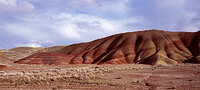
Painted Hills # 3.jpg

H
Painted Hills # 3.jpg

  • 4
  • 0
  • 89

Recent Classifieds

Forum statistics

Threads
203,208
Messages
2,851,481
Members
101,727
Latest member
Farag
Recent bookmarks
0

bluechromis

Subscriber
Allowing Ads
Joined
Sep 11, 2015
Messages
696
Format
35mm
I'm looking for materials to make custom dodging/burning masks for a particular image. For example, if one wanted to darken the sky behind a city skyline without darkening the buildings. Initially, I used scrap prints, but I decided they were too translucent. Then I used mat board, but it's a pain to cut that. What do others use? Does anyone use Rubylith?
 
Rubylith leaves you with a base, that can impact image quality. I tried one of the sheets of Cricut material and found it’s too hard to cut and peel plus it leaves a sticky base. Worse than Rubylith.
 
I suggest you sacrifice a sheet of photo paper, RC will do fine.

Fully expose it to the darkroom's overhead light, then develop & wash it as normal for a photo. This gives a sturdy sheet of very very black paper that is easy to cut, tear, manipuate.
 
Or, use a scrap print of the image you need to mask, but don't fix it. After stopping and rinsing, you should be able to trim it to the image with scissors, even when wet. Then, after you have the desired shape, return the print to the developer to develop the rest of the undeveloped, but now exposed, silver halides. Result: a black mask in the shape you want.

Doremus
 
Rubylith leaves you with a base, that can impact image quality. I tried one of the sheets of Cricut material and found it’s too hard to cut and peel plus it leaves a sticky base. Worse than Rubylith.

I doubt the base will affect image quality, since Rubylith was used to mask out backgrounds of photos in the graphic arts.
 
I doubt the base will affect image quality, since Rubylith was used to mask out backgrounds of photos in the graphic arts.

For high contrast, halftone negatives. There would be pinholes to retouch. The base is good quality on its own it wouldn't cause image issues. But it gathers dust and smudges easily. If you used it for continuous tone negatives, or for prints under enlarger, it would leave noticeable artifacts.
 
For high contrast, halftone negatives. There would be pinholes to retouch. The base is good quality on its own it wouldn't cause image issues. But it gathers dust and smudges easily. If you used it for continuous tone negatives, or for prints under enlarger, it would leave noticeable artifacts.

I would still give it a try. It is easy enough to cut and what residue or smudges might be left on the base might not affect the sky that the OP wants to burn in.
 
I just use my hands. If that doesn't work, I don't bother.
 
Use a print made a bit smaller than the print you are trying to make, cut to the area you want held back or burned.
The continuous movement of your dodging/burning print can then be up and down below the lens.
 
Use a print made a bit smaller than the print you are trying to make, cut to the area you want held back or burned.
The continuous movement of your dodging/burning print can then be up and down below the lens.
From my limited experience, that leaves a halo or a dark edge. Jeanloup Sieff liked that effect.
Screenshot 2025-10-10 at 7.01.23 PM.jpg
 
If you used it for continuous tone negatives, or for prints under enlarger, it would leave noticeable artifacts

I use rubylith masks for alt process printing; I leave the base intact and cut a frame for masking the edges. So the exposure is always through the base of the rubylith. This poses no particular problem. The base is easily cleaned. It doesn't smudge more than any other material like glass etc. I use continuous tone negatives virtually exclusively.
 
I remember a topic on What To Do With A Fogged Box Of Paper.
Sounds like the ideal source for exposing, and developing your own black card to cut out and make masks.

If suitable, I rip the shape instead of using scissors as this tends to blend the edges of the dodged area.
 
For this RA-4 print from a C-41 negative I made a normal test print which resulted in the ungainly grey sky that I wanted to change to a blue, determined the filter packsettings and exposure to produce the shade of blue that I wanted and then made a cutout to separate the sky from the waterfall. From there it was simply a mater of printing the 2 exposures.

Horsetail_Falls_2.58130126_large.jpg
 
Thanks, all.
 
Photrio.com contains affiliate links to products. We may receive a commission for purchases made through these links.
To read our full affiliate disclosure statement please click Here.

PHOTRIO PARTNERS EQUALLY FUNDING OUR COMMUNITY:


Ilford ADOX Freestyle Photographic Stearman Press Weldon Color Lab Blue Moon Camera & Machine
Top Bottom