• Welcome to Photrio!
    Registration is fast and free. Join today to unlock search, see fewer ads, and access all forum features.
    Click here to sign up

Marshall's Spot All Olive Green is Brown

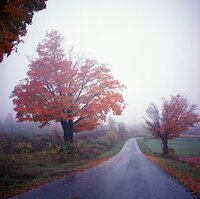
Rainy Day Trees

A
Rainy Day Trees

  • 4
  • 0
  • 49
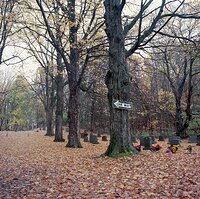
One Way

A
One Way

  • 1
  • 1
  • 47

Forum statistics

Threads
203,148
Messages
2,850,574
Members
101,698
Latest member
Weishampel
Recent bookmarks
0

Darkroom317

Member
Allowing Ads
Joined
Mar 2, 2009
Messages
653
Location
Mishawaka, IN
Format
Large Format
The other day I printed an image on warm tone paper. However, there is a spot that I need to retouch that is quite large. I have had great success spotting neutral tone prints. The warmtone print has an olive cast that I quite like for this particular set of prints. I figured that choosing the olive green would be a good idea but when I put it on the print it turned out brown. It was very warm and not even close to the tone I need. Does anyone have any advice how to mix he dyes to get the tone I need.
 
Try mixing in some neutral tone spotting dye. A fair amount of trial and error may be needed. FWIW I've become pretty good at spotting small dust spots, but really big spots are another matter.
 
The marshall's five bottle kit that I use has the following labelled tones: neutral black, brown, blue black, selenium brown, olive. Spotting is a lost art, and it is very difficult to convey the appropriate tone mixing techniques that are required to spot the various warm, neutral, and cold-tone b&w fiber papers still on the market. Each manufacturer's paper responds to marshall tones in different ways. I would suggest saving all your less than desirable prints, and processing them to archival completion, as you would with your keepers. Use these 'bad' prints to experiment with your marshall toning efforts. Use a palette of various toning dilutions for each tone in each bottle. You will have five palettes in front of you. Assign a fine 00 brush to each marshall tone palette and never interchange the brushes. I like to let my various dilutions in each palette evaporate and dry, as I then re-wet the different assigned spotting brushes to pick up dried tone as needed. For your first experiment, simply place straight-up undiluted tone from each palette on the white border of a 'bad' print. Then place your varying diluted tones adjacent to the original undiluted, for each of the five marshall tone palettes. From these first efforts on the white border, you should clearly see just how each separate marshall tone responds to your paper's white base. I have found that most papers require mixing of different marshall tones to perfectly create a spotting match. And this is where the discussion gets too complicated for the patience of most forum readers. But as noted by a previous poster, if you are working with a warm tone paper, the marshall olive bottle tone will need to be blended with a bit of neutral black tone, and then this blend will need to be diluted, in order to match a paper like ilford multigrade warm tone. good luck.
 
The olive tone does some interesting things in combination with the "selenium" brown tone and basic black, but it never behaves like a paint
color chip called "olive". I use it very sparingly on warmtone images, and always mixed with the other dyes, and seem to arrive at
exactly what I need in such cases.
 
Drew is absolutely correct. I also occasionally use a sixth marshall's tone, sepia, but I think marshall's eliminated that 'kit' bottle tone a number of years ago. Note that the marshall rubber bulb dropper bottles should be kept in separately sealed ziploc bags, as the rubber bulb dropper covers allow inevitable evaporation of the water from the bottles, thus increasing the concentration of dyes.
 
I haven't found the exact mix of colors to be all that critical. I drop of Selenium Brown and 1 drop of Neutral works fine for me with both my former paper of choice, Forte Polywarmtone, and my present paper, neutral tone Foma FB VC, both toned in 1:20 KRST. FWIS I discard any prints with really large white spots (which I seldom have) but have good results with small dust spots. The key, for me, is a really good brush from an art supply store.
 
Photrio.com contains affiliate links to products. We may receive a commission for purchases made through these links.
To read our full affiliate disclosure statement please click Here.

PHOTRIO PARTNERS EQUALLY FUNDING OUR COMMUNITY:



Ilford ADOX Freestyle Photographic Stearman Press Weldon Color Lab Blue Moon Camera & Machine
Top Bottom