• Welcome to Photrio!
    Registration is fast and free. Join today to unlock search, see fewer ads, and access all forum features.
    Click here to sign up

Low Light: Tri-X or Delta 3200

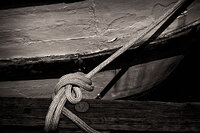
Tied to the dock

D
Tied to the dock

  • 4
  • 0
  • 66
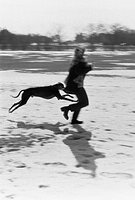
Running in the Snow

H
Running in the Snow

  • 1
  • 2
  • 80

Recent Classifieds

Forum statistics

Threads
203,083
Messages
2,849,612
Members
101,652
Latest member
Mayorbeez
Recent bookmarks
0

Darkroom317

Member
Allowing Ads
Joined
Mar 2, 2009
Messages
653
Location
Mishawaka, IN
Format
Large Format
I am working on a street project that includes some night scenes. I am looking for a good low light medium format film. I want fairly good shadow detail realizing that the range will be limited. I have used Delta 3200 at 12,800 and developed in DD-X. But I am wondering if pushing Tri-X and stand developing in Rodinal. I did it once but I don't remember what the results were like. Which would be better? Please post photos or links for examples.
 
First off you are asking a very subjective question and we have no idea what your subject is or what qualities you like in your prints.

Second relying on Internet examples to judge technical merit is, IMO, nearly useless.

I'd suggest that Delta 3200 can do 12500 nicely given you can use times tested and published by Ilford.

For TX you are way outside the published norms. I'm not saying you can't make TX do this backflip, just that Ilford and Kodak are good at their jobs and know the limits of their films pretty well and D3200 is a faster film.

The only way you will know if TX will work is to try it for yourself.
 
Delta 3200.

I've not used it higher than 3200 where it's very good. My experience with Tri-X has been that anything above 1600 is very iffy.
 
I used delta 3200 a year or so ago at a twilight street fair, shooting with a Fuji 6x9. I rated it at EI 1000 and processed it in Pyrocat HD. I found that EI 800 would have given me a bit better shadow separation, and that I needed to extend the development by a minute or two to enhance the overall contrast. The results were impressive regardless of my errors, and I definitely would use the film again in flat, low-light conditions. My vote would be for the Delta 3200 for MF, but I would run a test roll in similar conditions before committing to a big shoot.

Peter Gomena
 
relying on Internet examples to judge technical merit is, IMO, nearly useless.

Exactly, the question is always what is present in the negative and what is an artifact of the scanning process. Quality scanners are not something that one picks up at Best Brands or Walmart.
 
Underexposing a negative will always result in loss of shadow detail. Push processing, special developers, and intensifiers cannot bring out any detail that is not already there. Fast films and pushing are only two things that are used in dim light situtations. It is always instructive to look at photographs taken decades ago without the benefit of fast films available today. How did they obtain the photo?

It is unfortunate that Ilford chose to call it 3200 implying falsely that it is a true ISO 3200 film. The following is a quote from Ilford's website, "DELTA 3200 Professional has an ISO speed rating of ISO 1000/31º (1000ASA, 31DIN) to daylight." Exposing it at EI 12500 which is almost 4 stops under will result in a near complete loss of shadow detail. Ilford goes on to imply that exposing it above EI 6400 is not recommended.
 
Last edited by a moderator:
I figured as much. I was just wondering if I was missing out on a possibly better way than I am used to which is Delta 3200
 
Photrio.com contains affiliate links to products. We may receive a commission for purchases made through these links.
To read our full affiliate disclosure statement please click Here.

PHOTRIO PARTNERS EQUALLY FUNDING OUR COMMUNITY:



Ilford ADOX Freestyle Photographic Stearman Press Weldon Color Lab Blue Moon Camera & Machine
Top Bottom