
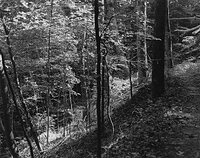
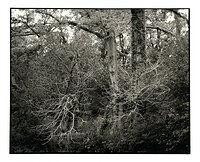
OP
OP

Marco: actually I'm using a B&W head (LPL 7700) with Ilford MGIV 3x3" filter sheets stuck in above the condensor. It's what's provided in a club darkroom but I'm thinking about buying my own soon - there's a C 7700 (colour head, otherwise similar) listed locally for less than the lens in it is worth so I might grab that and give it a go too.
WolfTales: I thought low contrast filters were more yellow, thereby blocking out more blue light and thereby holding back exposure of the higher-contrast layer of the paper. Conversely, high contrast filters are magenta to block out the green light and reduce exposure of the low-contrast layer. I believe you can get approximately the same effect as #5 by using a blue filter and a #00 or similar by using a green filter. As I understand it (tell me if I'm wrong) the total density of each filter is adjusted so that with a reduction in exposure of one layer there will be an increase in exposure of the other layer and the midtones will remain at about the same density for a given exposure.
as such... if I'm doing a split-grade print, surely it doesn't matter that I use the two most extreme grades? The point is to manually expose the two layers separately is it not? If the low-contrast layer blocks up with an exposure that would give me highlight detail, then getting a perfect print will require either a yet-lower contrast layer, or some masking or dodging.
One more thing: there is plenty of shadow detail in the negs. They're quite thick. Contrasty with very dense highlights and no blocked/transparent shadows... it's just in the printing where I'm losing detail.
WolfTales: I thought low contrast filters were more yellow, thereby blocking out more blue light and thereby holding back exposure of the higher-contrast layer of the paper. Conversely, high contrast filters are magenta to block out the green light and reduce exposure of the low-contrast layer. I believe you can get approximately the same effect as #5 by using a blue filter and a #00 or similar by using a green filter. As I understand it (tell me if I'm wrong) the total density of each filter is adjusted so that with a reduction in exposure of one layer there will be an increase in exposure of the other layer and the midtones will remain at about the same density for a given exposure.
as such... if I'm doing a split-grade print, surely it doesn't matter that I use the two most extreme grades? The point is to manually expose the two layers separately is it not? If the low-contrast layer blocks up with an exposure that would give me highlight detail, then getting a perfect print will require either a yet-lower contrast layer, or some masking or dodging.
One more thing: there is plenty of shadow detail in the negs. They're quite thick. Contrasty with very dense highlights and no blocked/transparent shadows... it's just in the printing where I'm losing detail.


