
I have recently been working my way through an older bottle of Tetenal Mirasol wetting agent and have noticed that effectiveness of the working solution (1+400) seems to have declined compared to newer and / or freshly opened stock. As I usually simply work my way through a new bottle of wetting agent I've not really seen this behaviour before, and so perhaps some notion of a 'best-before' date should be applied to older stock.
-
Welcome to Photrio!Registration is fast and free. Join today to unlock search, see fewer ads, and access all forum features.Click here to sign up
You are using an out of date browser. It may not display this or other websites correctly.
You should upgrade or use an alternative browser.
You should upgrade or use an alternative browser.
Longevity of wetting agent solution concentrates
-
A
- Thread starter Tom Kershaw
- Start date


Recent Classifieds
-
For Sale Rodenstock Apo Sironar N 300mm RARE
- Started by x.rasenas
-
For Sale Leica M9 not working sensor _ for repair
- Started by Manual Camera
-
Want to Buy WTB: 4x4 Resin 81B Filter
- Started by NortheastPhotographic
-
For Sale LINHOF SUPER TECHNIKA III VERSION 5 with Raptar 135, film holders and FP4
- Started by Simon Benton
-
For Sale LINHOF TECHNIKA III ver 5 LENSBOARDS
- Started by Simon Benton
Forum statistics

Ivo Stunga
Member
I use 10ml Mirasol per 10 films, so the bottle stays opened for a long time - haven't noticed any degrading performance. Haven't noticed any Best Before date, - might look for it when at home, though.I have recently been working my way through an older bottle of Tetenal Mirasol wetting agent and have noticed that effectiveness of the working solution (1+400) seems to have declined compared to newer and / or freshly opened stock. As I usually simply work my way through a new bottle of wetting agent I've not really seen this behaviour before, and so perhaps some notion of a 'best-before' date should be applied to older stock.
I use 10ml Mirasol per 10 films, so the bottle stays opened for a long time - haven't noticed any degrading performance. Haven't noticed any Best Before date, - might look for it when at home, though.
The datasheet for ILFOTOL, which I understand is not exactly the same as Mirasol, gives 3 years shelf life for an unopened bottle, and 12 months for a half full tightly capped bottle.

As surfactants are required to be biodegradable these days wetting agents (in my case Adox Adoflo) seem to have a quite limited shelf life. I just had to throw about 400ml of a 500ml bottle, because I wasn't able to use it up fast enough. There was a strange odour coming from the bottle and it didn't work anymore as surfactant.
As surfactants are required to be biodegradable these days wetting agents (in my case Adox Adoflo) seem to have a quite limited shelf life. I just had to throw about 400ml of a 500ml bottle, because I wasn't able to use it up fast enough. There was a strange odour coming from the bottle and it didn't work anymore as surfactant.
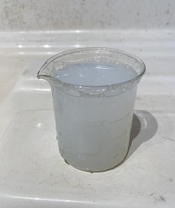
Thanks for relating your experience. Looking at the old Mirasol in a pyrex beaker, the solution concentrate has a distinctly milky appearance compared to fresh solution which is completely clear.
Attachments
Ivo Stunga
Member
Heh, I'll keep an eye for that. Currently it's been opened for a year or so, clear as of now and I'm talking the small bottle.
My Mirasol is well over three years old now, plus the time spent on the dealers shelf.
No sign of a use by date on the bottle.
I keep a working supply in a 100ml glass eyedropper bottle.
Both that and the original plastic bottles are gin clear, and work fine.
The original card seal in the cap is falling apart now so I will replace that.
I did wonder if glass storage was better than the original plastic bottle, but that does not seem to be the case.
My darkroom is very cool in summer and quite cold in winter I need extra heating whilst working in there in winter.
Could it be degrading in a very warm room, or stored near a radiator?
No sign of a use by date on the bottle.
I keep a working supply in a 100ml glass eyedropper bottle.
Both that and the original plastic bottles are gin clear, and work fine.
The original card seal in the cap is falling apart now so I will replace that.
I did wonder if glass storage was better than the original plastic bottle, but that does not seem to be the case.
My darkroom is very cool in summer and quite cold in winter I need extra heating whilst working in there in winter.
Could it be degrading in a very warm room, or stored near a radiator?
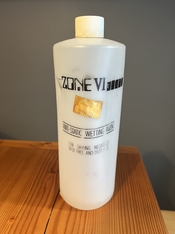
I typically use a bottle of wetting agent for 2 - 3 years, then toss it and buy new. I've never seen a bottle deteriorate over that time, but why not keep stuff fresh? Don't know if temp has any affect on shelf life, but I store mine at about 60F year 'round.

The best before dates may be related to the expected integrity of the packaging, as much as anything else.

Doremus Scudder
Member
Some of the surfactants used in wetting agents like Photo Flo can grow bacterial slime. This depends on the dilution (more water = more likely to grow things; working solutions only last a couple of days), whether the concentrate has a preservative, whether it gets inoculated or not, how susceptible the ingredients are in the first place (my European Photo Flo used ethylene glycol), etc.
If your wetting agents starts growing things, it's time to toss it.
Doremus
If your wetting agents starts growing things, it's time to toss it.
Doremus
pentaxuser
Member
The datasheet for ILFOTOL, which I understand is not exactly the same as Mirasol, gives 3 years shelf life for an unopened bottle, and 12 months for a half full tightly capped bottle.
Well I have used mine for a lot longer - years longer in fact, Tom. It still seems to "froth" unless I pour it out and back into the bottle at Ilford's stipulated dilution so I assume it is still working fine as it seems to do the job
pentaxuser

I have a Kodak Photoflo 600 bottle with the old logo. I bought it back in 2008 and still looks and works fine.
As surfactants are required to be biodegradable these days wetting agents (in my case Adox Adoflo) seem to have a quite limited shelf life. I just had to throw about 400ml of a 500ml bottle, because I wasn't able to use it up fast enough. There was a strange odour coming from the bottle and it didn't work anymore as surfactant.
It takes me a decade or two to use a bottle of Photo-Flo (screw cap disintegrated, now replaced). I have the Agfa equivalent unopened. Does anyone know roughly when the components might have changed so that they are biodegradable?
Maybe ask Mirko Böddecker of Fotoimpex (I think he posts regularly on Photrio), he has to deal with regulations regarding photo chemicals all the time. He might know more.

That 1 litre of PhotoFlo 600 I bought in 1982 worked well at the time. It also worked well yesterday but the same bottle is now only 80% full. Bottle and lid are in good condition; label has aged a bit.
- Joined
- Mar 12, 2004
- Messages
- 547
Ha. Photo-Flo 600 (1:600 dilution) was made for enormous high-volume film-processing machines. For we personal photographers, that's several lifetimes of use from one bottle.
And when it was my job to process b/w roll film, in a custom lab many years ago, the policy was to change the Photo-Flo tank weekly.
And when it was my job to process b/w roll film, in a custom lab many years ago, the policy was to change the Photo-Flo tank weekly.

Sirius Glass
Subscriber
Unmixed PhotoFlo, properly sealed, can last for years and is very stable. Once mixed it should be discarded after a short time because it can grow bacteria.

DWThomas
Subscriber
The age of my supply bottle of Photoflo would surely be measured in decades. After mixing, all service life bets are off. I normally mix a half liter or so of solution and dump it unless doing another film or two in the next day or so. In the past I found strange 'stuff' may appear if the mix is kept for weeks.
Ha. Photo-Flo 600 (1:600 dilution) was made for enormous high-volume film-processing machines. For we personal photographers, that's several lifetimes of use from one bottle.
And when it was my job to process b/w roll film, in a custom lab many years ago, the policy was to change the Photo-Flo tank weekly.
I'd assume a difference between undiluted photo-flo and diluted used product in a production environment. I use my chemistry one shot (except for selenium toner & washaid). If i were running a custom lab i'd do the same .....how much does it cost to change a 1:600 dilution ......seems like good insurance.

I've got at least a couple bottles, of Photoflow from, 1) a store and, 2) wherever, and they are easily a minimum of twenty years old and they also are good like others here have experienced.
They are 200:1 and 600:1 and the 600:1 may be from 1987 or 90.
I no longer save made up photoflow beyond the first day's work, having learned the hard way what a break of a week or so will grow in it, in a brown plastic jug.
I've never used any other product.
They are 200:1 and 600:1 and the 600:1 may be from 1987 or 90.
I no longer save made up photoflow beyond the first day's work, having learned the hard way what a break of a week or so will grow in it, in a brown plastic jug.
I've never used any other product.
Last edited:
I have 1/2 bottle of photo-flo 200 from 2005 and it worked fine last Saturday.
We have real hard water here.
We have real hard water here.
From what is reported here, it sounds as though Kodak photo-flo may be more robust in terms of keeping qualities. I see from the attached pdf dated 1995, that at least at one time Kodak gave photo-flo solution concentrate longevity as follows.
'Concentrates of PHOTO-FLO Solution should last indefinitely if the container is tightly capped.'
'Concentrates of PHOTO-FLO Solution should last indefinitely if the container is tightly capped.'
Attachments
Last edited:
That 1 litre of PhotoFlo 600 I bought in 1982 worked well at the time. It also worked well yesterday but the same bottle is now only 80% full. Bottle and lid are in good condition; label has aged a bit.
Sounds very much like me.
Contents working fine, but my packaging is getting a bit frayed and worn.
That's old age for you.

| Photrio.com contains affiliate links to products. We may receive a commission for purchases made through these links. To read our full affiliate disclosure statement please click Here. |
PHOTRIO PARTNERS EQUALLY FUNDING OUR COMMUNITY:  |