
• Welcome to Photrio!
    Registration is fast and free. Join today to unlock search, see fewer ads, and access all forum features.
    Click here to sign up

Lith print bleaching in fixer?

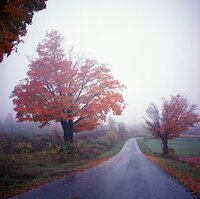
Rainy Day Trees

A
Rainy Day Trees

  • 4
  • 0
  • 59
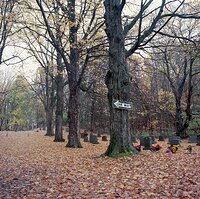
One Way

A
One Way

  • 1
  • 1
  • 57

Forum statistics

Threads
203,153
Messages
2,850,625
Members
101,700
Latest member
Cpeason301
Recent bookmarks
0

andreios

Member
Allowing Ads
Joined
Apr 22, 2010
Messages
373
Location
Prague, e.g.
Format
Multi Format
Hi all,
just a quick question to the lith-printing gang - I have noticed it before but wasn't sure about it - yesterday however it was pretty clear - I've been making some lith prints, among others i used Forte Polywarmtone and I watched not too strong but noticeable bleaching effect in the highlights and midtones while the print was in the fixer. Does anyone else have similar experience?
The chemical in use were Moersch EasyLith as developer and Ilford rapid fixer.
When using different papers - Fomatone, Orwo, Brovira,... - there was no bleaching effect visible.

Thank you

A.
 
I've not noticed bleaching per-say but there can be changes to the print when it is in the fixer. Tim Rudman refers to this as 'Fix-up' as opposed to 'dry-down'. The changes can affect colour and tone of the print
 
Thanks, I'll look it up in Dr. Rudman's book.
In my case the change was really very noticeable, but I would not say it has ruined the print, far from it. I was just thinking if it was something that one needs to bear in mind and maybe push the "snatch" moment a tad more...

Sent from my i9300 using Tapatalk
 
Absolutely. Part of the joys of lith printing. Every print I've ever made, regardless of paper or developer, does this. You could compensate for "fix-up" with your snatch point, but you have to remember that there is still the dry-down factor to consider. I used to fear the loss of delicate highlights in the fix up, but then realized they came back with dry down.

Definitely refer to Dr. Rudman's book. He shows clear examples of this effect happening.
 
I've not noticed it particularly either, but visible changes are possible and normal. Excessive fixing can bleach the print somewhat. As long as your fixing times in rapid fix aren't exceeding 3 or 4 minutes or so (and 2 or less should be sufficient) you don't need to worry about actual bleaching. But you may need to try and compensate for the visual change you see.
That said, safe light is poor light to really evaluate the print, though it's your only choice at the time of the snatch point.

All these variables are what make lith printing interesting however.
 
I don't do Lith prints but I do use warm tone papers & developers including Polywarmtone. The warmer the tones the more likely there will be bleaching of the highlights in the fixer, particularly where rapid fixers are used.

To keep this to a minimum I use two bath fixing and don't exceed more than 1 minute in each bath, and then the print goes into the wash trays. Over fixing can have a very significant effect on the overall densities of a print and will also shorten the life of the fixer baths (due to a more rapid build up of silver).

Ian
 
Lith prints "pop" in the fixer ... contrast boost; I believe it's because all the unused silver is being removed. And in fact this happens to a lesser extent with ordinary prints as well.

As suggested, Tim Rudman's books are great resources.

Different papers are affected differently ... but it basically comes down to planning for your print to get a contrast boost in the fix, and then to "color" down upon drying.
 
Last edited by a moderator:
Different papers are affected differently ... but it basically comes down to planning for your print to get a contrast boost in the fix, and then to "color" down upon drying.

You mean you deliberately over-fix to bleach the prints. It doesn't give a contrast boost just a loss of highlight detail and a slight reduction in Dmax.

Ian
 
Hey, Ian ... I don't deliberately over fix and I use tF-5 fixer to reduce the chance of over-fix bleaching...

I can't argue the science re: highlight detail; what i wrote was a paraphrasing of what I remember from Rudman's first book on lith printing but it reflects my personal, practical experience as well.

For example: Particularly with MGWT, a flat-looking print in the stop bath turns "contrastier" in the fix. Highlights appear blown out until its dry but there's not a lot of color. Old Oriental Seagull, however, doesn't show quite as much change in contrast when placed in the fix but dark brownish yellows fill in the highlights when its dry.

Just my experience...
 
OK, really I wanted you to clarify. Of course there's a difference between an unfixed print just prior to going into the fixer and a fixed print where the undeveloped silver halides are removed. It's a reason why we do test strips and check them with reasonable lighting after fixing before the final exposures. some dry their test strips to see the dry-down effects,.

The OP however is talking about bleaching in the fixer, that can happen with any fixer.

Ian
 
Is it not, in essence, the paper "clearing" once it gets into the fix?
 
Is it not, in essence, the paper "clearing" once it gets into the fix?

That's what Pstake is talking about but the OP is talking about bleaching in the fixer and that happens remarkably quickly with warm tone papers and rapid fixers (Ammonium Thiosulphate based). So in a fresh fixer like Hypam or Kodak/Ilford rapid fixer or the TF series keep fixing times low, 2 mins max, 5 minutes results in bleaching. Of course as a fixer get used times lengthen but this is where two bathe fixing excels and improves archival permanence and gives better economy.

Ian
 
Yes, lith prints bleach in fixer. I use Sodium Thiosulfate - that gets me the least bleaching.
 
The bleaching action of thiosulfate is directly related to acidity. So if it is a worry and you don't have good control over the fixing process, try a neutral or alkaline fixer - commercial products such as TF-5 (~neutral pH) or TF-4 (alkaline pH), both of which are rapid Ammonium Thiosulfate fixers that won't bleach. They can be used with a regular acid stop bath. Or you can mix your own alkaline fixers (see TF-3 rapid fixer or TF-2 regular fixer).

Thanks for the tip - and for all other suggestions. I do have an alkaline fixer which I use for Kallitypes, I'll try it next time.

Sent from my i9300 using Tapatalk
 
Photrio.com contains affiliate links to products. We may receive a commission for purchases made through these links.
To read our full affiliate disclosure statement please click Here.

PHOTRIO PARTNERS EQUALLY FUNDING OUR COMMUNITY:


Ilford ADOX Freestyle Photographic Stearman Press Weldon Color Lab Blue Moon Camera & Machine
Top Bottom
