
• Welcome to Photrio!
    Registration is fast and free. Join today to unlock search, see fewer ads, and access all forum features.
    Click here to sign up

Licquid Emulsion

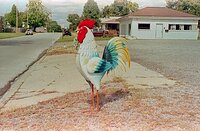
The Chicken

A
The Chicken

  • 3
  • 4
  • 80
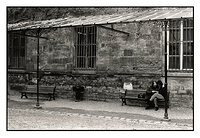
Amour - Paris

A
Amour - Paris

  • 1
  • 0
  • 83

Recent Classifieds

Forum statistics

Threads
203,241
Messages
2,851,917
Members
101,743
Latest member
Pablino
Recent bookmarks
0

thefizz

Member
Allowing Ads
Joined
Dec 8, 2004
Messages
2,354
Location
Ireland
Format
Medium Format
I am trying out liquid emulsion for the first time and would appreciate any help you can offer. I plan to apply it to flat pieces of raw timber which have been sanded.

Here's some of the questions that come to mind:

Is it a set filter grade.
How many coats should it get.
How should it be applied, brush or roller.
How long does it take to dry.
Any basic rules I should be following or avoiding.

Thanks,
Peter
 
All the liquid emulsions that I have used are fixed grade, about 2, although I think there is a VC version. With regard to your questions I would suggest that you prepare the surface of materials such as wood, stones and rocks, old metal etc with a primer, I used flat grey primer paint. I have also coated glass and used a clear varnish as a key for the liquid emulsion you can also use varnish on the other materials I mentioned.

Try giving two or three coats applied in a thin even layer by brush although you can use anything you wish to lay on the emulsion. Sometimes a less than perfect coating can work well depending on the subject matter.

Before using the emulsion heat it in a bowl od warmish water, not too hot, this thins it to allow better application. Do not shake the bottle as this introduces bubbles into the emulsion.

Dry it in normal room, or should I say darkroom temperature, it should be dry in about 1 hour or even less. If you want to increase the contrast you can try adding a few mls of a 10% solution of bromide if it doesn't work at first add a little more.

Liquid emulsion is a fun thing to use but it is also a very creative process. Try to look at the book Cyclops by Albert Watson where there are someexcellent examples of the use of liquid emulsion in fashion photography.

have fun
 
Thanks for your help Les, much appreciated.
 
emulsions

new here...

you should get the "bible" on the matter...

#silver Gelatin# by Martin Reed. It has ALL the info you need.

I use SE1 emulsion (Kentmere), and I only use one layer. (nice emulsion)

MACO makes a VC emulsion. I have it but havn't gotten around to try it yet..

have fun - it's addictive!
 
I got the Jessops version, how does it compare to other makes?
 
jessup

dunno as I havn't tried it.

but the SE1 is so easy - and unexpensive to use..
 
I have been definitly curious about their HALO-CHROME ® SILVER TONER.
http://www.rockaloid.com/products.html#halo
Anyone tried it?
Looks interesting, but I think I should try my hand at some of the more known toners first. (sepia, selenium, paladium etc.)
 
Last edited by a moderator:
see the experimental gallery where i added two examples of maco vc on wood ('Sammy').

I tried maco vc on wood. be aware that the darker the wood, the more problems you will have with contrast. use the lightest wood possible. I used gelatine to prebrush te wood with 5 thin layers. next i want to try to prebrush them with transparent wood paint which may work even better?
 
Thanks Willie, I will be using Maple wood which is very light in colour. I will let you all know how I get on.
 
Photrio.com contains affiliate links to products. We may receive a commission for purchases made through these links.
To read our full affiliate disclosure statement please click Here.

PHOTRIO PARTNERS EQUALLY FUNDING OUR COMMUNITY:


Ilford ADOX Freestyle Photographic Stearman Press Weldon Color Lab Blue Moon Camera & Machine
Top Bottom
