
• Welcome to Photrio!
    Registration is fast and free. Join today to unlock search, see fewer ads, and access all forum features.
    Click here to sign up

Lens with macro capabilites but large focal range?

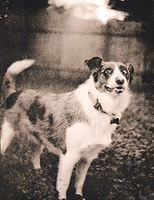
Arya dog at play 2

A
Arya dog at play 2

  • 1
  • 0
  • 20
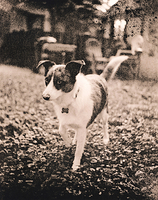
Arya dog at play

A
Arya dog at play

  • 0
  • 0
  • 22

Recent Classifieds

Forum statistics

Threads
201,974
Messages
2,833,078
Members
101,039
Latest member
juanfarrias888@gmail
Recent bookmarks
0

misslisamham

Member
Allowing Ads
Joined
Jun 10, 2015
Messages
1
Format
Medium Format
My go-to cameras are a pair of Mamiya 6's. I love them, but hate that I can't get closer to the subject than three feet. To shoot closer than that I have always used my Mamiya C330 lens (80mm 1:2.8), which can focus up to about five inches away, but also from infinitely far away (because of the bellows, I presume? I'm not a techie). However, I don't like that it's a twin lens (so I must correct for framing, which I never get quite right), and it's not as sharp as the Mamiya 6.

So, I recently bought a Hasselblad 501cm in hopes of replacing all the Mamiyas with one camera. For the macro work, someone suggested using a $ extension tube instead of buying the $$$ macro lens. So, I got a 55 and used it on my 80mm. It worked for super-tight macro shots (at f/22...), but focused only at a single distance from the subject. What are my options for getting the flexibility of the Mamiya C330's lens, described above? I am open to buying new lenses for the Hasselblad, or investing in a whole new system. Not wedded to square format.

Thanks!
 

mike c

Subscriber
Joined
Jan 5, 2009
Messages
2,863
Location
Los Angeles
Format
Multi Format
Well, Haselblad does have a 135mm macro lens that works with their bellows unit. It will focus from close up (do not know how close) to infinity with the bellows unit. They have 2 or three types of bellows units and the later one I believe is easier to work with, the others need a duel cable release.
 

wiltw

Subscriber
Allowing Ads
Joined
Oct 4, 2008
Messages
6,708
Location
SF Bay area
Format
Multi Format
misslisamham said:
I got a 55 and used it on my 80mm. It worked for super-tight macro shots (at f/22...), but focused only at a single distance from the subject.

I see a fundamental lack of comprehension of the principles of focus at macro vs. usual distances. Here are some very, very BASIC principles of focus...
  1. Ordinarily, how close to the subject a lens can focus is determined by the lens mechanism itself...it can only move away from the film plane by a certain distance, and this distance determines the minimum focus distance to the subject.
  2. A 'macro' or close focus lens is, simplified for conceptual purposes, a lens that can move FARTHER from the film plane than a conventional lens via its own built in focus mechanism, allowing the subject distance to be even closer than a conventional lens
  3. You can take a lens as described in #1, put an 'extension tube' between the lens and the film plane, to move the lens farther away from the film plane than its own mechanism permits, to allow the subject distance to be closer than usual, but because of the 'spacer' the lens CANNOT focus at Infinity without removal of the extension tube
  4. the extension tube as described in #4 determines the RANGE of FOCUS for the lens, yet the lens' own usual focus mechanism is used to focus at variable distances within that range of distance. (And, thic can be used to extended the range of focus of a macro lens even closer to the subject!)
 
Last edited by a moderator:

John Koehrer

Member
Allowing Ads
Joined
Apr 3, 2004
Messages
8,277
Location
Aurora, Il
Format
Multi Format
Hasselblad has/had a 120 S-Planar f5.6 that may do what you want. The closest focus is .8 meters(2' 7"), about the same as the 80 but because of it's slightly longer focal length gives a slightly tighter crop.

The Mamiya RB67 series uses a bellows like the C330 and like the 330 is a bulky camera.
Page 26 of this link give a mini breakdown of close focus distance and subject size with most of their lenses.

Most people consider the 90mm or 120mm normal for this camera 110X135mm filed with the 90 & bellows fully extended and
150X190mm for the 127. The chart also shows minimum subject to lens distances.

Both of these will focus from infinity to their close focus without additional accessories. There are tubes available if you want to get closer.
One advantage is the system is less expensive than Hasselblad but the Hasselblad is more compact.

Now, when you're at the extreme close focus the will be exposure compensation needed. This is true of ALL cameras & lenses. The RB has a calculator on the side of camera, it may look confusing but after you use it a couple of times it's not bad at all. For normal distances(>3ft) there's no compensation needed.

See if there's someone in your area that will let you try one on for size.
 

ic-racer

Member
Joined
Feb 25, 2007
Messages
16,744
Location
USA
Format
Multi Format
are my options for getting the flexibility of the Mamiya C330's lens, described above? I am open to buying new lenses for the Hasselblad, or investing in a whole new system. Not wedded to square format.

Thanks!

i think a 'technical' camera is the best solution. I use my Horseman VHR in situations like you describe. These cameras combine the convenience of 120 roll film and rangefinder focusing with the flexibility of a bellows, view camera movements, and the option of ground glass viewing.
http://www.wesellyourcollection.com/wp-content/uploads/2014/04/HS-04-B.jpg
 
Last edited by a moderator:

MattKing

Moderator
Moderator
Joined
Apr 24, 2005
Messages
55,290
Location
Delta, BC Canada
Format
Medium Format
A Mamiya RB67, or a Mamiya 645 with the very reasonably priced 80mm macro lens.

The later Mamiya 645 Pro, Pro-Tl or Super offer interchangeable backs. The relatively recent 645e or the older 645 models do not.
 

jspillane

Member
Allowing Ads
Joined
Aug 2, 2012
Messages
240
Location
Brooklyn, NY
Format
Medium Format
The Hasselblad 135mm bellows macro will given you the kind of functionality you are used to from the C330. It is supposedly optically the same as the 120mm S-Planar, which is my personal favorite film for the Hasselblad V System.

If you are going to use tubes for macro, you will need a set and be OK with swapping them regularly depending on the subject and lens. Once you get used to working with them they are quite versatile, although not as seamless as using a bellows system. Incidentally, the 80mm Planar works great for macro with the tubes, but the 55mm is fairly extreme. I would suggest getting a 21mm tube for general purpose macro - you can stack it with the 55mm for extreme close-ups. The 10mm tube is great if you want to get tighter but non-macro shots, or tweak the total extension using the longer tubes.

For more convenience than tubes (but similar limitations - loss of infinity, needing to change per shot, etc.) you can pick up the Proxar close-up filters. You don't need to calculate for light loss or remove the lens to use them. They are very good close-up filters, but technically there is a degradation of image quality. If that is an issue for you stay away from them, but they can be gotten quite cheap and I think are worth experimenting with. I would reckon that even with Proxar's any V system lens will comfortably out-resolve a Mamiya TLR lens, so you should still be quite alright.

Or, you could go to a bellows based medium format SLR such as the RB67 / RZ67. If you don't need the compact size or square format of the Hasselblad, the Mamiya SLR's are excellent and really amazing bargains for the quality.
 

fotch

Member
Allowing Ads
Joined
Mar 16, 2005
Messages
4,774
Location
SE WI- USA
Format
Multi Format
I see a fundamental lack of comprehension of the principles of focus at macro vs. usual distances. Here are some very, very BASIC principles of focus...
  1. Ordinarily, how close to the subject a lens can focus is determined by the lens mechanism itself...it can only move away from the film plane by a certain distance, and this distance determines the minimum focus distance to the subject.
  2. A 'macro' or close focus lens is, simplified for conceptual purposes, a lens that can move FARTHER from the film plane than a conventional lens via its own built in focus mechanism, allowing the subject distance to be even closer than a conventional lens
  3. You can take a lens as described in #1, put an 'extension tube' between the lens and the film plane, to move the lens farther away from the film plane than its own mechanism permits, to allow the subject distance to be closer than usual, but because of the 'spacer' the lens CANNOT focus at Infinity without removal of the extension tube
  4. the extension tube as described in #4 determines the RANGE of FOCUS for the lens, yet the lens' own usual focus mechanism is used to focus at variable distances within that range of distance. (And, thic can be used to extended the range of focus of a macro lens even closer to the subject!)

Great explanation.
 

Xmas

Member
Allowing Ads
Joined
Sep 4, 2006
Messages
6,398
Location
UK
Format
35mm RF
A Mamiya RB67, or a Mamiya 645 with the very reasonably priced 80mm macro lens.

The later Mamiya 645 Pro, Pro-Tl or Super offer interchangeable backs. The relatively recent 645e or the older 645 models do not.

The RB 140mm macro lens has

A floating group with calibration for two tubes for optimum performance and will cover the 6x7 backs close in.
 

Slixtiesix

Subscriber
Allowing Ads
Joined
Jul 31, 2006
Messages
1,418
Format
Medium Format
If you want a 6x6 camera that allows you to go continuously from infinity to close up the SL66 is hard to beat. The 120/5,6 is best for this purpose, followed by the 80/2,8. Sturdy tripod is a must! If you want to stay with your Hasselblad, the bellows unit with the 135/5,6 lens would do the same, however more bulky.
 

film_man

Member
Allowing Ads
Joined
Dec 17, 2009
Messages
1,575
Location
London
Format
Multi Format
Hasselblad has a guide (Close-up Photography V system) which shows you what magnifications you get with what lens and tube here:

Dead Link Removed

It shows you the image size on the film (so you don't know the focus range) but you can work out the magnification by simply dividing 5.6 by the cm size. Eg the 80mm lens with the 8mm tube gives you magnification from 0.1x to 0.2x.

In general for macro you either go for the 135 with the bellows or you can get the 120/4 which will focus close enough for 0.25x magnification. You can then use tubes or the bellows to get even closer with the 120.
 
Photrio.com contains affiliate links to products. We may receive a commission for purchases made through these links.
To read our full affiliate disclosure statement please click Here.

PHOTRIO PARTNERS EQUALLY FUNDING OUR COMMUNITY:


Ilford ADOX Freestyle Photographic Stearman Press Weldon Color Lab Blue Moon Camera & Machine
Top Bottom
