
George Mann
Member
Are you using your Nikkor 50mm f/2 on a film or digital camera…?
Both.
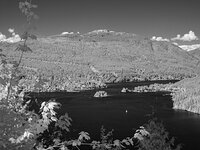
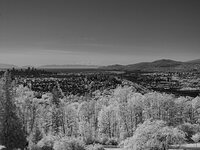
Are you using your Nikkor 50mm f/2 on a film or digital camera…?
Then my next question is why were you were shooting landscapes at such apertures? BTW, my Nikkor 50mm f2's are a bit soft in the corners wide open, but nothing approaching blurry or smeared. Of course an older f1.4 is bound to be worse.
Late in the day, low light, no tripod.


I have both and almost never shoot wide open. Both lenses are excellent and unless shooting off a tripod will out resolve the camera shake introduced by handheld photography. Each has their own look which might be a better way to evaluate them. Match the "look" to your vision of what you want the final image to portray.

Pretty much any lens stopped down looks the same.

Stopping down to f/16 or f/22 on the lenses on 35mm or compact digital cameras noticeably degrades the image due to diffraction in the lens. I never even stop down to f/8 unless I am desperate for more depth of field.
Pretty much any lens stopped down looks the same.
Yes, photography is an art not a competition...!There's two questions to be answered. The first is 'have you missed the point about photography if it's all about the edges of the frame?' Please list great photos let down by soft edges. The second question to be answered is via a selection of anonymous images, 'could you anticipate confidently saying which manufacturers lens took each photograph?' If the answer is 'no' you win the prize, if you think you could choose go back to question one.
Please list great photos let down by soft edges.

Indeed. I have a 35mm f/1.4 Nokton Classic single coated (version 2) for Leica M. Lovely little lens, supposed to have a "vintage" look. Now, don't ask me how "vintage" is supposed to look like, particularly as I don't have a Summilux or Summicron "king of bokeh" to compare. I really like the results of this lens. I also really like its price tag - maybe a 5th of what one of those venerable 'Crons or 'Luxes go for. Icing on the cake, it takes standard filters.Voigtlander is making very good lenses at a more affordable price than Leica…!
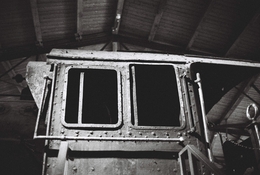
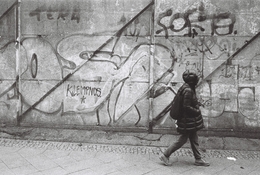
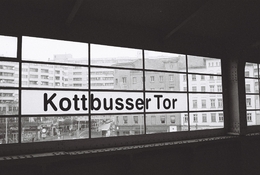
Indeed. I have a 35mm f/1.4 Nokton Classic single coated (version 2) for Leica M. Lovely little lens, supposed to have a "vintage" look. Now, don't ask me how "vintage" is supposed to look like, particularly as I don't have a Summilux or Summicron "king of bokeh" to compare. I really like the results of this lens. I also really like its price tag - maybe a 5th of what one of those venerable 'Crons or 'Luxes go for. Icing on the cake, it takes standard filters.
One of my all-time favorites is also the Voigtlander 40mm f/2 for Nikon F, but that's possibly out of the scope of this thread.
View attachment 331326
View attachment 331327
View attachment 331332
Agree. The famous "Leica glow" is actually just caused by aberrations, which could not be as well corrected with the technology of the day, compared to today's.As I see it, pun intended, a vintage lens has a character that shows the center of the image very sharp whilst the corners aren’t as crisp.
The “non vintage “ or modern lens might render the entire image too sharp or sterile...!
As I see it, pun intended, a vintage lens has a character that shows the center of the image very sharp whilst the corners aren’t as crisp.
That picture was taken at f/8 or f/11 if I remember correctly... everything should indeed be crisp!So the 35mm Nokton in post #39 doesn’t in fact have a vintage look, as you define it? The corners in the second photo look pretty crisp.
Surely internal flare was a significant characteristic of vintage lenses?
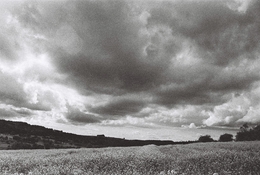
That picture was taken at f/8 or f/11 if I remember correctly... everything should indeed be crisp!
Here is an example with some flare. If I remember correctly it was taken "at or around" f/5.6-f/8 with orange filter on Tri-X.
View attachment 331460
To my inexpert understanding there’s a difference between flare spots as in your image, which are basically multiple ghost images of the lens opening; and veiling flare which affects the contrast and tonal rendition of the whole image. It’s the latter which modern coated lenses have reduced. Photographer James Ravilious famously sought older un-coated lenses to capture natural light effects the way he wanted them.
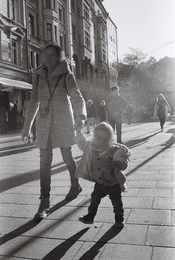
That picture was taken at f/8 or f/11 if I remember correctly... everything should indeed be crisp!
Here is an example with some flare. If I remember correctly it was taken "at or around" f/5.6-f/8 with orange filter on Tri-X.
View attachment 331460
That picture was taken at f/8 or f/11 if I remember correctly... everything should indeed be crisp!
Here is an example with some flare. If I remember correctly it was taken "at or around" f/5.6-f/8 with orange filter on Tri-X.
View attachment 331460
The vintage look of the vintage lenses are when it is shot wide open...!
Good answers…!
| Photrio.com contains affiliate links to products. We may receive a commission for purchases made through these links. To read our full affiliate disclosure statement please click Here. |
PHOTRIO PARTNERS EQUALLY FUNDING OUR COMMUNITY:  |