• Welcome to Photrio!
    Registration is fast and free. Join today to unlock search, see fewer ads, and access all forum features.
    Click here to sign up

Leica R4 Program mode slight overexposure battery / film question (XP2)

Somewhere...

D
Somewhere...

  • 3
  • 1
  • 71
Iriana

H
Iriana

  • 6
  • 1
  • 137

Recent Classifieds

Forum statistics

Threads
202,745
Messages
2,844,978
Members
101,494
Latest member
FlyingDutchman
Recent bookmarks
0
Well, then you'll have to accept that you'll never know whether your photos were correctly exposed to begin with. All that's left is to make the best of it with the scans the lab hands to you.

Btw, I find this decision utterly incomprehensible for any serious photographer. You spend loads of time fussing over cameras, lenses etc. - and then when push comes to shove, you don't even get to see the negatives? You lost me there.

Thank you K...... i find it incomprehensible too.
 
FWIW, your decision to have the negatives destroyed is up to you.
It just removes any reliable ability to evaluate whether or not your camera is exposing correctly.
If you want to be able to do that, you need to have access to the negatives.
Lab employees are human. Errors happen. As scanning involves all sorts of judgment calls, what you may be seeing is the result of those very human judgment calls, and not your camera's performance at all. Only a review of the negatives, in the context of considering the metering choices you made, would help determine that.
If you don't want to save your negatives - which many of us find incomprehensible - you could always discard them yourself after evaluating them yourself for the technical quality.
 
As mentioned, I have been using that lab for a while now and all was fine. Unfortunately I could not reach them on a Saturday, but I hope the person who did the scanning remembers my batch, as the negatives are gone by now.

@runswithsizzers Do you own a Leica Rß
It could be wonky, but we really can’t tell for the reasons koraks explained. At that point we’d just be guessing ad infinitum and wouldn’t be any wiser.

For what it’s worth, my R4s Mod 2, if anything, tends to underexpose. After all, these cameras were designed and put on the market at a time when slide film was the film of choice for advanced amateurs.

@miha thank you so much.
 
@runswithsizzers Do you own a Leica Rß
No I have never owned any Leica camera, and I know nothing about Leica cameras, specifically.

I do have enough experience digitizing negatives from my Rolleicord, Pentax and Konica cameras to have a pretty good idea about how all of that works for the person who is scanning their own film at home.

But I am much less knowledgeable about how labs scan film for their customers. Is that a hands-off automated process? -- or does a skilled operator take the time to make frame-by-frame or roll-by-roll adjustments to fine tune the results for each customer? I don't know.

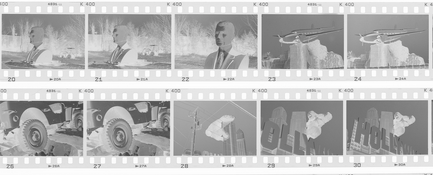
As far as learning anything about exposure, I think your last roll of film is probably water under the bridge by now. The next opportunity for learning will come with your next roll. Ask the lab to have an experienced tech look at the negatives from your next roll and give an opinion about your exposures. If they can't do that, then ask to get your negatives back and photograph them with some kind of back light for posting here. Something like this:

negatives.png
 
Last edited:
No I have never owned any Leica camera, and I know nothing about Leica cameras, specifically.

I do have enough experience digitizing negatives from my Rolleicord, Pentax and Konica cameras to have a pretty good idea about how all of that works for the person who is scanning their own film at home.

But I am much less knowledgeable about how labs scan film for their customers. Is that a hands-off automated process? -- or does a skilled operator take the time to make frame-by-frame or roll-by-roll adjustments to fine tune the results for each customer? I don't know.

As far as learning anything about exposure, I think your last roll of film is probably water under the bridge by now. The next opportunity for learning will come with your next roll. Ask the lab to have an experienced tech look at the negatives from your next roll and give an opinion about your exposures. If they can't do that, ask to get your negatives back and photograph them with some kind of back light for posting here. Something like this:

View attachment 416464

ok
 
how labs scan film for their customers. Is that a hands-off automated process?
Usually, yes. Too expensive to have a person spend much time on it. So either fully automated or minimal batch adjustments. Lab scans should be regarded as either a preview ( a bit like a contact sheet / index print) or the starting point for further editing towards and end result. More of an intermediate than a final product, really, although of course anyone is free to bail out of the process wherever they want.
 
Bickering aside Ilford XP2 Super would be a terrible film to do any 'test' with anyway because of it's massive tolerance for under or over exposure. And without having the negatives (like expeditioning to the dark side of the moon and deciding not to take a torch) there is no context regarding the usual suspects of thin negatives for under exposure, bleeding highlights or skies for over exposure, or edge markings for a lab fault.

I've got R cameras and the exposures are pretty reliable in auto mode (compensating + or - where necessary), and very good in manual when I know what I'm metering from. This context is also important because it ties in actual knowledge with any unexpected discrepancy, so knowing a zone V 18% grey reading should be reliable and the negatives are under or over exposed it would point to the camera or batteries or development and rule out the first link in the chain, the photographer. After that is done look at the negatives analytically, change the battery anyway, and test again.

Edit- For the sake of clarity at the moment mine are using LR44 batteries and the results are as expected.
 
Last edited:
Usually, yes. Too expensive to have a person spend much time on it. So either fully automated or minimal batch adjustments. Lab scans should be regarded as either a preview ( a bit like a contact sheet / index print) or the starting point for further editing towards and end result. More of an intermediate than a final product, really, although of course anyone is free to bail out of the process wherever they want.
That agrees with my assumption. I have received lab scans from only 3 or 4 different labs (all color negative film), and in my opinion, all of them required at least some post-processing to be finished photos.

That was a some time ago, and I think basic, low resolution scans were the standard back then. Hopefully, it is easier to get higher quality scans from labs today. And hopefully, you can get back something better than 8-bit JPGs, which might be OK for storage, but maybe not so great for editing.
 
Hopefully, it is easier to get higher quality scans from labs today.
No doubt and there has of course been some development in auto-correction software, but I think there's no way around the fact that if you send in a 36 exp roll, you can't expect a lot of manual labor being done on the €15 scan of those frames. If you work that back into a realistic hourly rate, even without physically handling the film, an operator could spend at most a few seconds on each frame. So the conclusion is that if you get a consumer scan of a roll of film in the given price range, you're getting automated scans that in all likelihood nobody has had the time to inspect on a frame-by-frame basis.
 
As this thread was taken into a different direction, I would like to thank all contributors; I am going to see Leica to have my R4 checked.
 
Hi all,

I’m looking for some experienced R-series input. I’ve noticed that my Leica R4 tends to produce slightly overexposed frames in Program (P) mode, consistently by what looks like roughly ½ - 1stops. Some context / data points:
  • Film: Ilford XP2 Super, rated at ASA 400
  • Lens: Summilux-R 50/1.4
  • Conditions: Sunny December morning, fairly high contrast (low winter sun, light sky/backgrounds)
  • Battery: modern PX28 substitute (not original mercury, obviously)
Highlights look a bit flat and scans come out brighter than expected. The behaviour is consistent rather than random.

I’m aware that:

The R4 uses centre-weighted TTL metering
Program mode is fully dependent on meter logic
Modern replacement batteries can have slightly different voltage characteristics

So before assuming anything is “wrong”, I’m trying to decide on the most sensible way forward.

Two options I’m considering:

Option A: keep shooting Program mode, but rate XP2 at ISO 500 or 640 to compensate
Option B: keep ISO at 400, but use –0.5 EV exposure compensation (or switch to A mode with compensation)

For those with long-term R4 experience:

Is this behaviour typical in Program mode?
Any preference between A or B in practice?
Anything else I should sanity-check (ASA dial contacts already exercised)?

Appreciate any real-world input. Thanks in advance.

i've had an R4 for a long time and always found the program mode to be the least reliable -- backlighting seems to fool it more than other cameras, so I just use it in either manual or aperture auto mode so I have more control.

At this point it's a very old camera and even when new some of the earlier models had electronics issues. I have a Nikon N90 (don't you love the way they practically give these cameras away these days?) that is a lot more reliable in program.
 
It might be the mirror dampener is sticky and holds the shutter a bit longer. A common issue with Leica r4-r7
 
Understood. I’m seeing consistent ~⅔ stop overexposure at fast speeds in Program, no mirror hesitation or inconsistency. That’s why I’m focusing on meter/battery calibration rather than shutter mechanics.
 
I’m seeing consistent ~⅔ stop overexposure
What is this measurement based on?

I’m focusing on meter/battery calibration
I find that odd as you also said this:
R4 meter shows same values as other cameras and my phone app.
You have determined the meter seems to be working OK. Yet, you're focusing on meter calibration to solve an assumed problem of overexposure, while you appear to not be in a position to determine whether this problem in fact exists in the negatives.
 
Fair point. Without the negatives in hand I can’t conclusively label it overexposure. I’ve confirmed the meter agrees with other meters, so I’ll chalk this up to scan interpretation and do a controlled test roll to satisfy my curiosity. Thanks for the input, and have a good week.
 
i've had an R4 for a long time and always found the program mode to be the least reliable -- backlighting seems to fool it more than other cameras, so I just use it in either manual or aperture auto mode so I have more control.

At this point it's a very old camera and even when new some of the earlier models had electronics issues. I have a Nikon N90 (don't you love the way they practically give these cameras away these days?) that is a lot more reliable in program.
Thanks! Very constructive and helpful reply, to my original question. I will check the R4 and see if the seemingly correct exposure values displayed in the viewfinder have a weak link somewhere in the body.
 
Last edited:
If I were having negatives scanned by a lab I'd hope they came back kind of dull and uninteresting tonally, but with all the tones present. The lab has no way to know what the original scene looked like or the point of interest, so it's down to the photographer to post process them based on what they saw (or whatever they have in their minds eye). It's the same when scanning at home with a camera or dedicated film scanner, a flat image ready for post processing is the ideal image because scanning software isn't nearly as clever as Lightroom. A scan with '2/3 of a stop over exposure' may simply be waiting for you re-arrange the tones according to your preferences. Why not post some of the scans so we can see what you mean?
 
Bec
If I were having negatives scanned by a lab I'd hope they came back kind of dull and uninteresting tonally, but with all the tones present. The lab has no way to know what the original scene looked like or the point of interest, so it's down to the photographer to post process them based on what they saw (or whatever they have in their minds eye). It's the same when scanning at home with a camera or dedicated film scanner, a flat image ready for post processing is the ideal image because scanning software isn't nearly as clever as Lightroom. A scan with '2/3 of a stop over exposure' may simply be waiting for you re-arrange the tones according to your preferences. Why not post some of the scans so we can see what you mean?

Hi

The photos are portraits, they should not be in the public domain. Thanks for your input anyway, appreciated. Maybe I should add that this lab has consistently delivered good results in developing and scanning XP2 from a variety of bodies (R and M), and also that I post-process all their scans (mainly contrast or cropping).

In the case discussed here, it was the first time I used this camera body after I purchased it recently, and as the results differ very much from whatever else the lab has done for me so far, I was curious to find out why, keeping the R series' sometimes temperamental electronics in mind. As there are no negatives, it is a dead case for now. I will use another roll with the R4 and see how it pans out.

Thanks again, and have a good week.
 
Last edited:
Maybe for context: A roll of film from my new-to-me R4 (I think first time I used it) turned out to be overexposed. Delevelopment-wise, "my" lab has done well in the last 3 years. So I am asking the R owners "Could my Program Mode be wonky, or the modern type of batteries".

Really no reason to be so dramatic and start a fundamental discussion.

Set your camera on a tripod in front of a blank unformly illuminated wall. Take the same framed area (blank looking) in all exposure modes of your camera, and all should result in negatives with the same uniform density in all shots...the meter simply is trying to provide suggestion of what it takes to expose with the same tonal density in all shots...regardless of the metering angle (spot vs. weighted vs. full frame averaging) Looking at the original film, your RA-4 should NOT be resulting in any different density ('overexposed') in Program mode (compared to any other mode).
 
Last edited:
Set your camera on a tripod in front of a blank unformly illuminated wall. Take the same framed area (blank looking) in all exposure modes of your camera, and all should result in negatives with the same uniform density in all shots...the meter simply is trying to provide suggestion of what it takes to expose with the same tonal density in all shots...regardless of the metering angle (spot vs. weighted vs. full frame averaging) Looking at the original film, your RA-4 should NOT be resulting in any different density ('overexposed') in Program mode (compared to any other mode).

Thanks, will think about it.
Have a good week!
 
Photrio.com contains affiliate links to products. We may receive a commission for purchases made through these links.
To read our full affiliate disclosure statement please click Here.

PHOTRIO PARTNERS EQUALLY FUNDING OUR COMMUNITY:


Ilford ADOX Freestyle Photographic Stearman Press Weldon Color Lab Blue Moon Camera & Machine
Top Bottom