• Welcome to Photrio!
    Registration is fast and free. Join today to unlock search, see fewer ads, and access all forum features.
    Click here to sign up

LED Safelight

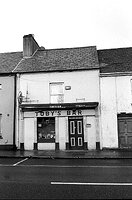
Toby's Bar

H
Toby's Bar

  • Tel
  • Apr 25, 2026
  • 0
  • 0
  • 28
Barber

A
Barber

  • 0
  • 0
  • 48

Forum statistics

Threads
203,490
Messages
2,855,502
Members
101,866
Latest member
Afadjato
Recent bookmarks
0
Man, i do not know.
You would have to ask one of the smart Guys/Gals on The Forum.
Regardless of the paper...( i can EASILY send you 5 pieces of 8x10 if that helps) I cannot help but think that something is "wrong" with the lights.?
Have you tried asking the company.?
Maybe they will send you a few new ones to try.?
It would be, literally, pennies for them to send you 2-3-4-5 lights.
Good Luck
Caveat emptor! The dealer does not represent the lights as darkroom safelights, don't know if he/she really has any responsibility to replace anything.
 
Man, i do not know.
You would have to ask one of the smart Guys/Gals on The Forum.
Regardless of the paper...( i can EASILY send you 5 pieces of 8x10 if that helps) I cannot help but think that something is "wrong" with the lights.?
Have you tried asking the company.?
Maybe they will send you a few new ones to try.?
It would be, literally, pennies for them to send you 2-3-4-5 lights.
Good Luck

Well, technically, I have three more lights I didn't test. Since the weekend is almost here I will probably do some tests from the normal working distance. With the other safelight I can't see anything more than a grey rectangle on the paper in the developer (its a 15watt incandescent bulb behind a 1/8" think piece of red acrylic), so I'd love to get these things figured out so I can see what I'm doing. By the way, I looked closely at the box of paper when I went home for lunch, and it said safelight filter "OC" which after some googling seems to be amber. Is that still not red sensitive, or do I have mismatched paper and safelight?
 
I am not afraid to be wrong.....I would think if a paper was Amber Safe, it would certainly be Red Safe.
Somebody with more experience will correct me.:sad:
 
well, like I said, this weekend will include more "scientific-ish" testing. There are some other boxes of free paper from other manufacturers that were given to me, so I may add some other papers to the list.
 
OC safe papers are blind to red plus a small portion of other parts of the spectrum.
Our eyes aren't very sensitive to red. Traditionally, this meant that we could see more in a darkroom with a relatively dim, amber OC safelight than with the equally relatively dim red safelights that were designed for orthochromatic materials.
But all of this was the state before modern, efficient LEDs came on the scene.
With the exception of the Heiland product linked to, none of the other LEDs that I have seen are designed for darkroom work. As a result, they aren't guaranteed to have the sort of narrow spectrum output that fits nicely into the right part of the paper. My sense is that it would be easy to design, manufacture and guarantee such darkroom LEDs, but it wouldn't be incredibly cheap to do so - spectrum accuracy comes at a price.
I have experimented with three different types of LED sources for safelight illumination.
One of them - a 16 foot red LED party rope light - works tremendously well as long as it is at least 3 feet away from the papers I use. I actually use it higher up - closer to my nine foot, beige painted ceiling. Its availability is better at Christmas time :smile:
Another of them - a somewhat old style array of 24 or so small red sources in a housing the size of a projection bulb, that screws into a standard household reflector - also works well. I have it installed in a clamp on lamp holder that is pointed to the ceiling.
I also used a third option - an amber LED with the same array of 24 or so small sources in a housing the size of a projection bulb. It used to work well pointed up to the ceiling, but we re-painted the bathroom/darkroom a lighter colour. Now it fogs the paper.
For clarity, when I say that a safelight works well, that means it passes the Kodak Safelight Test at all reasonable and some unreasonable lengths of time. As you are probably aware, the Kodak Safelight Test involves already partially fogged (and therefore much more sensitive) paper - both pre-safelight exposure fogged and post safelight exposure fogged. The partial fogging both increases the sensitivity of the test, and more accurately tests for the subtle, contrast sapping fog problems that aren't as easy to see as something like obviously grey borders.
Here is a link to the test.
Oh, and here is a web image that shows the white version of my older LED safelights - now discontinued:

timthumb.php
 
And I tried one of those red rope lights and it fogged like crazy. So it's definitely dependent on the specific make/model.

And I could easily see that, in the case of the SuperbrightLED bulbs, a change in supplier or even production run could impact the light output in a way that doesn't affect it's intended purpose but does affect our "off label" use.
 
That's why I made my LED safelight using Rubylith, a product designed specifically for photographic purposes, albeit for use with litho film. I felt it should block the appropriate part of the spectrum. And I used 2 layers.
 
I tested all the superbright LED lights I have against the Kodak paper I'm practicing with, 5 minutes with a penny from normal working distance, and all the LEDs passed. I realized the fogging happened with a sample pack of 5 sheets of film that was in the bundle of freebies that I got. The brand was "Forte", and was made in Hungary. I'm not familiar with the brand, so my best guess is that it was that specific paper that had a wider than normal sensitivity.

I would suggest testing papers agains the LEDs before trusting them together.
 
I tested all the superbright LED lights I have against the Kodak paper I'm practicing with, 5 minutes with a penny from normal working distance, and all the LEDs passed. I realized the fogging happened with a sample pack of 5 sheets of film that was in the bundle of freebies that I got. The brand was "Forte", and was made in Hungary. I'm not familiar with the brand, so my best guess is that it was that specific paper that had a wider than normal sensitivity.

I would suggest testing papers agains the LEDs before trusting them together.

Forte also hasn't been made in over 10 years so it was probably prefogged, but it was a bit weird about safelights too. IIRC red was recommended and some of the red superbright led's put out more than red. If you hold a cd up to them you can see other colors, if there are any
 
The Thomas safelight bulb is available and the generic version is a SOX35. Good for 10,000 hours.

The trick to the LED lamps is that none of the cheap ones are tested and certified for darkroom use, so you have to run your own tests. And since we all know what quality control is like in some parts of the world there is no guarantee that the lamp you buy, even with the exact same model or part number will be the same as the one that I bought, tested, and found to be good.
 
It's great you used Rubylith film over the LED bulbs. I have never found a red LED that did not have some visible green and yellow component when viewed edgewise with a CD. The Rubylith eliminates those spectral lines and easily quadruples the safe time of a bare LED, even those little Super Bright LED "night light" style bulbs.

I can get away with most anything red for wet plate work, but was aghast to find my red "party bulb" fogged my graded enlarger paper to black in just minutes. I find the Rubylith plus red LED combination to be ideal. I used a trailer tail light assembly from Lowes, with a switch wired to the brake circuit to toggle high/low intensity.

https://www.photrio.com/forum/threads/using-rubylith.157857/

Don
 
Last edited:
Added link in previous post to info I posted earlier on spectral output of the Super Bright LED bulb and Rubylith mods,
 
I have Rubylith in 1/2" and 1" rolls in case I need it but thus far my initial tests show I am good without it.

I am using two 16' foot long strands of red LED from Superbright that are between 5-6' feet away from any photo sensitive paper. They are diffused and on dimmers that are set at around 25% brightness which seems to be plenty for the darkroom. I'll do more exhaustive tests later as I am still wrapping up my darkroom build but so far, I am really encouraged by what I see.
 
(Not sure if you are serious) I can supply the info for the light and gel if anyone wants to make one on their own.

Please! Thank you.
 
We used rubylith around florescent tubes in a community darkroom. Worked well as this room was used for printing, not film loading.
 
Photrio.com contains affiliate links to products. We may receive a commission for purchases made through these links.
To read our full affiliate disclosure statement please click Here.

PHOTRIO PARTNERS EQUALLY FUNDING OUR COMMUNITY:


Ilford ADOX Freestyle Photographic Stearman Press Weldon Color Lab Blue Moon Camera & Machine
Top Bottom