• Welcome to Photrio!
    Registration is fast and free. Join today to unlock search, see fewer ads, and access all forum features.
    Click here to sign up

Least grain film at 1600?

102391040027-2.jpg

A
102391040027-2.jpg

  • 6
  • 4
  • 91
Just a Sparrow

D
Just a Sparrow

  • 1
  • 0
  • 49

Recent Classifieds

Forum statistics

Threads
201,780
Messages
2,830,024
Members
100,942
Latest member
juksuon
Recent bookmarks
1

flavio81

Member
Allowing Ads
Joined
Oct 24, 2014
Messages
5,241
Location
Lima, Peru
Format
Medium Format
Um, the difference between a 400 ISO and 1600 ISO film is how much shadow detail is available.

Yes, you are correct.

But what i mean is that the contrast obtained when pushing HP5 is still reasonable. A "normal contrast" film, pushed 2 stops, would have a very noticeable "high contrast" look.
 

howardpan

Member
Allowing Ads
Joined
Sep 18, 2014
Messages
258
Location
Taipei
Format
Medium Format
My prints dried overnight, and I will go back and scan them later this evening.

When you see the scans, I think you will see for yourself that I metered the shadow area for Zone III. You can judge for yourself whether HP5 really had a speed of 1600 when using the Spur SLD+Push Master developer.

I will scan both the print as well as the image on the contact sheet so that you can judge for yourself the degree of enlargement. You will also see the difference in the grain quality between HP5+ and Delta 3200.

As I understand it, film speed depends on the developer used. I define film speed as that speed which allows me to differentiate Zone I from Zone 0, which I determine using the unexposed edge of the negative. At any higher speed, Zone I would be indistinguishable from Zone 0. The development time is determined by where I want my Zone V and Zone VIII to fall (i.e. on the contrast curve).
 

markbarendt

Member
Allowing Ads
Joined
May 18, 2008
Messages
9,422
Location
Beaverton, OR
Format
Multi Format
Yes, you are correct.

But what i mean is that the contrast obtained when pushing HP5 is still reasonable. A "normal contrast" film, pushed 2 stops, would have a very noticeable "high contrast" look.
Compared to what?
Were both films developed to the same measured contrast index?
Were the same subjects compared?
What adjustments were made when printing?
 
Last edited:

Lachlan Young

Member
Allowing Ads
Joined
Dec 2, 2005
Messages
5,082
Location
Glasgow
Format
Multi Format
Another thing to bear in mind is that a PQ or Phenidone-Ascorbate developer can bump the shadow speed by 2/3 stop as a matter of course - thus if it's raising the effective speed of a 400 speed film to 650, a 1 stop push would nominally suggest an EI of 1250 or thereabouts - probably hard to tell apart from 1600 for most people. Consider too that Ilford's 'normal' contrast index of 0.62 is regarded as a 'push' by Kodak's standards and you can see how easy it is for people to obfuscate and claim wildly...
 

markbarendt

Member
Allowing Ads
Joined
May 18, 2008
Messages
9,422
Location
Beaverton, OR
Format
Multi Format
Another thing to bear in mind is that a PQ or Phenidone-Ascorbate developer can bump the shadow speed by 2/3 stop as a matter of course - thus if it's raising the effective speed of a 400 speed film to 650, a 1 stop push would nominally suggest an EI of 1250 or thereabouts - probably hard to tell apart from 1600 for most people. Consider too that Ilford's 'normal' contrast index of 0.62 is regarded as a 'push' by Kodak's standards and you can see how easy it is for people to obfuscate and claim wildly...
Pushing does not significantly change the speed of a film, maybe a 1/3 stop or so is realistic; so 800 not 1250. Beyond that the question is all about how much shadow detail you can do without.
 

Lachlan Young

Member
Allowing Ads
Joined
Dec 2, 2005
Messages
5,082
Location
Glasgow
Format
Multi Format
Pushing does not significantly change the speed of a film, maybe a 1/3 stop or so is realistic; so 800 not 1250. Beyond that the question is all about how much shadow detail you can do without.

That's what I was (not very successfully) implying - the only true speed boost (not a push) is maybe 2/3 stop at most from a phenidone & HQ or Phenidone and Ascorbate developer - the Delta 400 datasheet makes this quite clear where some (but not all) PQ or PA devs make Delta 400 effectively a 500 speed film at 'box' speed - ie 1/3 stop faster. I've seen older data sheets where they suggest that 650 is also 'box' speed for some of their 400 speed offerings (can't remember if HP4 or HP5) in Microphen.

Beyond that, you're not gaining anything, just underexposing the shadows & overprocessing the highlights...
 

Rudeofus

Member
Joined
Aug 13, 2009
Messages
5,119
Location
EU
Format
Medium Format
Another thing to bear in mind is that a PQ or Phenidone-Ascorbate developer can bump the shadow speed by 2/3 stop as a matter of course - thus if it's raising the effective speed of a 400 speed film to 650, a 1 stop push would nominally suggest an EI of 1250 or thereabouts - probably hard to tell apart from 1600 for most people. Consider too that Ilford's 'normal' contrast index of 0.62 is regarded as a 'push' by Kodak's standards and you can see how easy it is for people to obfuscate and claim wildly...
AFAIK, film makers now have some leeway when measuring ISO speed, so rest assured that they measure their box speed with the fastest speed reaching developer they can get their hands on. Therefore I would not expect ISO 1600+ from Delta 3200 in DD-X or Crawley's FX-11, but rather ISO 800 from Delta 3200 in D-76.

The big difference between Delta 3200 and HP5+ (apart from ISO speed) seems to be their toe shape. Delta 3200 has a pronounced, sharp toe, and pushing gains contrast but no shadow detail. HP5+ appears to have a long toe, which responds well to pushing.

@rubbernglue: you are correct, unless we know exact scene brightness levels of the area measured plus complete exposure settings (which include transmission of lens, plus possible bellows factors for close objects), the statement "exposed at EI 3200" says precisely nothing.
 

Lachlan Young

Member
Allowing Ads
Joined
Dec 2, 2005
Messages
5,082
Location
Glasgow
Format
Multi Format
AFAIK, film makers now have some leeway when measuring ISO speed, so rest assured that they measure their box speed with the fastest speed reaching developer they can get their hands on. Therefore I would not expect ISO 1600+ from Delta 3200 in DD-X or Crawley's FX-11, but rather ISO 800 from Delta 3200 in D-76.

The big difference between Delta 3200 and HP5+ (apart from ISO speed) seems to be their toe shape. Delta 3200 has a pronounced, sharp toe, and pushing gains contrast but no shadow detail. HP5+ appears to have a long toe, which responds well to pushing.

P.1 of the Delta 3200 tech document clearly states an ISO of 1000 in ID-11 - which is what all of Ilford's tech documents specify as being used to test for ISO film speed. However, from a little looking at the other data in that document it becomes clear that the design G-bar/ CI for this speed was lower than Ilford's usual 0.62 G-bar - the G-bar at which they suggest you'll get a usable EI 3200.
It's not just the toes that are different - Delta 3200 has a long soft shoulder, & HP5, at least from published curves, seems to maintain a fairly straight line once off the toe. Just to be helpful, the published curves for both films are in different developers, but the fundamentals are translatable & quite obvious if you've shot both films in a variety of situations & printed them in the darkroom.

I should add that I don't really care for push processing - I'd go for Delta 3200 rated in the 800-1000 range over a slower push-processed film every time.
 

flavio81

Member
Allowing Ads
Joined
Oct 24, 2014
Messages
5,241
Location
Lima, Peru
Format
Medium Format
P.1 of the Delta 3200 tech document clearly states an ISO of 1000 in ID-11 - which is what all of Ilford's tech documents specify as being used to test for ISO film speed. However, from a little looking at the other data in that document it becomes clear that the design G-bar/ CI for this speed was lower than Ilford's usual 0.62 G-bar - the G-bar at which they suggest you'll get a usable EI 3200.

Thank you very much!! This is what I was trying to say. As i understood it, there are films that are designed with a lower contrast at their base ISO, and those are the films that are intended for push processing (or that push really well). Delta 3200 is such a film, and I say that HP5+ is such a film as well (i've read somewhere a feature on when HP5+ was introduced, that the Ilford representative mentioned that one of the design goals was better push-processed results)

A "normal" film, such as (to pick an example) Acros 100, would have a much more noticeable "high contrast" look when push processed.

Your post confirms my understanding (CI = Contrast Index)

Compared to what?
Were both films developed to the same measured contrast index?
Were the same subjects compared?
What adjustments were made when printing?

See above. Compared to a "normal" film.
 

Lachlan Young

Member
Allowing Ads
Joined
Dec 2, 2005
Messages
5,082
Location
Glasgow
Format
Multi Format
Thank you very much!! This is what I was trying to say. As i understood it, there are films that are designed with a lower contrast at their base ISO, and those are the films that are intended for push processing (or that push really well). Delta 3200 is such a film, and I say that HP5+ is such a film as well (i've read somewhere a feature on when HP5+ was introduced, that the Ilford representative mentioned that one of the design goals was better push-processed results)
Not really - HP5+ under test conditions at 0.62 CI should hit the ISO standard for 400 speed & its longer toe will help compensate to an extent for underexposure.
 

markbarendt

Member
Allowing Ads
Joined
May 18, 2008
Messages
9,422
Location
Beaverton, OR
Format
Multi Format
Compared to what?
Were both films developed to the same measured contrast index?
Were the same subjects compared?
What adjustments were made when printing?
See above. Compared to a "normal" film.
HP5 is a normal film, it responds to pushing very much like Acros would. They both have long straight lines. CI 62 on either will produce similar print contrast. Not exact but pushing either creates a snappier contrast rate.

D3200 is a normal film too in this sense, what is different are the speed and shape of the curve.

You haven't really answered the questions about your tests. All the variables count. For example, you need to understand that a print on grade 2 paper prints about "1" unit high on the density axis on the curve. Say from 0.1 to 1.1 or maybe 0.5 to 1.5 (ish). Across those ranges the D3200 line is pretty straight. HP5 has a softer/longer toe than D3200. That, and the extra speed of D3200 means D3200 will typically have snappier/higher contrast shadow detail, at the high end HP5 will have snappier highlights especially if exposure is stronger because it's straighter and D3200 highlights will be flatter.

Through in different adjustments to contrast or different papers for each film while printing and the head to head film comparison is completely lost in the other variables.
 

Rudeofus

Member
Joined
Aug 13, 2009
Messages
5,119
Location
EU
Format
Medium Format
HP5 is a normal film, it responds to pushing very much like Acros would. They both have long straight lines. CI 62 on either will produce similar print contrast. Not exact but pushing either creates a snappier contrast rate
There are different approaches to pushing. There are zone system disciples, who use it for contrast control. If only the straight line part of the H&D curve is used in printing, then yes, HP5+ and Acros behave the same. Delta 3200, on the other side, has a pronounced shoulder, which becomes even more pronounced with pushing.

Then there are folks who use pushing to increase effective film speed, which in their case means: reduce the amount of light needed to create discernible image matter. These folks care mostly about the toe part of the H&D curve, and how it can be affected by pushing. For these folks Acros is similar to Delta 3200, but very different from HP5+. Unlike Acros and Delta 3200, HP5+ has a long toe, and increasing toe contrast by pushing extends usable EI, assuming overall contrast is controlled by other means (dodging&burning, hybrid techniques).

 

howardpan

Member
Allowing Ads
Joined
Sep 18, 2014
Messages
258
Location
Taipei
Format
Medium Format
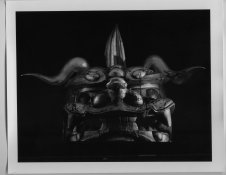
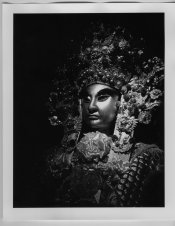
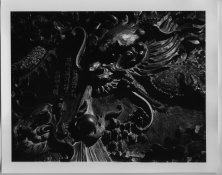
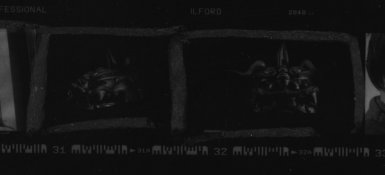
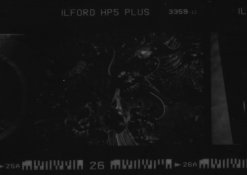
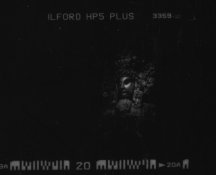
Here are the scans that I promised earlier:

There are three images (6 files) here, two from HP5+ shot at 1600 and developed using Spur SLD + Push Master and one from Delta 3200 shot at 1600 developed using D76 stock. The Delta 3200 image is the lion head (file name: (there was a url link here which no longer exists)).

You can see the degree of enlargement by comparing the actual print image to the full frame image from the contact sheet.
The prints are made on 8x10 Ilford warmtone fiber based paper with about 1/2" border on each side.

The only thing I did was scan the prints; use Lightroom to rotate and straighten the edges and brighten the images so that you can see the print (and the dust on my scanner) more clearly. These are not straight exposures. I tend to burn in the edges by about 1 stop in order to separate the subject from the background, so even though some details on the edge of the subject may not be easily visible, I believe it is partly due to my burning technique and partly due to exposure metering.

All these shots were taken with a mechanical camera (Leica M3 and Leicaflex SL2) where I metered using an external, handheld Sekonic lightmeter. If I recall correctly, only the dragon was measured using incidence mode. The other two were measured using reflective mode such that the areas where I want to keep the details were kept at Zone III.
 

Attachments

  • 2017-03-02-0006.jpg
    2017-03-02-0006.jpg
    491.5 KB · Views: 249
  • 2017-03-02-0005.jpg
    2017-03-02-0005.jpg
    590.6 KB · Views: 250
  • 2017-03-02-0004.jpg
    2017-03-02-0004.jpg
    653.2 KB · Views: 242
  • 2017-03-02-0001.jpg
    2017-03-02-0001.jpg
    61.3 KB · Views: 216
  • 2017-03-02-0002.jpg
    2017-03-02-0002.jpg
    35.8 KB · Views: 205
  • 2017-03-02-0003.jpg
    2017-03-02-0003.jpg
    28 KB · Views: 202

Rudeofus

Member
Joined
Aug 13, 2009
Messages
5,119
Location
EU
Format
Medium Format
Again, where did you meter? If you metered in the shadow regions, or used average metering on a mostly dark subject with few highlights, then we should not be surprised that HP5+ at EI 1600 looks good, whereas Delta 3200 with its soft shoulder will also look good. If you (in theory) redid these shots with increasingly reduced exposure, then HP5+ @ EI 1600 would suffer from poorly defined shadows long before Delta 3200 shot at EI 1600, the HP5+ version would, of course, be finer grained than the Delta 3200 (assuming same negative contrast is reached).
 

markbarendt

Member
Allowing Ads
Joined
May 18, 2008
Messages
9,422
Location
Beaverton, OR
Format
Multi Format
There are different approaches to pushing. There are zone system disciples, who use it for contrast control. If only the straight line part of the H&D curve is used in printing, then yes, HP5+ and Acros behave the same. Delta 3200, on the other side, has a pronounced shoulder, which becomes even more pronounced with pushing.

Then there are folks who use pushing to increase effective film speed, which in their case means: reduce the amount of light needed to create discernible image matter. These folks care mostly about the toe part of the H&D curve, and how it can be affected by pushing. For these folks Acros is similar to Delta 3200, but very different from HP5+. Unlike Acros and Delta 3200, HP5+ has a long toe, and increasing toe contrast by pushing extends usable EI, assuming overall contrast is controlled by other means (dodging&burning, hybrid techniques).
I agree that there is a pronounced shoulder, but so what? The whole curve doesn't get printed.

When you do the math and plot which tones actually straight print from the film it becomes pretty obvious that the shoulder doesn't affect the print that much unless the film got significantly more than typical exposure and it was still pushed or you are burning in the highlights.
 

Rudeofus

Member
Joined
Aug 13, 2009
Messages
5,119
Location
EU
Format
Medium Format
That shoulder in Delta 3200 makes things quite a bit more difficult with night shots with light sources in the image. Even with push development and plenty of density in the negs I see myself printing with gradation 4 all the time in order to make the highlight regions look punchy. Obviously such high gradation makes dodging&burning even harder. If you look at the data sheet, Delta 3200 highlight contrast is more or less unaffected by pushing.
 

RalphLambrecht

Subscriber
Allowing Ads
Joined
Sep 19, 2003
Messages
14,921
Location
K,Germany
Format
Medium Format
Well said, Matt.

However, i differ with you in HP5. My opinion is that HP5 is also a rather lowish contrast film, that's why it pushes so well at 1600. I have some shots made with HP5 pushed to 1600 (using Microphen) that look so good, you'd think HP5 was actually a ISO 1600 film. Of course, still there is less shadow detail, but contrast is not exaggerated.
+1
 

howardpan

Member
Allowing Ads
Joined
Sep 18, 2014
Messages
258
Location
Taipei
Format
Medium Format
Again, where did you meter? If you metered in the shadow regions, or used average metering on a mostly dark subject with few highlights, then we should not be surprised that HP5+ at EI 1600 looks good, whereas Delta 3200 with its soft shoulder will also look good. If you (in theory) redid these shots with increasingly reduced exposure, then HP5+ @ EI 1600 would suffer from poorly defined shadows long before Delta 3200 shot at EI 1600, the HP5+ version would, of course, be finer grained than the Delta 3200 (assuming same negative contrast is reached).

Hi Rudeofus,

For the image file (there was a url link here which no longer exists), I measured the shadow region and set it as Zone III. This would be the upper left corner of the head piece. For the image file (there was a url link here which no longer exists), I took an incidence reading of the light falling on the dragon and used that value as Zone V.
 

Rudeofus

Member
Joined
Aug 13, 2009
Messages
5,119
Location
EU
Format
Medium Format
Hi howardpan,

thanks for the quick and informative update. Am I correct to assume, that 'set it as Zone III' means set exposure dial to 2 stops underexpose, which means the shadow regions was exposed as EI 6400 (= EI 1600 minus two stops, and you said it was HP5+ @EI1600)? Or did you expose the shadow regions as EI 1600 ?

And about the dragon in the 0004 image: that's black subject matter measured with incident light metering, then printed to give 15-30% gray in the print, which makes the image much brighter (compared to an 18% gray card) than it was. This EI 1600 measurement would have easily been EI 6400 with a spot meter set to the same regions.
 

Skiver101

Member
Allowing Ads
Joined
Jan 4, 2017
Messages
122
Location
Scotland
Format
4x5 Format
I wonder if there's another option?

Try a bit of pre-exposure to lift the shadows and develop less to reign in the highlights.
Not too much of either - find the happy medium.

Well, that's what old Ansel said !

JP
 

StoneNYC

Member
Allowing Ads
Joined
Aug 5, 2012
Messages
8,345
Location
Antarctica
Format
8x10 Format
In my experience tmax 400 is (my best film) for pushing.
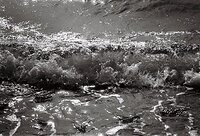
This is tmax400 shot at 3200 and developed as 5000 in microphen; 1+0 12min 1min/agit @20C
Have a look in good resolution at flickr, and notice the shadows :smile:


267 m645 11
by Johan, on Flickr

This is 645 so it's a little deceiving as you've got a lot more surface area here, but it's still a decent result. I've found HP5+ Pushes really nicely in DD-X and the shadows are a lot better, BUT I have to admit the grain here really is good.

Is Microphone the one that is a reusable developer and "seasons" as you use it?
 

RalphLambrecht

Subscriber
Allowing Ads
Joined
Sep 19, 2003
Messages
14,921
Location
K,Germany
Format
Medium Format
Try a bit of pre-exposure to lift the shadows and develop less to reign in the highlights.
Not too much of either - find the happy medium.

Well, that's what old Ansel said !

JP
that will give you plenty of shadow detail but very flat midtowns and a very soft negative; not to my liking; lost all the punch.
 

howardpan

Member
Allowing Ads
Joined
Sep 18, 2014
Messages
258
Location
Taipei
Format
Medium Format
Hi howardpan,

thanks for the quick and informative update. Am I correct to assume, that 'set it as Zone III' means set exposure dial to 2 stops underexpose, which means the shadow regions was exposed as EI 6400 (= EI 1600 minus two stops, and you said it was HP5+ @EI1600)? Or did you expose the shadow regions as EI 1600 ?

And about the dragon in the 0004 image: that's black subject matter measured with incident light metering, then printed to give 15-30% gray in the print, which makes the image much brighter (compared to an 18% gray card) than it was. This EI 1600 measurement would have easily been EI 6400 with a spot meter set to the same regions.

Hi,

I missed your earlier post for some reason. To answer your question, I exposed the shadow region "at EI 6400". However, this is not my preferred way of describing the procedure. In my mind, the entire roll is exposed at a certain EI, which is the setting Imusedmon my light meter. For each scene, I picked the shadow area where I would like to keep the detail, measured it's lighting conditions. I know that I can maintain detail even if that even if I placed that part in Zone III so I close my aperture by 2 stops (or increase my shutter speed) for the exposure.

I'm not sure I understood your question regarding the dragon.
 

Craig75

Member
Allowing Ads
Joined
May 9, 2016
Messages
1,234
Location
Uk
Format
35mm
Thats come out a treat richard. Id be happy with that
 
Photrio.com contains affiliate links to products. We may receive a commission for purchases made through these links.
To read our full affiliate disclosure statement please click Here.

PHOTRIO PARTNERS EQUALLY FUNDING OUR COMMUNITY:


Ilford ADOX Freestyle Photographic Stearman Press Weldon Color Lab Blue Moon Camera & Machine
Top Bottom