• Welcome to Photrio!
    Registration is fast and free. Join today to unlock search, see fewer ads, and access all forum features.
    Click here to sign up

large prints from 400 ISO films

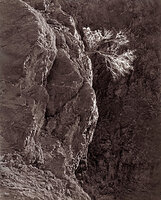
Bush on Canyon Wall

A
Bush on Canyon Wall

  • 0
  • 0
  • 0
double portrait

A
double portrait

  • 1
  • 0
  • 20

Recent Classifieds

Forum statistics

Threads
203,249
Messages
2,851,985
Members
101,747
Latest member
Tallphotographer
Recent bookmarks
0
The answer was in the first few posts. I have printed up to 24"x36" from 135. Your limits are viewing distance and the optics of the enlarger.

Steve
 
Thank you for putting terminology to it. You definitely have a better vocabulary than I do.

I think what you are getting at here is that diffraction is related to the 'relative' aperture which gets smaller as magnification gets bigger. A lens better corrected for large magnnification would not need to be stopped down as much to bring in the corners and therefore would have less diffraction effects. The 'doughnut' pattern is the Airy disk diffraction pattern.

So this brings up two points specific to high magnification enlargements:
1) High magnification uses the maximum image circle of the enlarging lens design, and the edges will be stressed for evenness of illumination and field flatness (ie "my enlarging lens always worked fine for 4x5in prints...")
2) High magnification causes more diffraction for the same F-Stop number on the barrel.
 
I think what you are getting at here is that diffraction is related to the 'relative' aperture which gets smaller as magnification gets bi

No. It was an issue of field flatness at high magnification.

That's why Rodenstock, for instance, made enlarging lenses for specific ranges. Making the jump from 12x to 20x demands a lens specific to that magnification. Switching from an El Nikkor or Focotar to an Apo Rodenstock N solved the problem for me. Much bigger, would have needed the Rodagon G... which, interestingly, was not as good as the N at 20x.
 
I'm sure I'll regret saying this, but many 'serious photographers' would be shocked to see how much better 35mm can be than they ASSUME it can be. It just takes a little effort, or a little desperation.

TMY2, in a true fine grain developer (and I mean the term in the classical sense, of rendering grain cleanly and not mushy) can go to 11x14 and not have visible grain from arm's length away. At a normal viewing distance, a 20x24 can look like it came from 120 neg, not 35mm.

Edwal 12 is a good reference developer. Microdol-X is not. Once you find your way, it is no more difficult than making an 8x10 from Tri-x.
 
Photrio.com contains affiliate links to products. We may receive a commission for purchases made through these links.
To read our full affiliate disclosure statement please click Here.

PHOTRIO PARTNERS EQUALLY FUNDING OUR COMMUNITY:



Ilford ADOX Freestyle Photographic Stearman Press Weldon Color Lab Blue Moon Camera & Machine
Top Bottom