
• Welcome to Photrio!
    Registration is fast and free. Join today to unlock search, see fewer ads, and access all forum features.
    Click here to sign up

Kodak TMAX Fixer - Can I use it for paper?

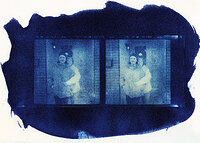
Cyanotype stereo card

A
Cyanotype stereo card

  • 0
  • 0
  • 13
IMG_0025.jpeg

A
IMG_0025.jpeg

  • 0
  • 1
  • 11

Forum statistics

Threads
203,126
Messages
2,850,257
Members
101,690
Latest member
nisherii
Recent bookmarks
0

Keyan

Member
Allowing Ads
Joined
Oct 24, 2011
Messages
4
Format
35mm
I bought the 1l Kodak TMAX Fixer from the helpful guys at ag-photographic thinking that it was a fixer for paper. But it says nothing about paper on the bottle. Does anyone know if I would be safe to use it as a fixer for paper? If so how would I dilute it…

Any help would be greatly appreciated.
 
It can be used for both film and paper. I am not sure if the dilutions are different but if there isn't anything on the bottle then there will be a Kodak publication.

They are very helpful at Ag. It might even be quicker to ring them and ask about dilutions or do a search here. There must be loads of posts on TMAX fixer.

pentaxuser
 
Yes, you can use the same fixer for both paper and film. However, you want to mix two seperate dilutions, label them and keep them seperate from each other. Do not reuse paper fix for film, of course you can go the other way and reuse film stock on paper. You don't want to chance dust contamination from paper onto the film.
 
Hi Keyan,

I think the product you purchased is Polymax-T fixer. It is a hardening fixer and can be used for both paper and film. For paper, dilute 1+7. For film dilute 1+3. I'm pretty sure it is simply Kodafix in a larger package.

Neal Wydra
 
Wow. Thank you so much guys, I’ll give it a try and let you know what happens!
 
I did give them an email, they said it should be fine but to ask around on this forum! Thanks for your replies, really appreciate it.
 
Worked fine! It was my first time developing so there quite a few mishaps! I had 2 problems with the final prints, Some were coming out in a strange cloudy effect… I dont think I left them in the stop bath long enough. Also the next day, after they had dried some of the image had run off the edges of the shot… I’ll post images…
 
Dear Keyan,

"Some were coming out in a strange cloudy effect…"

It sounds as though the prints were not properly submerged in the fixer and/or fixed for a long enough time. I've seen folks submerge prints in fixer and then move on to something else. The prints then float to the top (image up) and problems ensue. It is important to agitate during fixing as well.

Neal Wydra
 
Yes, you can use the same fixer for both paper and film. However, you want to mix two seperate dilutions, label them and keep them seperate from each other. Do not reuse paper fix for film, of course you can go the other way and reuse film stock on paper. You don't want to chance dust contamination from paper onto the film.

Actually no, there are byproducts from film development that you don't want to get into your paper. Once fixer has been used on film, don't use it on paper.

You *really* don't want paper-dust in your film either, but a spot of filtering the fixer will, er, fix that.

Keyan said:
Worked fine! It was my first time developing so there quite a few mishaps! I had 2 problems with the final prints, Some were coming out in a strange cloudy effect… I dont think I left them in the stop bath long enough. Also the next day, after they had dried some of the image had run off the edges of the shot… I’ll post images…

Sounds like the paper was either improperly fixed (if it went orange or dark coloured) or improperly washed (if it went white). You need to make sure that:
* the paper hits the developer uniformly and is completely covered within a few seconds,
* don't let corners of the paper poke up out of the bath,
* same for fixer, and
* give the paper at least three good soaks in fresh water (3 consecutive baths of a few minutes) with agitation to make sure all the fixer is washed out.

Underfixed or underwashed prints will die rapidly. If they don't look right when brand new, your development is uneven.
 
Photrio.com contains affiliate links to products. We may receive a commission for purchases made through these links.
To read our full affiliate disclosure statement please click Here.

PHOTRIO PARTNERS EQUALLY FUNDING OUR COMMUNITY:


Ilford ADOX Freestyle Photographic Stearman Press Weldon Color Lab Blue Moon Camera & Machine
Top Bottom
