
• Welcome to Photrio!
    Registration is fast and free. Join today to unlock search, see fewer ads, and access all forum features.
    Click here to sign up

Kodak Monographs etc now avail for download

Iriana

H
Iriana

  • 3
  • 0
  • 62
Puddle

Puddle

  • 4
  • 2
  • 101

Forum statistics

Threads
202,734
Messages
2,844,784
Members
101,489
Latest member
Sunnydoran
Recent bookmarks
0

Emulsion

Member
Allowing Ads
Joined
Jan 25, 2007
Messages
138
Location
Australia
Format
Med. Format RF
Kodak Monographs available for download.

These are very old and out of copyright. Available for free download as PDF.

Kodak Monograph 1 - The silver bromide grain of photographic emulsions (1921)
http://www.archive.org/details/silverbromidegra00trivrich

Kodak Monograph 2 - The theory of development. (1922)
http://www.archive.org/details/theoryofdevelopm00nietrich

The photographic negative. Very old. Has many interesting chapters however.
http://www.archive.org/details/photographicnega00burbiala

(I have no affliation with the above site. It is a well known archive of copyright free materials).

Emulsion.
 
Last edited by a moderator:
This is a wealth of information and knowledge! Not only those three documents, but the entire categories of Photographic chemistry and Photography! Thank you very much for shearing it!
 
Thank you for posting these resources.

Very interesting.
 
These were still being published when I joined the company in 1965, and I think that they were up to about volume 7 or 10. I have one of them here somewhere.

They also published several in-house textbooks. I have one called "Photographic Theory". There were also books on emulsion making and color product theory and design. The emulsion making book, as I remember it had over 50 pages alone on spectral sensitization and was written by Paul Gilman. He also taught that part of the course.

Every Kodak engineer had to take a very lengthy course in photographic theory and design which also included a brushup in chemistry and math along with color theory. I have quite a collection of textbooks for the courses.

I doubt if the in-house texts will ever be published.

The internal Kodak publications that I have are very lengthy and also copyright and so I cannot duplicate them here.

PE
 
Other publications by Kodak

This is the cover from a 200 page 8.5 x 11 inch textbook published internally. IDK what the distribution of these was nor how many different volumes like this were published.

Other books published were as thick or thicker with much information packed into them. With regard to some of the work published internally in these books it was rather recursive to me as they referr me to my own work much of which was not published other than in these internal texts.

Many publications from ICIS, SPSE and other photo organizations exist that were only distributed to members or registrants of meetings and some articles were never published outside of these booklets. I have several of those as well.

I really don't know what to do with them except donate them to GEH at some point in time.

PE
 

Attachments

  • photographic theory.jpg
    photographic theory.jpg
    68.2 KB · Views: 780
Awesome! Thanks for sharing.
 
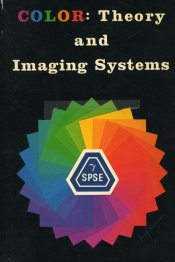
Another text

This is an SPSE publication of over 400 pages, standard textbook size. It contains 19 chapters written by the top experts in their fields from each company. So, this crosses company lines, but nevertheless it is a good tutorial for anyone that can get their hands on it. Of course it contains no confidential or proprietary information.

That is one limit that will be of importance historically.

PE
 

Attachments

  • color theory.jpg
    color theory.jpg
    55 KB · Views: 611
Great find, all three. But the third book , 'The photographic negative' from 1888, is absolutely fantastic!

Thanks for sharing these...

Steve
 
It may be of interest to note that EK has donated George Eastman's personal notebooks and formulas to the George Eastman House. These can be seen by appointment, at GEH in their library. It would be a rare treat to see these.

PE
 
Some more interesting items at the Internet Archive.
An interesting film describing in some detail silver halide crystals:
http://www.archive.org/details/Alchemis1940
(there is also part 2 of this movie also available at this site).
Emulsion.

What a great way to start a rainy Saturday morning! Part II is very interesting.
Thanks for the link.
d
 
Ron,


Would this proprietary information be lost if Kodak goes out of business and closes all of its film making operations?

Sandy


This is an SPSE publication of over 400 pages, standard textbook size. It contains 19 chapters written by the top experts in their fields from each company. So, this crosses company lines, but nevertheless it is a good tutorial for anyone that can get their hands on it. Of course it contains no confidential or proprietary information.

That is one limit that will be of importance historically.

PE
 
Ron,


Would this proprietary information be lost if Kodak goes out of business and closes all of its film making operations?

Sandy

Sandy;

Probably a lot of manufacturing secrets would be lost and a lot of procedural operations would become obscure. For example, the details of a dispersion are published in many places, but I doubt if anyone could make one without weeks of trial and error unless they were taught. Same goes for emulsion making.

Some material may be turned over to George Eastman House. Some has already been placed in their hands, but the usage of many items is obscure.

I have to "interpret" Wall and Baker for example, to get any sort of useful information out of them regarding emulsion making, and many chemicals they use are obscure today due to name changes.

They measure many solutions as being made in "degrees Baume" but no one has a conversion table that I know of. None of my handbooks or texts cover it.

So, it is going to be tough to make up gelatin to a Kodak internal standard in "RBT" units which are entirely arbitrary.

Sorry for this long answer, but the bottom line is that they may be lost or may be published. If published, they may be so obscure as to be useless or nearly useless.

PE
 
A long answer with good information is much better than a short answer that does not answer the question.

What you say is more or less what I suspected. Much of the proprietary information is in the tradition of the practice and subject to loss with the persons of the practice.

Also, based on conversations I have had with you and other people involved in emulsion making, and in my own limited work with coatings, there appers to be quite a lot of art that is needed to go along with the science of the practice.

Sandy


Sandy;

Probably a lot of manufacturing secrets would be lost and a lot of procedural operations would become obscure. For example, the details of a dispersion are published in many places, but I doubt if anyone could make one without weeks of trial and error unless they were taught. Same goes for emulsion making.

Some material may be turned over to George Eastman House. Some has already been placed in their hands, but the usage of many items is obscure.

I have to "interpret" Wall and Baker for example, to get any sort of useful information out of them regarding emulsion making, and many chemicals they use are obscure today due to name changes.

They measure many solutions as being made in "degrees Baume" but no one has a conversion table that I know of. None of my handbooks or texts cover it.

So, it is going to be tough to make up gelatin to a Kodak internal standard in "RBT" units which are entirely arbitrary.

Sorry for this long answer, but the bottom line is that they may be lost or may be published. If published, they may be so obscure as to be useless or nearly useless.

PE
 
Sandy;

You are correct, and thanks for the comment. I did want to give as much information as possible.

I try to teach my "art" to those who take my classes. I would like to do the following as well.... I could teach system design of negative films and papers, and system design of posiitive systems. I could teach developer design, fixer design and bleach/blix design.

In fact, fix, bleach and blix chemistry is much the least understood amongs the general users of these chemistries.

I could teach stabilzer design and image stability testing. This is another poorly understood area amongst the general analog photography population.

All of these involve "art" that is very esoteric, that the student could then take off on and extrapolate into new areas.

As it is though, without any of my associates interested in doing this type of work and schools not being interested in it, we are in a devolutionary period in analog photo history in which we will probably devolve and normalize at about the 1920s era if we lose Kodak, Ilford and Fuji. And, believe me, times are tough for all 3 of them! As it is, I could go to the Formulary and teach a different workshop each week all summer but that will not be. It is just too stressful and time consuming let alone the fact that there may be no students for many of those courses or that it might strain the resources of the Formulary.

I tried those system design threads here, and on PN, but there was little to no interest. In fact, there was quite a bit of contention from time to time, so I gradually gave up. My associates that have tried that here and elsewhere also found the same thing and advised me to give up.

PE
 
Does the normalize at about the 1920s apply to both B&W and color technology?

It is obvious that the market for film has been constantly decreasing. I had wondered what would happen if the big players in this market just folded. At what level of expertise, and at what output, would some of the other film producers in places like Eastern Europe and China be positioned to supply a much smaller market?

I have been involved in several discussions on the LF forum on the future of 120, 4X5 and 8X10 film and would really appreciate your expert thoughts on this.

Sandy


As it is though, without any of my associates interested in doing this type of work and schools not being interested in it, we are in a devolutionary period in analog photo history in which we will probably devolve and normalize at about the 1920s era if we lose Kodak, Ilford and Fuji. And, believe me, times are tough for all 3 of them! As it is, I could go to the Formulary and teach a different workshop each week all summer but that will not be. It is just too stressful and time consuming let alone the fact that there may be no students for many of those courses or that it might strain the resources of the Formulary.

PE
 
Sandy;

Chromogenic color films will be virtually impossible to recreate if there are none being made. Photos taken with tricolor cameras will work well and color bromoil will be useful in printing as will home-made dye bleach. It is possible to hand coat color dye bleach print materials, but dye bleach films with decent camera speed and with decent properties regarding grain are virtually impossible for technical reasons related to having the dyes present to begin with.

PE
 
Interesting topic. So the only way to keep the advances that we have . . . is to keep them going? Well, I suppose at some level deep down inside, we all know this, or there wouldn't be an Internet board devoted to analog process. I mean, let's be realistic - most (not all) but a considerable amount of our results or similar ones could be obtained using digital these days. But there is something about analog capture that tugs at me. I don't know if it's the "imperfectness" of the film or the peaceful solitude of a mechanical camera, or what it is. But something makes me want film to be around a long time. Even though, at least for what I do, a high-end digital camera could easily do it.

So...what I'd like to know is, in your estimation, if corporate greed were taken out of the equation and the photographic companies merged together their analog units only, into one corporation that existed to solely make analog supplies (i.e. film, paper, chemistry), could it support itself at the current levels of usage?
Or is the current supply to great for demand, and are we doomed to watch the lines of analog suppliers continue to hemorrhage money until they are all gone? Just curious. I thought things had pretty well stabilized for a bit, and then the economy went to pot. Wonder what effect that will have? Could be good or bad, depending.
Jed
 
When you consider that Kodak gets 1/2 of its sales dollars from film and that about 80% of those dollar sales are for motion picture, it is hard to see what could be done if the cine industry demand for film products decreases due to digital.

When you add to that the fact that Kodak has probably still has more people in analog R&D than work at Ilford in total, that is a lopsided combination. And, when you consider that Kodak is pretty much just coating color paper in their plant at Harrow England this further shows the nature and size of the Kodak analog effort compared to many other companies. In size, Kodak is probably still larger than Fuji as well.

As for corporate greed, IDK what you mean in this context. It is shareholders greed actually. They want money for their shares!

And as far as analog goes, here is an analogy. I can take a car apart and visually see how the parts are put together. I may not know the materials they are made of though, and that is part of the art of the design of an automobile. Assembly may be obscure as well. With a film, by comparison, it is almost impossible to take the film apart without a very sophisticated analytical chemistry lab and even having done so, finding out how things interlock is virtually impossible.

You may know that an emulsion contains a trace of Cadmium and some Iodide, but you don't know how or when they got there in the manufacturing process and that is critical.

PE
 
Photrio.com contains affiliate links to products. We may receive a commission for purchases made through these links.
To read our full affiliate disclosure statement please click Here.

PHOTRIO PARTNERS EQUALLY FUNDING OUR COMMUNITY:


Ilford ADOX Freestyle Photographic Stearman Press Weldon Color Lab Blue Moon Camera & Machine
Top Bottom