• Welcome to Photrio!
    Registration is fast and free. Join today to unlock search, see fewer ads, and access all forum features.
    Click here to sign up

Kodak HC-110 & TF-4 / Gentle or Vigorous Agitation?

Recent Classifieds

Forum statistics

Threads
202,018
Messages
2,833,858
Members
101,074
Latest member
T B
Recent bookmarks
0

Photo Engineer

Subscriber
Allowing Ads
Joined
Apr 19, 2005
Messages
29,018
Location
Rochester, NY
Format
Multi Format
Steve;

There was a huge staff of professional photographers at EK when I was there. They did not do lab experiments, they did the type of work, in the field, that any pro did! We had elaborate studios with sets and props and all of the studio lighting equipment you could imagine, and we had labs for them to process and print int.

So, these methods were tried and perfected by true professionals.

I might add that we had a fairly large staff of "Kodak Girls" (and guys) who were used as models both indoors and out.

PE
 
Joined
Jan 21, 2003
Messages
15,715
Location
Switzerland
Format
Multi Format
Thanks for that explanation, Ron. I didn't read your post carefully enough to realize you were talking about washing. I thought it was about development agitation.

The method I use to wash film is with an upright dedicated film washer, where the reels are stacked on top of each other, just like in a developing tank. Extra air is introduced to the wash water, which causes a type of turbulent water flow. No air bubbles accumulate on the film surface in this washer, but I imagine that with plain running water it might.


Thomas;

Look at the film as it washes. You will see tiny bubbles on the film caused from air entrained in the wash water. This can cause uneven washing with resulting dots of brown from retained hypo. We called it "measles". So, some sort of agitation should be used even in the wash. I just remove the reel from the tank and tap it a few times, then return it to the wash tank. I do this every time I see the bubbles accumulate.

This is not well known.

PE
 

Photo Engineer

Subscriber
Allowing Ads
Joined
Apr 19, 2005
Messages
29,018
Location
Rochester, NY
Format
Multi Format
Well, I refer to bubbles forming at any stage of the processing procedure, and with any type of product, film and paper both.

PE
 
Joined
Jan 21, 2003
Messages
15,715
Location
Switzerland
Format
Multi Format
Well, I refer to bubbles forming at any stage of the processing procedure, and with any type of product, film and paper both.

PE

I find that the most difficult aspect of that is print washing. Knowing that I have to replace my water heater soon, I observe that when I flush hot water in the winter there are a lot of micro bubbles, almost to the point that it looks like purposely aerated water. My only solution for true archival print washing at the time being is to use a tray and a siphon. The siphon breaks up many of those micro bubbles, and I can physically intervene and move the prints around in the tray in order for them to wash properly. My 'archival' print washer from Versalab isn't working very well in the winter because of those micro bubbles. The nozzles that inject wash water in each of the print slots do not break up the micro bubbles like the siphon does, so within a couple of minutes the entire print surface is full of air bubbles. It simply does not work well.

The cold water in my tap in the winter is around 40 degrees F, so it takes a lot of hot water in order to bring the water temp up to temperature of efficient washing.

I know what I have to do to solve this problem, but just driving home your point with an example, showing that it's absolutely necessary to pay attention to it.
 

Photo Engineer

Subscriber
Allowing Ads
Joined
Apr 19, 2005
Messages
29,018
Location
Rochester, NY
Format
Multi Format
There is a screw on tip for any threaded water tap that will help fix this problem. It is essentially a vacuum or suction tip that uses the Bernoulli effect to suck air into the water stream. We used the vacuum, but Jobo has a device that uses it to reduce bubbles and the screw on tap does the same.

I have not seen one in stores recently, but they resemble a "T" where one side of the top of the "T" screws into the tap and the water exits the other side. Air enters the base, and breaks up the tiny bubbles and creates a vacuum at the same time. The inside of the top of the "T" is constricted in such a way as to create the Bernoulli effect. The exit flow of water + air is quite forceful, so you have to take care not to overdo the flow rate.

Same goes for the Jobo washer.

PE
 

JBrunner

Moderator
Moderator
Allowing Ads
Joined
Dec 14, 2005
Messages
7,429
Location
PNdub
Format
Medium Format
However you agitate, be consistent. A consistant process is way more important than exactly how you do it, as long as you have even development and no bell marks.
 
OP
OP
mindthemix

mindthemix

Member
Allowing Ads
Joined
Jun 14, 2012
Messages
178
Location
Miami
Format
Multi Format
Finally my "keepers"

First things first. Thank you everyone for all your feedback and knowledge, I've learned more with your replies than hours of reading.

The experience was super (my wife and 5 years old son has joined the party), and the smell of film, mmm...sexy.

Summary:

Camera: Yashica Lynx 14E
Film : Kodak T-Max 400
Developer: Kodak HC-110 (@75F) - Dil B
Stop Bath: Water
Fixer: TF-4


  • Presoak: 1 minute (mixed feelings here)
  • Development: 4.5 minutes (30 seconds agitation then 5 inversions every 30 seconds)
  • Stop Bath: 1 minute (continuous agitation)
  • Fix: 6 minutes (5 inversions once a minute)
  • Final wash: 5 minutes
  • Soak in PhotoFlo: 1 minute

I messed with the exposure so no a lot of keepers this time, but I think the development came out really good. At east I have pictures on film!

Feedback are extremely welcome. More rolls tonight.

Note: The fixer ends up with a reddish tint to it. Is that normal? Thanks!
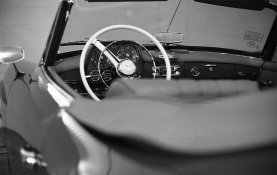
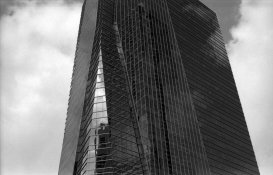
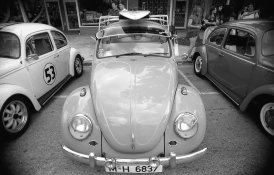
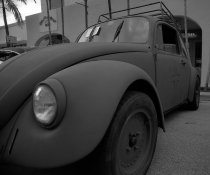
scan_435.jpgscan_447.jpgscan_453.jpgscan_438.jpgscan_452.jpg
 
Last edited by a moderator:
Joined
Jan 21, 2003
Messages
15,715
Location
Switzerland
Format
Multi Format
Nice pictures!

It's normal for the fix to come out with a tint after fixing TMax. That color clears after a while.
You will also notice that as your fixer gets older and used it will turn a slight golden tint. This is also normal.

Have fun!
 
OP
OP
mindthemix

mindthemix

Member
Allowing Ads
Joined
Jun 14, 2012
Messages
178
Location
Miami
Format
Multi Format
My second try and the third T-Max roll

Olympus OM-1n / Zuiko 21mm F/3.5
Yellow filter

Film : Kodak T-Max 100


Developer: Kodak HC-110 (@75F) Dilution H
Stop Bath: Water
Fixer: TF-4


Presoak: 1 minute
Development: 10 minutes (30 seconds agitation then 5 inversions every 30 seconds)
Stop Bath: 1 minute (continuous agitation)
Fix: 6 minutes (5 inversions once a minute)
Final wash: 8 minutes
Soak in PhotoFlo (two drops): 1 minute

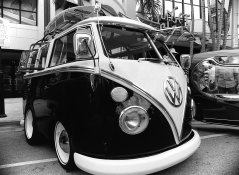
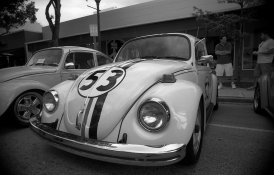
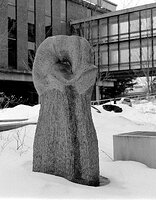
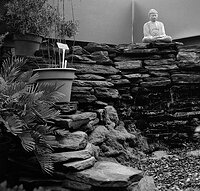
Epons_Scan_513.jpgEpons_Scan_512.jpgEpons_Scan_511.jpgEpons_Scan_509.jpgEpons_Scan_500.jpg
 
Last edited by a moderator:

John Wiegerink

Subscriber
Allowing Ads
Joined
May 29, 2009
Messages
4,105
Location
Lake Station, MI
Format
Multi Format
I just crawled out of the darkroom and saw this second set of pictures and had to comment. Great job! It almost makes me want to go back to using HC-110. By looking at the stump shot I'd say you nailed the exposure perfect. Also, your camera combo is first rate. I owned a 21mm f3.5 at one time and do believe it was the best wide angle I have ever used and I have used a few. The 21mm f4 Konica Hexanon is a very close second. There is so much nice gear out there at very reasonable prices now. I just hope we can get film for those goodies for a while. JohnW
 
OP
OP
mindthemix

mindthemix

Member
Allowing Ads
Joined
Jun 14, 2012
Messages
178
Location
Miami
Format
Multi Format
I just crawled out of the darkroom and saw this second set of pictures and had to comment. Great job! It almost makes me want to go back to using HC-110. By looking at the stump shot I'd say you nailed the exposure perfect. Also, your camera combo is first rate. I owned a 21mm f3.5 at one time and do believe it was the best wide angle I have ever used and I have used a few. The 21mm f4 Konica Hexanon is a very close second. There is so much nice gear out there at very reasonable prices now. I just hope we can get film for those goodies for a while. JohnW

Thank you John!

I love the OM-1 but I need to master this camera. I laso have the following lenses: 28mm F/2.8, 50mm F1/.8,135mm F/3.5, 200mm F/4 and 65-200mm F/4. I need to shot more and more to learn every aspect of the camera/lens combination. The light meter on camera is broken but I'm metering with a Sekonic.
 
OP
OP
mindthemix

mindthemix

Member
Allowing Ads
Joined
Jun 14, 2012
Messages
178
Location
Miami
Format
Multi Format
However you agitate, be consistent. A consistant process is way more important than exactly how you do it, as long as you have even development and no bell marks.

Hey Jason. My second development has proved your advice. Thanks!
 
Photrio.com contains affiliate links to products. We may receive a commission for purchases made through these links.
To read our full affiliate disclosure statement please click Here.

PHOTRIO PARTNERS EQUALLY FUNDING OUR COMMUNITY:


Ilford ADOX Freestyle Photographic Stearman Press Weldon Color Lab Blue Moon Camera & Machine
Top Bottom