
Well, here goes!
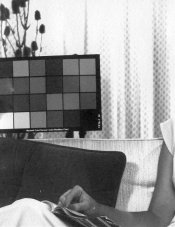
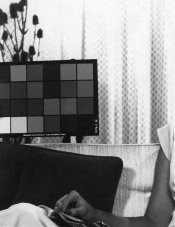
Here is my take on two grades of a Kodabromide-Brovira hybrid paper. Enjoy.
It is taken, in part, from the book.
Making an enlarging speed emulsion. This is a low to medium contrast grade paper formula series.
You will need:
Silver Nitrate
Sodium Bromide
Potassium Iodide solution
Gelatin, 250 Bloom photograde
Rhodium Chloride solution
Sodium Thiosulfate pentahydrate solution
Photo Flo 200
Glyoxal, 10% solution
Thymol, 10% solution in Iso Propyl Alcohol
In the light:
A: Dissolve 10.0 g photograde gelatin in 60 ml of distilled water at room temperature in a 150 ml glass beaker. Gradually raise the temperature to 40 degrees C with stirring on a stirring hotplate or in a sink with temperature control and mechanical stirring. When the gelatin is fully dissolved, and no floating translucent gelatin slugs are evident, add 3.9 g of Reagent Grade NaBr (Sodium Bromide) and continue stirring while raising the temperature to 55 deg C. Just before precipitation, add 0.09 ml of 0.1% Rhodium Chloride to the melted gelatin and salt. (Omitting the Rhodium Chloride will reduce the contrast of the emulsion by about 1 grade which is useful to know if you wish intermediate grades of contrast.)
B: Dissolve 5.1 g of Reagent Grade AgNO3 (silver nitrate) in 40 ml of distilled water. When fully dissolved, suck up 10 ml into several 10ml Monoject syringes or all 40 ml into one larger syringe with an extension tube on the end.
Turn out the lights (you may use a red or yellow safelight)
Add the 10 ml of B to A during a period of 1 minute with stirring at 55 deg C. Repeat this 3 more times with a 1 minute hold in between each addition. This should require between eight and ten minutes. If you are using the larger syringe for injection make sure that only 1/4th of the quantity is being added every minute, and that there is a pause of about 1/2 to 1 minute between each incremental addition. Also, with the larger syringe, it is necessary to place the end of the extension tip UNDER the surface of the liquid during addition, but care must be taken not to interfere with the stirring of the solution if you do this. After the addition, keep the temperature at 55 deg C and continue stirring for 10 minutes.
At the end of 10 minutes, stop the heat and stirring and reduce the temperature to 40 deg C as quickly as possible. You may then pour this into a 150 ml stainless steel beaker or divide it into 4 BLACK 35 mm plastic film cans. Each portion should be 25 ml if you decide to divide it up. There may be a small residue. This residue is high in silver and should be placed aside for later silver recovery.
For a contrast grade 0 - 1 paper:
To prepare for coating, bring 30 grams of this emulsion to 55 deg C and add 0.2 ml of the 1% KI solution and hold for 10 minutes with gentle stirring. Add another 0.1 ml of KI solution and hold for another 10 minutes at 55 deg C with gentle stirring.
When ready to coat, bring the emulsion to 40 deg C and add 6 drops of 10% glyoxal to the melted emulsion and 1 drop of TX-200 to the emulsion then coat on paper support.
This paper has an approximate grade of 0 - 1.0.
For a contrast grade 1 - 2 paper:
To prepare for coating, bring 30 grams of this emulsion to 60 deg C and add 1.0 ml of the 0.1% Sodium Hypo (pentahydrate) solution and hold for 60 minutes with gentle stirring. Add 1.0 ml of 1% KI solution and hold for another 30 minutes at 60 deg C with gentle stirring.
When ready to coat, bring the emulsion to 40 deg C and add 6 drops of 10% glyoxal to the melted emulsion and 2 drops of TX-200 to the emulsion then coat on paper support.
This paper has an approximate grade of 1.0 - 2.0
Note that this emulsion formula has few variations or knobs to turn. As you push speed higher and higher, the emulsion must be coaxed into doing things by the exact addenda, times, and temperatures. The Iodide and Hypo treatments control speed, fog and contrast. Overdo any one of them and you risk fog. That is the most serious of errors. Underdo any one of them and risk low speed and/or contrast.
This is an unwashed bromoiodide emulsion. It can only be used on paper support. It will not work properly on film support, glass or RC.
Exposure:
This emulsion is approximately equal to, faster than or may be up to 3 stops slower than regular enlarging papers. This depends on how well your lab technique was. If your normal exposure for an 8x10 from a 4x5 requires about 12" at f11 to make an enlargement with no filtration then you should be able to use the same exposure with this paper as a starting point. If your emulsion is slow then the exposure with the same negative will be up to 3 stops slower.
My average exposure making an 8x10 print from a 4x5 negative is about the same as I would use for Ilford MGIV paper, or about 12 at f11 with the #2 filter in the beam. I use the same exposure without the filter for this paper.
Processing:
Develop for not more than 3' in Dektol 1:3 or not more than 2' in Dektol 1:1. Contrast can be adjusted by Dektol dilution and development times.
Stop in an acid stop bath
Fix in a hardening fixer
Wash well in cold running water
If your dmax is low when you flash a strip and develop it, you have not coated enough of the emulsion on your paper support.
In a similar fashion, an ISO wash method of the above emulsion was made as well. This emulsion used phthalated gelatin. This washed emulsion is much more flexible in overall utility but harder to make.
Pictures of an ISO wash being done have been posted on APUG in the DVD thread. It is shown in the DVD and is described completely in the full text of the forthcoming book along with photographs.
PE
Here is my take on two grades of a Kodabromide-Brovira hybrid paper. Enjoy.
It is taken, in part, from the book.
Making an enlarging speed emulsion. This is a low to medium contrast grade paper formula series.
You will need:
Silver Nitrate
Sodium Bromide
Potassium Iodide solution
Gelatin, 250 Bloom photograde
Rhodium Chloride solution
Sodium Thiosulfate pentahydrate solution
Photo Flo 200
Glyoxal, 10% solution
Thymol, 10% solution in Iso Propyl Alcohol
In the light:
A: Dissolve 10.0 g photograde gelatin in 60 ml of distilled water at room temperature in a 150 ml glass beaker. Gradually raise the temperature to 40 degrees C with stirring on a stirring hotplate or in a sink with temperature control and mechanical stirring. When the gelatin is fully dissolved, and no floating translucent gelatin slugs are evident, add 3.9 g of Reagent Grade NaBr (Sodium Bromide) and continue stirring while raising the temperature to 55 deg C. Just before precipitation, add 0.09 ml of 0.1% Rhodium Chloride to the melted gelatin and salt. (Omitting the Rhodium Chloride will reduce the contrast of the emulsion by about 1 grade which is useful to know if you wish intermediate grades of contrast.)
B: Dissolve 5.1 g of Reagent Grade AgNO3 (silver nitrate) in 40 ml of distilled water. When fully dissolved, suck up 10 ml into several 10ml Monoject syringes or all 40 ml into one larger syringe with an extension tube on the end.
Turn out the lights (you may use a red or yellow safelight)
Add the 10 ml of B to A during a period of 1 minute with stirring at 55 deg C. Repeat this 3 more times with a 1 minute hold in between each addition. This should require between eight and ten minutes. If you are using the larger syringe for injection make sure that only 1/4th of the quantity is being added every minute, and that there is a pause of about 1/2 to 1 minute between each incremental addition. Also, with the larger syringe, it is necessary to place the end of the extension tip UNDER the surface of the liquid during addition, but care must be taken not to interfere with the stirring of the solution if you do this. After the addition, keep the temperature at 55 deg C and continue stirring for 10 minutes.
At the end of 10 minutes, stop the heat and stirring and reduce the temperature to 40 deg C as quickly as possible. You may then pour this into a 150 ml stainless steel beaker or divide it into 4 BLACK 35 mm plastic film cans. Each portion should be 25 ml if you decide to divide it up. There may be a small residue. This residue is high in silver and should be placed aside for later silver recovery.
For a contrast grade 0 - 1 paper:
To prepare for coating, bring 30 grams of this emulsion to 55 deg C and add 0.2 ml of the 1% KI solution and hold for 10 minutes with gentle stirring. Add another 0.1 ml of KI solution and hold for another 10 minutes at 55 deg C with gentle stirring.
When ready to coat, bring the emulsion to 40 deg C and add 6 drops of 10% glyoxal to the melted emulsion and 1 drop of TX-200 to the emulsion then coat on paper support.
This paper has an approximate grade of 0 - 1.0.
For a contrast grade 1 - 2 paper:
To prepare for coating, bring 30 grams of this emulsion to 60 deg C and add 1.0 ml of the 0.1% Sodium Hypo (pentahydrate) solution and hold for 60 minutes with gentle stirring. Add 1.0 ml of 1% KI solution and hold for another 30 minutes at 60 deg C with gentle stirring.
When ready to coat, bring the emulsion to 40 deg C and add 6 drops of 10% glyoxal to the melted emulsion and 2 drops of TX-200 to the emulsion then coat on paper support.
This paper has an approximate grade of 1.0 - 2.0
Note that this emulsion formula has few variations or knobs to turn. As you push speed higher and higher, the emulsion must be coaxed into doing things by the exact addenda, times, and temperatures. The Iodide and Hypo treatments control speed, fog and contrast. Overdo any one of them and you risk fog. That is the most serious of errors. Underdo any one of them and risk low speed and/or contrast.
This is an unwashed bromoiodide emulsion. It can only be used on paper support. It will not work properly on film support, glass or RC.
Exposure:
This emulsion is approximately equal to, faster than or may be up to 3 stops slower than regular enlarging papers. This depends on how well your lab technique was. If your normal exposure for an 8x10 from a 4x5 requires about 12" at f11 to make an enlargement with no filtration then you should be able to use the same exposure with this paper as a starting point. If your emulsion is slow then the exposure with the same negative will be up to 3 stops slower.
My average exposure making an 8x10 print from a 4x5 negative is about the same as I would use for Ilford MGIV paper, or about 12 at f11 with the #2 filter in the beam. I use the same exposure without the filter for this paper.
Processing:
Develop for not more than 3' in Dektol 1:3 or not more than 2' in Dektol 1:1. Contrast can be adjusted by Dektol dilution and development times.
Stop in an acid stop bath
Fix in a hardening fixer
Wash well in cold running water
If your dmax is low when you flash a strip and develop it, you have not coated enough of the emulsion on your paper support.
In a similar fashion, an ISO wash method of the above emulsion was made as well. This emulsion used phthalated gelatin. This washed emulsion is much more flexible in overall utility but harder to make.
Pictures of an ISO wash being done have been posted on APUG in the DVD thread. It is shown in the DVD and is described completely in the full text of the forthcoming book along with photographs.
PE