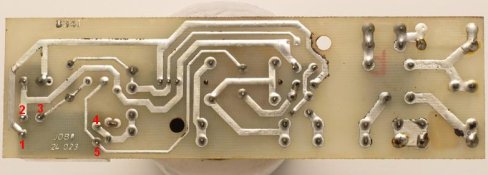


Sparky should get replaced - if not the relay contacts will pit and you will have to replace the relay. It isn't an extremely urgent repair. When the resistor doesn't spark that is because the relay contacts are sparking to save the resistor.
The little blue capacitor next to sparky should have some numbers on it - 0.01 would be 0.01 uF 10,000 pF, 10nF or 10KpF; 0.1 would be 0.1uF, 100nF, 100KpF and so forth.
Capacitors marked "250VAC" are for connection to the AC wiring. They are actually 1,500V or 3,000V capacitors so they don't fail if there is a lightning strike to the power lines or some such. These capacitors are big, say 2 cm long.
If you can't read the markings on the capacitor on the board then a use a 100kpF capacitor and everything should be OK. Expect the capacitor to be larger than the one that failed. Get a capacitor rated for 400VDC.
The resistor and capacitor you will be replacing are not direction sensitive, though some other components are.
In the last picture of the motor you can see the two brown/orange capacitors used for suppressing EMI (radio interference) from the motor brushes - the capacitors work with the coils on either side of the brushes. Capacitors and resistors across the relay contacts are there to suppress the inductive voltage surge that happens when the relay opens to reverse direction - they also suppress the 'click' you would hear on the radio when the motor reverses.
The little blue capacitor next to sparky should have some numbers on it - 0.01 would be 0.01 uF 10,000 pF, 10nF or 10KpF; 0.1 would be 0.1uF, 100nF, 100KpF and so forth.
Capacitors marked "250VAC" are for connection to the AC wiring. They are actually 1,500V or 3,000V capacitors so they don't fail if there is a lightning strike to the power lines or some such. These capacitors are big, say 2 cm long.
If you can't read the markings on the capacitor on the board then a use a 100kpF capacitor and everything should be OK. Expect the capacitor to be larger than the one that failed. Get a capacitor rated for 400VDC.
The resistor and capacitor you will be replacing are not direction sensitive, though some other components are.
In the last picture of the motor you can see the two brown/orange capacitors used for suppressing EMI (radio interference) from the motor brushes - the capacitors work with the coils on either side of the brushes. Capacitors and resistors across the relay contacts are there to suppress the inductive voltage surge that happens when the relay opens to reverse direction - they also suppress the 'click' you would hear on the radio when the motor reverses.
Last edited by a moderator: