• Welcome to Photrio!
    Registration is fast and free. Join today to unlock search, see fewer ads, and access all forum features.
    Click here to sign up

Is this uneven development?

Ecstatic Roundabout

A
Ecstatic Roundabout

  • 0
  • 0
  • 50
MIT. 25:35

MIT. 25:35

  • 1
  • 0
  • 87

Recent Classifieds

Forum statistics

Threads
202,960
Messages
2,848,138
Members
101,555
Latest member
drzf
Recent bookmarks
1

drgoose

Member
Allowing Ads
Joined
Feb 4, 2014
Messages
115
Location
Florida
Format
4x5 Format
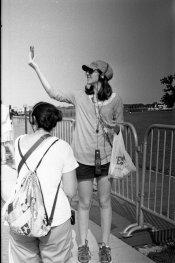
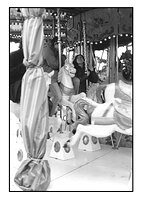
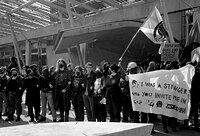
Hello, I posted this question in the rangefinder forum thinking that this was probably a shutter problem, but after thinking a little about it I think this is probably uneven development. I shot this frame with a leica IIIf and a Sumitar 50mm lens, using Tri-X 400 rated at 1600 and then developed it using rodinal 1+100 (10 ml+ 1 lt of water) and did stand development for 90 min with only 1 min of initial agitation. I have several frames where one side of the frame is underexposed compared to the other. I am attaching a couple of examples. All help appreciated.

Thanks.
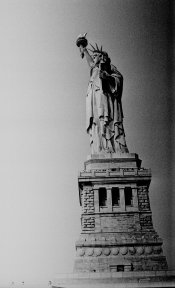
NYC Trip 7-31-14 Pacific004-1.jpgNYC Trip-1-1.jpgNYC Trip-12-1.jpg
 
If you only have several frames like this, but others that are fine, then I'd suspect the shutter before the development. If the development was uneven, then holding a long strip up to the light should show one side more developed than the other consistently along the whole roll.
 
If you only have several frames like this, but others that are fine, then I'd suspect the shutter before the development. If the development was uneven, then holding a long strip up to the light should show one side more developed than the other consistently along the whole roll.

Hmm, I think shutter on he IIIf travels the wrong way for the light difference in those shots.
 
I agree that this does look like development problem... the fading or graduation is way to even, almost like the shutter slowed down or sped up.

If you only have several frames like this, but others that are fine, then I'd suspect the shutter before the development. If the development was uneven, then holding a long strip up to the light should show one side more developed than the other consistently along the whole roll.
 
Hmm, I think shutter on he IIIf travels the wrong way for the light difference in those shots.

yup, horizontal shutter, runs the length of the frame. If it were the shutter the top/bottom of these vertical frames would be dark, not the side.

I think it's uneven development -- one of the goals of agitation during development is to make sure the same strength of chemical is against the whole surface of the negative for the whole process. In this case of a 90-minute stand development, I strongly suspect your chemistry didn't stay mixed, something heavier/denser sank to the bottom and that side of the film didn't get the same amount of development.

Ultimate test: shoot roll, develop WITH agitation, ponder results.

Meanwhile, if the light side of these means the negative is denser, you can dodge/burn for more even tones very easily. Have fun!
 
Keep the print fully immersed in the developer.
 
Keep the print fully immersed in the developer.

He doesn't say whether these are neg or print scans, but if they are print scans then I would agree. More like the paper was slid into the tray on and angle then pulled to soon. If these are neg scans then I'd say stand development and not enough volume of Rodinal per-sq-in of film. I rule out shutter problems due to direction of travel. JW
 
Thanks to everyone, these are negative scans. Next time I try stand dev I will do one inversion every 30 min and see if the problem goes away.


Sent from my iPhone using Tapatalk
 
I agree that this does look like development problem... the fading or graduation is way to even, almost like the shutter slowed down or sped up.

Also uneven development would not start over on each frame. The graduation would continue from the previous frame to the next.
 
Almost looks like too much polarization. I'm think not in the processing but rather in the capture.
 
Also uneven development would not start over on each frame. The graduation would continue from the previous frame to the next.

Well, I'd say it does look like it continues from frame to frame. I think the OP will find that a midway inversion or two will change the look of his negatives. Also, make sure you use a larger tank with a larger volume of developer to assure enough Rodinal per-sq-in of film. I have used Rodinal to stand develop Fuji Acros and the results were unbelieveable, but Fuji Acros is a very good film to begin with. JW
 
Almost looks like too much polarization. I'm think not in the processing but rather in the capture.

Camera orientation during capture makes it hard for me to believe it could be a polarizer problem. Besides, the IIIf is not very friendly to using a polarizer. JW
 
Camera orientation during capture makes it hard for me to believe it could be a polarizer problem. Besides, the IIIf is not very friendly to using a polarizer. JW

I would agree and it does still look like that sort of problem. I'm still going with capture rather than processing.
 
Hello, I posted this question in the rangefinder forum thinking that this was probably a shutter problem, but after thinking a little about it I think this is probably uneven development. I shot this frame with a leica IIIf and a Sumitar 50mm lens, using Tri-X 400 rated at 1600 and then developed it using rodinal 1+100 (10 ml+ 1 lt of water) and did stand development for 90 min with only 1 min of initial agitation. I have several frames where one side of the frame is underexposed compared to the other. I am attaching a couple of examples. All help appreciated.

Thanks.
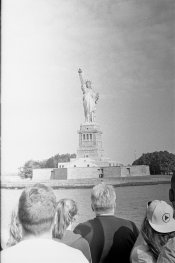
View attachment 92193View attachment 92194View attachment 92195


I can understand it not being the shutter, but I'd really like the OP to clarify if it was every frame or just some. Was it only the vertical ones?
 
Well, I'd say it does look like it continues from frame to frame.

NOPE. The gradation continues in the same direction but if it was uneven development the liger side would match up with the darker side of the previous frame. That's not the case in these examples.
 
NOPE. The gradation continues in the same direction but if it was uneven development the liger side would match up with the darker side of the previous frame. That's not the case in these examples.

Well, as far as I'm concerned it's not a capture problem and since stand development was used I'd definitely lean in that direction. Oh, I'm curious as to what makes you believe that the light side and dark side have to match. I don't understand that at all. If he were shooting vertical and holding the camera in the same position every shot then each negative would match. Light side to light side and dark side to dark side. Remember, if each frame is not exposed exactly the same then some will be darker or lighter according to how it was exposed. They would not alternate unless he flipped the camera each time. His examples show this since he's shooting 35mm. JW
 
NOPE. The gradation continues in the same direction but if it was uneven development the liger side would match up with the darker side of the previous frame. That's not the case in these examples.

These are 35mm frames (which run parallel to the film) and assuming they're whole, the gradient is consistently across the width of the film. Assuming a typical spiral in a tank, the gradient is vertical in the tank.

Given the use of stand development, I'd go with that being the culprit. Shoot a test roll and develop it normally, with the usual 1:00 then 0:10-per-1:00 agitation scheme.

I don't think it's polarisation, because you can see the gradient within non-sky elements, like the statue base.
 
These are 35mm frames (which run parallel to the film) and assuming they're whole, the gradient is consistently across the width of the film. Assuming a typical spiral in a tank, the gradient is vertical in the tank.

Given the use of stand development, I'd go with that being the culprit. Shoot a test roll and develop it normally, with the usual 1:00 then 0:10-per-1:00 agitation scheme.

I don't think it's polarisation, because you can see the gradient within non-sky elements, like the statue base.

+10
 
Photrio.com contains affiliate links to products. We may receive a commission for purchases made through these links.
To read our full affiliate disclosure statement please click Here.

PHOTRIO PARTNERS EQUALLY FUNDING OUR COMMUNITY:


Ilford ADOX Freestyle Photographic Stearman Press Weldon Color Lab Blue Moon Camera & Machine
Top Bottom