
-
Welcome to Photrio!Registration is fast and free. Join today to unlock search, see fewer ads, and access all forum features.Click here to sign up
You are using an out of date browser. It may not display this or other websites correctly.
You should upgrade or use an alternative browser.
You should upgrade or use an alternative browser.
Is there a way to shoot a paper negative at ISO 100?
-
A
- Thread starter mkillmer
- Start date
Recent Classifieds
-
Want to Buy Hasselblad tripod quick release plate... level
- Started by eli griggs
-
For Sale Fotodiox Pronto AF adapter
- Started by OAPOli
-
Under Offer 612 Holga modded body
- Started by OAPOli
-
For Sale Rodenstock Apo Sironar N 300mm RARE
- Started by x.rasenas
-
For Sale Leica M9 not working sensor _ for repair
- Started by Manual Camera
Forum statistics
pentaxuser
Member
If PE gets ISO 25 with Ilford MG then as Kentmere is a stop faster and it is, then ISO 50 should be possible. At ISO 50 or even anywhere near it, models should be able to keep still long enough even under natural light.
pentaxuser
pentaxuser

papers vary depending on the paper and the light.
graded papers i have used are very slow
gaslight papers, very slow
bottled emulsions, some are slow, some were fst ( luminos was about asa 100 )
i wish i had peroxide and a box, i'd fume my paper and see what happens, since it
has been known to work with film, it seems like a good bet to work with paper.
Luminos was the UK importer/distributor of Adox materials in the 1950's, at some stage the owner appears to have moved to the US where the trade name continued and was used for rebadged Kentmere materials possible others as well.
Ian

Nikola Dulgiarov
Member
@ Tom1956
This is an example of what I've done with X-ray film. This is Primax Mammography Film, shot w/o a filter @ 50ASA, developed in Pyrocat HD. Scanned on an Epson V700, and an approx. 100% crop of the image (try not to ay attention to dust and artifacts, nor to the aesthetics of the image, my brother is an easy/and willing/ target when testing things out )
)

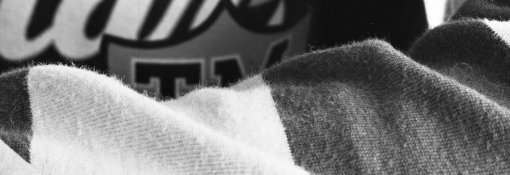
This is an example of what I've done with X-ray film. This is Primax Mammography Film, shot w/o a filter @ 50ASA, developed in Pyrocat HD. Scanned on an Epson V700, and an approx. 100% crop of the image (try not to ay attention to dust and artifacts, nor to the aesthetics of the image, my brother is an easy/and willing/ target when testing things out
)I think I'm leaning more toward x-ray film not, based on the supposed flatness of response in the ortho region, and the supposed anti-halation backing, although I know not what brand would be the best on these counts. I could give up full-pan film on these traits, and still be mostly happy. Print paper still leaves me cool. Now if somebody could spoonfeed me a film, developer, time and temperature to load up my 8x10, shoot a piece, and end up with a perfect 10-step gray scale, that would be nifty.
I learn so much on these photo chat sites, and become confused with twice that amount. This one has the sharpest people I've found, but it still seems like I could search archives till the cows come home and still not find a hard-set procedure. Here's what I DO know--8x10 pan film prices are totally outrageous, and it shuts down any 8x10 ambition on that count alone.
I learn so much on these photo chat sites, and become confused with twice that amount. This one has the sharpest people I've found, but it still seems like I could search archives till the cows come home and still not find a hard-set procedure. Here's what I DO know--8x10 pan film prices are totally outrageous, and it shuts down any 8x10 ambition on that count alone.

- Joined
- Dec 10, 2009
- Messages
- 6,295
- Format
- Multi Format
Beautiful work! It's sure sharp even though its X-ray film. BTW, I think you're neg is flopped. I have a V700 and I love it. Wish the film holders were sturdier.
@ Tom1956
This is an example of what I've done with X-ray film. This is Primax Mammography Film, shot w/o a filter @ 50ASA, developed in Pyrocat HD. Scanned on an Epson V700, and an approx. 100% crop of the image (try not to ay attention to dust and artifacts, nor to the aesthetics of the image, my brother is an easy/and willing/ target when testing things out
Now that's just fine. Thanks Nikola. I could live with those kinds of results all day. Appreciate it.
Nikola Dulgiarov
Member
Yeah, I noticed the flip, but since it is of no consequence in the situation, I didn't bother with correcting it
True on the holders, although at my scanning volume and purposes, it's sufficient; I may try wet-mounting in the future, who knows.
BTW, in Bulgaria, this film cost me about $100 for 100 sheets, so still $1/sheet, I know X-ray film is cheaper in the US, from what I've seen, but that has been the standard Green/Blue sensitive double-sided films.
True on the holders, although at my scanning volume and purposes, it's sufficient; I may try wet-mounting in the future, who knows.
BTW, in Bulgaria, this film cost me about $100 for 100 sheets, so still $1/sheet, I know X-ray film is cheaper in the US, from what I've seen, but that has been the standard Green/Blue sensitive double-sided films.
Well, some study on the X-Ray film availability in the US counts out obtaining the Primax. I have found a link on a Kodak product:
Dead Link Removed
But about this base color. I'm sure threads already exist on the blue base. And I'm bound to ask how this reacts with printing them on VC paper, since the graded papers are just about all gone. I notice this Kodak film is also available on a gray base. But how gray? I've just about made up my mind to go this x-ray film route as it would allow much more shooting freedom. I don't like the idea of digging in my pocket for $6 every time I push the button. So can anybody shed light on this blue base situation? And how gray is the gray?
Dead Link Removed
But about this base color. I'm sure threads already exist on the blue base. And I'm bound to ask how this reacts with printing them on VC paper, since the graded papers are just about all gone. I notice this Kodak film is also available on a gray base. But how gray? I've just about made up my mind to go this x-ray film route as it would allow much more shooting freedom. I don't like the idea of digging in my pocket for $6 every time I push the button. So can anybody shed light on this blue base situation? And how gray is the gray?
- Joined
- Dec 10, 2009
- Messages
- 6,295
- Format
- Multi Format
Fuji HRT has a bluish base. Works well with alt processes like salt printing.
Fuji HRT has a bluish base. Works well with alt processes like salt printing.
That reply doesn't sound hopeful with an ordinary Ilford VC fiber base silver printing. I'm afraid the blue base would be like the highest numbered filter in the filter kit.
- Joined
- Dec 10, 2009
- Messages
- 6,295
- Format
- Multi Format
Just adjust your film processing time to suit the blue base.
It looks like I'm getting somewhere on the study of this X-Ray film matter. It appears that Kodak Medical X-Ray Film General Purpose Green MXG is what I need to be buying? And some Pyrocat developer?
I've found the Kodak PDF on this material.
http://sfxrayimaging.com/Product/docs/Medical_X-ray_Film_General_Purpose _Green_MXG.pdf
I note the sharp cut-off of color at 550, which means it bites off the whole red to yellow end of the spectrum, and maybe even a nibble or 2 into the green. Qualifies as orthochromatic, but just by the skin of its teeth. Although I think I'll order some of this and do some playing. Thanks for pointing me in that direction, everybody.
I've found the Kodak PDF on this material.
http://sfxrayimaging.com/Product/docs/Medical_X-ray_Film_General_Purpose _Green_MXG.pdf
I note the sharp cut-off of color at 550, which means it bites off the whole red to yellow end of the spectrum, and maybe even a nibble or 2 into the green. Qualifies as orthochromatic, but just by the skin of its teeth. Although I think I'll order some of this and do some playing. Thanks for pointing me in that direction, everybody.
Last edited by a moderator:
- Joined
- Jun 21, 2003
- Messages
- 29,810
- Format
- Hybrid
just wondering if anyone has
peroxide fumed paper since this thread was active ..
if so
did you expose the paper when it was still "moist" or did it dry?
what sort of speed increase did you get ?
peroxide fumed paper since this thread was active ..
if so
did you expose the paper when it was still "moist" or did it dry?
what sort of speed increase did you get ?

Pulling up an older thread, as I have begun to jump into 8x10. I don't have the funding to buy new film, so will be shooting with paper negatives for a while. But about this X-Ray film Maincoon--I thought I had studied the matter and made the determination that X-Ray film was blue-sensitive, and paper was mildly orthochromatic. But I've done so much of this internet research, I can't figure what's what any more. More discussion on the matter would be welcome.
From my reading, X-ray film comes in different types, there are industrial films which record the direct impingement of X-ray particles from exposure at radiation intensities that would "fry" organics (we're organic) and then there are films that are exposed through screens that "light up" (luminescence) when much lower intensity X-rays hit the other side of the screen. These screens typically glow either blue or green and X-ray films are sensitized for either the blue or green light. The green X-ray film is orthochromatic (more or less). Some films are single coated and others are coated on both sides of the base and are roughly twice as fast as the single emulsion films. A third class of common X-ray films are actually contact speed direct positive duping films for copying X-rays and like most such materials are very very very very slow. My best guess starting EI for a single coated emulsion would be in the 25-50 neighborhood. Double that for double coated.

- Joined
- Jun 21, 2003
- Messages
- 29,810
- Format
- Hybrid
xray film is blue and sometimes green sensitive
VC paper and graded papers have different sensitivities
some more blue, some a mix of the 2.
a lot of their ( paper ) ISO is vairiable and dependent on the amount of blue light.
bright sunny day at noontime when there is most blue light ( according to my weatherman )
paper can be as high as iso 25 ( as PE has shown with his experiments and posts )
murky overcast days in open shade it can be iso 6 or even slower.
i am guessing, shooting xray film is a "know your light conditions like it is 1890 " sort of thing
like using paper negatives or liquid emulsion ( or home made emulsion ) coated paper glass or metal.
i've been shooting self coated materials and paper negatives since the 80s and i am still amazed at how hard, it is !
a lot of people say shooting paper negatives is easy, it is 100x harder than shooting panchromatic film ... and 100x as much fun !
VC paper and graded papers have different sensitivities
some more blue, some a mix of the 2.
a lot of their ( paper ) ISO is vairiable and dependent on the amount of blue light.
bright sunny day at noontime when there is most blue light ( according to my weatherman )
paper can be as high as iso 25 ( as PE has shown with his experiments and posts )
murky overcast days in open shade it can be iso 6 or even slower.
i am guessing, shooting xray film is a "know your light conditions like it is 1890 " sort of thing
like using paper negatives or liquid emulsion ( or home made emulsion ) coated paper glass or metal.
i've been shooting self coated materials and paper negatives since the 80s and i am still amazed at how hard, it is !
a lot of people say shooting paper negatives is easy, it is 100x harder than shooting panchromatic film ... and 100x as much fun !
I have been using the X-ray film quite a bit with a 6-1/2X 9 Voigtlander Avus and it has worked well for me. I develop it in Dektol diluted 1:16 and the contrast isn't too out of line. Most of the time I make (tiny!) contact prints which look great but I have also enlarged it to 5X7 and had it come out well. I shoot it at ISO 50. The price of what I got (Kodak green x-ray film) comes to 35 cents a sheet or about 4 cents for a 6X9 frame. Every now and again I wish I would have used regular roll film for an image I really like and then ask my self why, as it looks just fine on X-ray!
I figure the experience of shooting this stuff must be about what it was like in the teens through 30's. You won't be out much by trying it and it may be worth a shot just for the goofy ways the colors come through. In a way I wish they offered this in single side coated in 120. It would have to be sort of cheap to out price the Arista/ Foma stuff though.
Brian
I figure the experience of shooting this stuff must be about what it was like in the teens through 30's. You won't be out much by trying it and it may be worth a shot just for the goofy ways the colors come through. In a way I wish they offered this in single side coated in 120. It would have to be sort of cheap to out price the Arista/ Foma stuff though.
Brian
In a way I wish they offered this in single side coated in 120. It would have to be sort of cheap to out price the Arista/ Foma stuff though.
Brian
Rollei Ortho 120 would be close. Not cheap in the US $15.49 per roll, I can buy a 100 sheet box of X-ray film for not much more!
Rollei Ortho 120 would be close. Not cheap in the US $15.49 per roll, I can buy a 100 sheet box of X-ray film for not much more!
It is funny that they sell a film considered to have been cheap/undesirable not too long ago for such a price. $2 per frame or $.04... not too hard of a choice! If one could buy the x-ray film in longer chunks you could just about slit up some up with black craft paper, mark out numbers on it and roll it up for use in roll film cameras. Nice thing about it is the red window would actually serve its purpose for once.

- Joined
- Apr 25, 2010
- Messages
- 462
- Format
- Multi Format
I have been using ten year old Ilford MG paper and find I can't rate it higher than ISO 3 (probably age). Kentmere glossy grade 2 paper took me an age to get hold of, and I find ISO 6 reliable. I have a couple of packs as a kickstarter reward of Galaxy paper rated (accurately, I find) at ISO 125. This is sold as reversal paper, but it isn't really. You have to do reversal processing to get a positive. So I happily toss it in the Ilford MG developer and make my paper negatives. Even then, with relatively slow large format lenses and indoor light conditions, I still need lights for portraits.

No;most papers are around ISO3 when using a yellow filter,which I recommend to use to harness the contrast.Is there a way to shoot a paper negative at ISO 100? I know, "Use Film" - not the answer I need though...
I am working on a project where I need to use photo paper. I'm not restricting myself to commercial papers for this project (although that would be ideal).
I will consider a special order or using an emulsion, but I dont know where to start.
It has been suggested that "Ultrafine" papers are ISO 12, and some Kodak papers are higher again.
Any ideas?
- Joined
- Jun 21, 2003
- Messages
- 29,810
- Format
- Hybrid
No;most papers are around ISO3 when using a yellow filter,which I recommend to use to harness the contrast.
how many stops of light does a yellow filter eat up ?
according to photo engineer, he gets iso 25 with ilford mgiv
he's been posting this for 10 years now
(there was a url link here which no longer exists)

how many stops of light does a yellow filter eat up ?
.....
For me, the yellow filter consistently eats up 2 stops of light. I make almost all of my photos outdoors.
A fellow at another forum who uses paper almost exclusively and is really good at it... and he says the yellow filter eats 1 stop. Most of his photos are indoors. My guess is that it depends on the light.
I've heard of fuming salt prints with ammonia ( never tried it ), but never heard of fuming photo paper with hydroxide. An interesting idea!
| Photrio.com contains affiliate links to products. We may receive a commission for purchases made through these links. To read our full affiliate disclosure statement please click Here. |
PHOTRIO PARTNERS EQUALLY FUNDING OUR COMMUNITY:  |