
• Welcome to Photrio!
    Registration is fast and free. Join today to unlock search, see fewer ads, and access all forum features.
    Click here to sign up

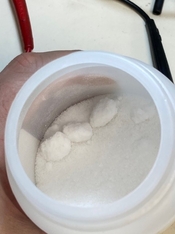
Is sodium metaborate suppose to be clumpy?

Recent Classifieds

Forum statistics

Threads
202,846
Messages
2,846,442
Members
101,564
Latest member
swedafone
Recent bookmarks
0

What About Bob

Subscriber
Joined
Aug 23, 2019
Messages
725
Location
Northampton, MA.
Format
Analog
I received my chemicals from Artcraft. The metol and the sodium metaborate came in a dark container while the sulfite came in a white one. All containers were wrapped with black tape? Is it normal for the metaborate to be clumpy? The other two containers don't make any sharp sounds when shaking them.
 
Lots of chemicals are "clumpy" -- depending on what that means. My Kodalk is not anywhere as fine as salt or sugar -- if that's what you mean.
 
Lots of chemicals are "clumpy" -- depending on what that means. My Kodalk is not anywhere as fine as salt or sugar -- if that's what you mean.
I brought the container to the light and can see the inside better. I can see a combination of fine and rocky looking clumps in the container. The clumps do not appear to fall apart while shaking the container.
 
Do they fall apart when you press them with your finger? If yes, then fuhgeddaboudit.
 
The reason why I asked such a question is that when I bought chemicals for the first time at B&H the metol was on the stale side and had some clumps in it. I was informed that I may have had a stale batch. Members gave some recommendations to other outlets for chemical purchases.

When I get to mix up the new metol and sulfite from Artcraft this should answer my question as to whether or not the chemistry that I bought at B&H caused the black specks in the developer. So I guess by seeing the lumps in the container of metaborate that made me question things about it; if this was normal for that type of chemical to get rocky or if it could be a sign of aging.
 
Here Martin Reed the former owner of a raw chemical suppliers and also a customer of suppliers Rayco discuss this.
My experience after 3 years is that so long as it is kept in a sealed container it may become clumpy but its property is unchanged.
 
The reason why I asked such a question is that when I bought chemicals for the first time at B&H the metol was on the stale side and had some clumps in it.

"Clump" is still undefined, as is "Stale". If Metol (and Kodalk) are kept in sealed containers they should last a LONG time. I was given a five POUND bottle of Metol 25 years ago, and it's still works fine. There's a reason they don't have an expiration date. Clumpy? Some might think so --- depending on how big or small, hard or soft, a "clump" is. Brown? Some might say so. I'd say more "egg shell".

"Black specs" in your developer? If they are not in your developer before you add water, I don't see how the developer would create them.
 
Last edited:
"Clump" is still undefined, as is "Stale". If Metol (and Kodalk) are kept in sealed containers they should last a LONG time. I was given a five POUND bottle of Metol 25 years ago, and it's still works fine. There's a reason they don't have an expiration date. Clumpy? Some might think so --- depending on how big or small, hard or soft, a "clump" is. Brown? Some might say so. I'd say more "egg shell".

"Black specs" in your developer? If they are not in your developer before you add water, I don't see how the developer would create them.
Thanks xkaes

I have been trying to do process of elimination on this one. I thought it might have been the film flaking off at first but then I developed another film brand and still got them I then checked the tank itself and it checked out all right. Made another batch of D23 with the same chemicals, same specks. The one and only thing that tells me it may not be a chemical issue is that when I put that first roll through that batch of chemistry there were no specks at all. Only after developing that very first roll then they appear Something changed at that point and I don't know what that may have been.

It's Gremlins I tell ya!
 
Are you saying you are re-using the chemicals -- or are these fresh chemicals each time? Those are two different ball games.
 
Sodium Metaborate is actually crystals of varying water content. This suggests that it is not very demanding to store. The lumps may have formed during the crystallization process. And my metaborate, which I got from Suvatlar (Germany), is lumpy.
 
Sodium Metaborate is actually crystals of varying water content. This suggests that it is not very demanding to store. The lumps may have formed during the crystallization process. And my metaborate, which I got from Suvatlar (Germany), is lumpy.
Thanks lamerko for explaining this.
 
Can you see any specks in the chemicals BEFORE they are used? I have no idea how large these specks are, so you might need a magnifying glass or loupe or an enlarging lens.
 
Sodium metaborate is hygroscopic so it absorbs water from the environment over time, which tends to stick the crystals together and so there can sometimes be some big chunks of the chemical in purchased jars of it. Sometimes I get a new jar from ArtCraft and it has no lumps in it, and sometimes there are. Over time, I find it develops large, hard lumps by itself. To be usable, you may have to remove the big chunks and - putting them in a (clean) heavy plastic bag - smash them up with a hammer.
 
"Clump" is still undefined, as is "Stale". If Metol (and Kodalk) are kept in sealed containers they should last a LONG time. I was given a five POUND bottle of Metol 25 years ago, and it's still works fine. There's a reason they don't have an expiration date. Clumpy? Some might think so --- depending on how big or small, hard or soft, a "clump" is. Brown? Some might say so. I'd say more "egg shell".

"Black specs" in your developer? If they are not in your developer before you add water, I don't see how the developer would create them.

I have a bottle of Kodak Elon that must be 50 years old. Still works perfectly!
 
Can you see any specks in the chemicals BEFORE they are used? I have no idea how large these specks are, so you might need a magnifying glass or loupe or an enlarging lens.

None before the developer goes in the tank.The sizes can vary. The first time I got them there were a good deal of them in solution. As I was using up the batch of developer, the amount of specks shrunk down.I did mix another batch of D23 not long ago and did get specks again. On the last film run I did take a swab and collect a few of these specks had them dry on a paper towel. Keeping it in a safe place and will work on building some more samples up.

For those who may not have seen the post regarding the black specks, here it is:
 
Sodium metaborate is hygroscopic so it absorbs water from the environment over time, which tends to stick the crystals together and so there can sometimes be some big chunks of the chemical in purchased jars of it. Sometimes I get a new jar from ArtCraft and it has no lumps in it, and sometimes there are. Over time, I find it develops large, hard lumps by itself. To be usable, you may have to remove the big chunks and - putting them in a (clean) heavy plastic bag - smash them up with a hammer.

I used to bake. I remember having to do that with some brown sugar. Talk about pounding bricks, lol.
 
I have a bottle of Kodak Elon that must be 50 years old. Still works perfectly!
With xkaes's batch of 25 years and yours of 50, this then puts my mind at ease. I can now switch to some other possible reason.

Thing that confuses me is there being no specks before but there are after development. This crosses out the bottles theory. If it was the tank then all solutions should have had the specks. The specks sure did sink back down into the graduate when I tried using a strainer to filter them out. That's when I had to use the q-tip to swab them out from the bottom of the graduate.
 
Last edited:
I will figure out the speck thing, eventually. I thank everyone for their input on the metaborate topic.

I just thought of trying a presoak on the next film run just to see if anything comes out of the presoak. I believe Ilford doesn't recommend doing one but I have done them before in the past.
 
Last edited:
I will figure out the speck thing, eventually. I thank everyone for their input on the metaborate topic.

I just thought of trying a presoak on the next film run just to see if anything comes out of the presoak. I believe Ilford doesn't recommend doing one but I have done them before in the past.

My understanding is that Ilford in effect is saying that it isn't necessary but does no harm. Isn't this the same thing? Well it might depend on how you read "doesn't recommend" If the latter phrase slowly metamorphoses into Ilford says "don't do a presoak" which I have seen it become in our heated debates on this knotty question of presoak or no presoak then this is the wrong interpretation.

Users can do either without concern about the consequences

pentaxuser
 
I pre-soak won't have any effect on your problem -- unless the black spots are coming from your water, which can have "stuff" in it one day and not the next -- unless you have a filter?????????
 
I pre-soak won't have any effect on your problem -- unless the black spots are coming from your water, which can have "stuff" in it one day and not the next -- unless you have a filter?????????

I use distilled water for all of the chemistry I mix. This adds on to the confusion for me. I wouldn't dare use tap for mixing chemistry. I would downgrade to something like Poland Springs before using tap.
 
Yea, it's a little lumpy sometimes. Fairly fresh, it should break apart without too much effort (no hammers), but the clumps get harder with age, and hammers may be required. Not as bad a potassium bromide.
 

Attachments

  • Sodium Metaborate.jpg
    Sodium Metaborate.jpg
    43.6 KB · Views: 69
Sodium metaborate is hygroscopic so it absorbs water from the environment over time, which tends to stick the crystals together and so there can sometimes be some big chunks of the chemical in purchased jars of it. Sometimes I get a new jar from ArtCraft and it has no lumps in it, and sometimes there are. Over time, I find it develops large, hard lumps by itself. To be usable, you may have to remove the big chunks and - putting them in a (clean) heavy plastic bag - smash them up with a hammer.

Lots of chemicals absorb atmospheric water, even if the storage container is very good, as fresh air enters each time it's opened. Sodium carbonate is probably the best known to photographers. I discovered that my potassium carbonate, which hasn't changed its "powderyness" has to be used at 1.26 times the formula weight, despite being in quite good storage container with tight fitting lid.
 
Photrio.com contains affiliate links to products. We may receive a commission for purchases made through these links.
To read our full affiliate disclosure statement please click Here.

PHOTRIO PARTNERS EQUALLY FUNDING OUR COMMUNITY:


Ilford ADOX Freestyle Photographic Stearman Press Weldon Color Lab Blue Moon Camera & Machine
Top Bottom