• Welcome to Photrio!
    Registration is fast and free. Join today to unlock search, see fewer ads, and access all forum features.
    Click here to sign up

Invest in 4x5 equipment?

Ma Murphy's

A
Ma Murphy's

  • 2
  • 1
  • 19
Tar

H
Tar

  • 3
  • 3
  • 99

Forum statistics

Threads
202,297
Messages
2,838,688
Members
101,251
Latest member
mrche
Recent bookmarks
0

Sirius Glass

Subscriber
Allowing Ads
Joined
Jan 18, 2007
Messages
50,858
Location
Southern California
Format
Multi Format
Over the years , I built a working set for 35mm MF and 4x5, but I have no intention of growing the 4x5 set. With 35mm and MF system cameras, I've got all I need for my photographic future. 4x5 is not better in image quality than MF. So why 4x5? What do others think?

I bought and used a 4"x5" Graflex Model D and 4"x5" Pacemaker Speed Graphic. I ended up using my Hasselblads much more.
 

GregY

Member
Allowing Ads
Joined
Apr 12, 2005
Messages
4,083
Location
Alberta
Format
Large Format
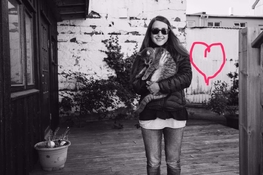
Just remember, cat pictures are always exempt from this discussion.
Reykjavik
IMG_0067.JPG
 
Last edited:

isaac7

Member
Allowing Ads
Joined
Apr 12, 2019
Messages
64
Location
Virginia
Format
Med. Format RF
Why is the print the standard and not the web? Most photos we look at aren't prints.

If a screen is how you will look at and show images then it really doesn't make any difference how you shoot your pictures. Or if they got shot at all, they could just be generated these days. The vast majority of screens are smaller than 15", most fit in your hand. IMO all images are the same once they are on a screen and is why I no longer play any attention to them. Even my own pictures do not interest me once I have them on the screen. Pixels are pixels. <shrug>

But you're right, a print and its "quality" doesn't have to be the ultimate arbiter of what makes a format worth doing. The only sensible reasons to shoot film at all these days revolve around enjoying the process. Personally I only find it worthwhile if the end result is a print and/or a positive transparency. LF shooting is unlike any other kind of photography and as I've mentioned before I think that experience is its own justification. Even if the technical advantages of LF aren't exploited the experience can't be replicated any other way.
 

Don_ih

Member
Allowing Ads
Joined
Jan 24, 2021
Messages
8,704
Location
Ontario
Format
35mm RF
This is an argument that will go nowhere, as more and more people have very limited experience with any prints other than snapshots and even the majority of people who enlarge 135 and 120 have no experience with large format contact prints. So, to an extent, it's like trying to describe the taste of some exotic fruit to someone. They know how to taste, they've tasted plenty of things, but until they taste the fruit you're talking about, they won't quite know - and, even when they do taste it, they still may not think it's better than any other fruit.

Those qualities some (or many) people find exist only in prints may not be what other people consider important. If those qualities are lacking on photos on a screen, and that other person only knows photos on a screen, then how a photo looks on a screen is what they consider important.
 

Alan Edward Klein

Member
Allowing Ads
Joined
Aug 29, 2017
Messages
10,232
Location
New Jersey formerly NYC
Format
Multi Format
If a screen is how you will look at and show images then it really doesn't make any difference how you shoot your pictures. Or if they got shot at all, they could just be generated these days. The vast majority of screens are smaller than 15", most fit in your hand. IMO all images are the same once they are on a screen and is why I no longer play any attention to them. Even my own pictures do not interest me once I have them on the screen. Pixels are pixels. <shrug>

But you're right, a print and its "quality" doesn't have to be the ultimate arbiter of what makes a format worth doing. The only sensible reasons to shoot film at all these days revolve around enjoying the process. Personally I only find it worthwhile if the end result is a print and/or a positive transparency. LF shooting is unlike any other kind of photography and as I've mentioned before I think that experience is its own justification. Even if the technical advantages of LF aren't exploited the experience can't be replicated any other way.
You seem conflicted. In any case, if you enjoy the process of shooting MF or LF and film, it doesn't necessarily matter what the final result is - print or screen display. It;s the process of shooting that counts for me.

By the way, I display photos on my 75" TV that gives a splendid display of the shots, much larger than any print I ever made. I also have 16x20" prints mounted on the walls, but because I can't do that any longer, screen display is another choice. In any case, you seeing my photos in Virginia on a 15" screen is a lot better than never seeing them at all.
 

DREW WILEY

Member
Allowing Ads
Joined
Jul 14, 2011
Messages
14,947
Format
8x10 Format
The first person to have ordered up big flat digital display panels in picture frames seems to have been Bill Gate himself. They cost him a ridiculous amount of money apiece to make (now anyone can afford something like that). He wanted guests in his rooms to view any famous painting they wanted by just the touch of a button.

Ironic - here was someone who could actually afford an Old Masters painting, or a Gauguin, or a Monet, or whatever - but as a darn digital stunt puts the equivalent of what is now a boring programmable highway display ad for ambulance chasers or pot dispensaries up on his own walls.
 

djdister

Subscriber
Joined
Oct 6, 2012
Messages
276
Location
Maryland USA
Format
Multi Format
The effective resolution of a print still beats most digital display panels, but the dynamic range of a digital display beats that of a print. So choose what you like...
 

chuckroast

Subscriber
Joined
Jun 2, 2023
Messages
3,274
Location
All Over The Place
Format
Multi Format
The first person to have ordered up big flat digital display panels in picture frames seems to have been Bill Gate himself. They cost him a ridiculous amount of money apiece to make (now anyone can afford something like that). He wanted guests in his rooms to view any famous painting they wanted by just the touch of a button.

Ironic - here was someone who could actually afford an Old Masters painting, or a Gauguin, or a Monet, or whatever - but as a darn digital stunt puts the equivalent of what is now a boring programmable highway display ad for ambulance chasers or pot dispensaries up on his own walls.

I've seen Rembrandts in person and there is no monitor made that could do them justice. Modern art, maybe, but not the classics.
 

stevenje

Subscriber
Allowing Ads
Joined
Aug 3, 2013
Messages
55
Format
Multi Format
Although many museums and galleries post images from their shows on the internet and there are books of art and photography galore, there is no substitute for seeing the real thing in person. Scale, subtleties, delicacy and depth are lost in translation.

Well said.
 

wiltw

Subscriber
Allowing Ads
Joined
Oct 4, 2008
Messages
6,747
Location
SF Bay area
Format
Multi Format
But you're scanning the "standard" print for the web. So all the issues you mentioned are the same. In addition, no two chemical prints are the same. So which one is the standard?

I used to belong to a group of photographers randomly scattered across the US (and sometimes one member would spend considerable time in Japan) and we would have a (optional) holiday print exchange. Each member would choose one image and make up multiple copies of each, they would all be mailed to one person who would assemble composite packets and mail them out to all participants. I would print up multiple Cibachorme print copies for my chosen image....printing up dozens of copies before sending them for distribution, I would set them all side by side to example them carefully and see if I could spot ANY difference between prints...NEVER could, in spite of very critical inspection. Of course, the enlarger was electronically timed for light output duration, the chemistry was controlled for temperature by a Jobo, but the air temp was subject to deviations of a typical HVAC thermomstat, so not as strict as pro lab standards. But I would not hesitate to dispute the statement about 'no two chemical prints are the same'.

 
Last edited:

chuckroast

Subscriber
Joined
Jun 2, 2023
Messages
3,274
Location
All Over The Place
Format
Multi Format
I used to belong to a group of photographers randomly scattered across the US (and sometimes one member would spend considerable time in Japan) and we would have a (optional) holiday print exchange. Each member would choose one image and make up multiple copies of each, they would all be mailed to one person who would assemble composite packets and mail them out to all participants. I would print up multiple Cibachorme print copies for my chosen image....printing up dozens of copies before sending them for distribution, I would set them all side by side to example them carefully and see if I could spot ANY difference between prints...NEVER could, in spite of very critical inspection. So I dispute the statement about 'no two chemical prints are the same'.

If you're able to control for all the variables - chemistry, temperature, light source, and so on - it is absolutely possible to make prints indistinguishable upon viewing.

The problem is the one thing you cannot control - variability in paper coating and composition from batch to batch - even within the same brand and product. I would imagine that with Ciba. this would have been less of an issue.
 

wiltw

Subscriber
Allowing Ads
Joined
Oct 4, 2008
Messages
6,747
Location
SF Bay area
Format
Multi Format
If you're able to control for all the variables - chemistry, temperature, light source, and so on - it is absolutely possible to make prints indistinguishable upon viewing.

The problem is the one thing you cannot control - variability in paper coating and composition from batch to batch - even within the same brand and product. I would imagine that with Ciba. this would have been less of an issue.

OTOH, if all prints are made from a single batch of paper, that variability goes away, too.
 

chuckroast

Subscriber
Joined
Jun 2, 2023
Messages
3,274
Location
All Over The Place
Format
Multi Format
OTOH, if all prints are made from a single batch of paper, that variability goes away, too.

Assuming you are going to make less than 100 or you can select multiple boxes guaranteed to be from the same production run, you're entirely correct. I recall back in the Bad Old Days of shooting weddings, it was standard practice to make sure the film all had the same emulsion batch ID for this very reason.
 

DREW WILEY

Member
Allowing Ads
Joined
Jul 14, 2011
Messages
14,947
Format
8x10 Format
Wilt - if one had reliable electronic feedback in their colorhead, Ciba had the advantage of being somewhat tolerant of minor dev temp variations, say, plus or minus 3 degF or a little more. Furthermore, typical dev times were 3 min, except for the less common P3X hotter commercial process - so not as fussy in that respect either. Ciba was also a comparatively long exposure scenario.

But when it comes to the now predominant RA4 process, we're talking about faster dev times, often fast exposures, etc - so print to print consistency can be more of a challenge in the home darkroom. And due to the fact they're engineered for relatively low contrast color negs instead of chromes, the spectral sensitivity peaks of the paper dyes themselves are quite steep, and fussier to keep on track. While a 4 cc dial setting difference might be only negligible with Ciba, even a 1 cc change might make a conspicuous difference with RA4 paper (if one is attentive to or fussy about the exact look).

Same goes with color correction and contrast masking; with Ciba you needed a heavy-handed sledgehammer approach. With color neg printing, if needed at all, masking is more like power steering, and you need a gentle touch.

The big problem with Ciba, other than its handling issues, was that the product shifted color balance rather quickly - quite dramatically in fact if we're talking about six months. It wasn't just a matter of batch to batch issues. It would go from a greenish bias when new to a magenta bias when old or "ripe"; so I'd schedule my specific images for their best fit within that inevitable cycle of shift. You couldn't just rebalance or re-mask as a cure - the different coating layers responded differentially. But sometimes that very idiosyncrasy produced the most gorgeous prints.

RA4 papers are far more consistent, at least until they're outdated enough to start yellowing and going blaaah.
 

DREW WILEY

Member
Allowing Ads
Joined
Jul 14, 2011
Messages
14,947
Format
8x10 Format
Chuck - back to Rembrandt. I looked at all kinds of well printed "coffee table books" with copies of famous Rembrant paintings in them ... asked myself, What's the big deal with this guy? Then one cold winter morning I found myself face to face with a real deal big Rembrandt self-portrait in the National Gallery in DC. I was almost floored. The buttons were "gold", not yellow; the ever-so subtle impasto build-up make even adjacent paintings by other Dutch Masters look as if they were missing something. Over a two-hour period, I kept going back and back to view that painting. I finally "got it".
 

Pieter12

Member
Allowing Ads
Joined
Aug 20, 2017
Messages
8,316
Location
Magrathean's computer
Format
Super8
I recall in Hollywood there was a lab that specialized in head shots. You could get 100 identical 8x10s with no problem. I believe they made a copy negative to print from.
 

DREW WILEY

Member
Allowing Ads
Joined
Jul 14, 2011
Messages
14,947
Format
8x10 Format
What is "identical" in terms of mass-produced lab prints and what might be classified as a finely-tuned personal print instead, can be rather different definitions. Frankly, I don't even care if two or more prints are identical, just as long as they're all compelling or beautiful in their own way.

Otherwise, my own quality control standards are distinctly higher than those of so-called professional labs when it comes to prints. I only use their services for color film development,
where esthetic variables are not supposed to be in play, but just consistent machine reliability.
 

chuckroast

Subscriber
Joined
Jun 2, 2023
Messages
3,274
Location
All Over The Place
Format
Multi Format
Chuck - back to Rembrandt. I looked at all kinds of well printed "coffee table books" with copies of famous Rembrant paintings in them ... asked myself, What's the big deal with this guy? Then one cold winter morning I found myself face to face with a real deal big Rembrandt self-portrait in the National Gallery in DC. I was almost floored. The buttons were "gold", not yellow; the ever-so subtle impasto build-up make even adjacent paintings by other Dutch Masters look as if they were missing something. Over a two-hour period, I kept going back and back to view that painting. I finally "got it".

Years ago, I had to travel to Amsterdam on business, and had a free weekend.

My colleague and I visited the Rijksmuseum and lucked into getting to see not only his famous "Nightwatch" but a bunch of smaller paintings that had just been cleaned.

There is simply no way to describe the real thing. The light doesn't seem to reflect, it seems to eminate from his brushes. It's an incredible experience that anyone who has access to see the real thing (anywhere) should try and go see.

That evening, we got to go next door to see the Royal Concertgebouw Orchestra play. Again, a spectacular arts experience in an evening of music.

Neither monitor nor digital recording could remotely capture either of these respectively.

But some people have tried to copy the Dutch Masters. This is really fun:


DREW WILEY

Member
Allowing Ads
Joined
Jul 14, 2011
Messages
14,947
Format
8x10 Format
Oh my! I have never had the opportunity to visit the Netherlands, although my sister has because her husband is Dutch. I have had the opportunity to view some original Vermeer and
Van Gogh paintings up close in person, without any time pressure. Those are almost in a class by themselves. An I've seen plenty of older Dutch miniatures - quite remarkable detail; don't know if they had some kind of magnifying glass or not back in Medieval days. But the native Americans near here made miniature wedding baskets interwoven with hummingbird feathers, with certain patterns so small they can't even be seen with the naked eye. Likewise with a few Ice Age artifacts I've found, meticulously crafted in miniature. Must have done it by feel alone. Reminds me of a local photographer, a jeweler by day, who contact printed his 35mm slides and displayed them under individual gooseneck magnifying glasses. Wonder what grandiose Gursky would think about that?
 

Alan Edward Klein

Member
Allowing Ads
Joined
Aug 29, 2017
Messages
10,232
Location
New Jersey formerly NYC
Format
Multi Format
I've seen Rembrandts in person and there is no monitor made that could do them justice. Modern art, maybe, but not the classics.

Monitors are cheaper.
 

Alan Edward Klein

Member
Allowing Ads
Joined
Aug 29, 2017
Messages
10,232
Location
New Jersey formerly NYC
Format
Multi Format
I used to belong to a group of photographers randomly scattered across the US (and sometimes one member would spend considerable time in Japan) and we would have a (optional) holiday print exchange. Each member would choose one image and make up multiple copies of each, they would all be mailed to one person who would assemble composite packets and mail them out to all participants. I would print up multiple Cibachorme print copies for my chosen image....printing up dozens of copies before sending them for distribution, I would set them all side by side to example them carefully and see if I could spot ANY difference between prints...NEVER could, in spite of very critical inspection. Of course, the enlarger was electronically timed for light output duration, the chemistry was controlled for temperature by a Jobo, but the air temp was subject to deviations of a typical HVAC thermomstat, so not as strict as pro lab standards. But I would not hesitate to dispute the statement about 'no two chemical prints are the same'.


We were discussing scanning the print. You didn't address that point.

"But you're scanning the "standard" print for the web. So all the issues you mentioned are the same."
 

MattKing

Moderator
Moderator
Joined
Apr 24, 2005
Messages
55,552
Location
Delta, BC Canada
Format
Medium Format
We were discussing scanning the print. You didn't address that point.

"But you're scanning the "standard" print for the web. So all the issues you mentioned are the same."

If you take that scan, resize the resulting digital file so that it will present appropriately on a screen - even a 4K 70" one - and then make a 11x14 print from the resized file, in almost all cases the subsequent print will be markedly poorer than the initial print.
So if you aim for a standard that will look great on a 70" screen, you are handicapping yourself if you also want an 11x14 print as well. The print requires a different standard.
Those of us who do both - make prints and display digitally, need to choose the most demanding standard in order to be able to obtain results that succeed for our purposes.
 
Photrio.com contains affiliate links to products. We may receive a commission for purchases made through these links.
To read our full affiliate disclosure statement please click Here.

PHOTRIO PARTNERS EQUALLY FUNDING OUR COMMUNITY:


Ilford ADOX Freestyle Photographic Stearman Press Weldon Color Lab Blue Moon Camera & Machine
Top Bottom