
• Welcome to Photrio!
    Registration is fast and free. Join today to unlock search, see fewer ads, and access all forum features.
    Click here to sign up

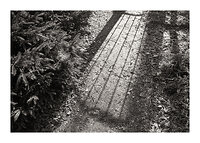
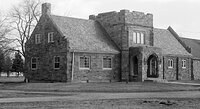
interesting pictures and how is it done?

Grill

H
Grill

  • 4
  • 0
  • 71
Cemetery Chapel

H
Cemetery Chapel

  • 4
  • 0
  • 97

Recent Classifieds

Forum statistics

Threads
202,790
Messages
2,845,577
Members
101,530
Latest member
FatherHenry
Recent bookmarks
1
Do you know these to be done traditionally?
My guess is photoshop, some appear to have some areas selected and posterized, others hit with high contrast and or the threshold tool. There also appears to be some heavy sharpening and the sky seems to have been pasted into the last image. Some this could be accomplished simply by printing using a high contrast filter. Interesting stuff though.
 
I suspect this was done using one of the dreaded digital techniques, but it reminds me of work done using the POP solarization process described in Petersen's Photographic, January 1977 edition.

The basic idea was to soak a sheet of paper in developer prior to exposure. The wet paper was then given two exposures - the first was short and bright, typically with the aperture wide open. After 20-30 seconds, a faint image would appear on the paper. Then, a second exposure - longer and with the lens stopped down - was required. The partially developed image from the first exposure would hold back light from the second exposure, whle the second expsoure would complement the first both as additional expsoure and as a partial solarization exposure. The result was quite striking - at times it looked like a normal print, while in other instances it looked solarized. The process would produce detail in highlights that normally would be totally blown out, white mackie lines at the boundaries between highlights and shadows, and some of the most beautiful silvery midtones I have ever seen.

The process required the use of high contrast graded paper - Agfa Brovira #6 (when it was available) or later #5. I did a number of these that were successful, and I also tried it with VC paper with no success.
 
Thanks monphoto that is the technique I ment, I'll have some searches on the POP solarization process:smile:
As far as the pictures go I am afraid MrCallow is right I just saw they are shot with a nikon coolpix...... so they probably never saw the darkroon. Sorry lads, stupid I just seemed to have forgotten Photoshop when I was thinking those pictures over.

cheers!
Quinten
 
I think these are not digital images. but a combination of lith negatives in conjunction with normal negatives, some posterization and bas releif printed on an enlarger. Also a bit of solarization kicked in for good measure. The prints do look amazing.
Also with seperate exposurse through softening and textures. I like this work as it is the photographers vision which could not be reproduced exactly the same each time by others.
 
Ok Quinten
I didn't see your last post. too bad for the cool pix thing because if they were done on an enlarger I would be very impressed.

I like them anyways no matter how they were done.
 
Here's an example of something like this done in a real chemical darkroom. (there was a url link here which no longer exists)
 
Perhaps something similar could be done with contrasty film and a camera with a diffusion filter. The late and lamented Kodak Tech Pan was my favorite for grain-free high contrast images. 4x5 Tech Pan made great solarized negatives at an exposure index of maybe 25 and solarized in Solarol developer. When my supply of it is exhausted, I might try (http://www.jandcphoto.com/index.asp?PageAction=VIEWPROD&ProdID=206from). ]J&C Micro 4x5 Sheet Film[/URL]
 
Photrio.com contains affiliate links to products. We may receive a commission for purchases made through these links.
To read our full affiliate disclosure statement please click Here.

PHOTRIO PARTNERS EQUALLY FUNDING OUR COMMUNITY:


Ilford ADOX Freestyle Photographic Stearman Press Weldon Color Lab Blue Moon Camera & Machine
Top Bottom
